Wednesday, August 16, 2017

John's Baptism, Not Christian Baptism

Baptists will often cite the baptism of Jesus by John the Baptist (Matthew 3:13-17, Mark 1:9-11, Luke 3:21-22) as evidence of immersion as the only acceptable mode of baptism. they claim that "He came up
out of the water" (Matthew 3:16) requires Him to have been under the water. While it can be understood otherwise, that isn't my purpose here. Rather, I deny that the account has any relevance to the debate, because John's baptism was an Old Testament ritual, not Christian baptism.

Turn to another passage about John's baptism, Acts 19:1-7. I won't quote the whole thing here. It is the account of Paul's ministry to a group of people who had been baptized only by John's baptism (whether that refers to John personally, or baptism by his disciples is unclear). The Apostle asks the people whether they had received the Holy Spirit, to which they replied that they had never even heard of the Holy Spirit. Then (verses 4-5), Paul told them, "'John baptized with the baptism of repentance, telling the people to believe in the one who was to come after him, that is, Jesus.' On hearing this, they were baptized in the name of the Lord Jesus." That is, they had not received the Holy Spirit. This does not indicate, in spite of what Pentecostals would claim, that there is a difference between believing and receiving the Spirit. That is false (I Corinthians 12:13). Rather, they hadn't received the Spirit because they had not been fully instructed about Jesus. When Paul had done so, they believed, received the Holy Spirit, and were then baptized again.

There is no record that Paul objected in any way to John's baptism. However, his actions indicate that he did not consider it to be the baptism commanded by Christ (Matthew 28:19). Therefore, it is invalid as a basis for our doctrine of Christian baptism.

Monday, August 14, 2017

Imago Dei: In What Way Did Adam Bear God's Image?

I have had conversations with Mormons in which they have insisted that being made in the image of God means that God has a physical body like us. We are in His image in that He had arms and legs, hair, the whole shebang. Oneness Pentecostals teach something similar, holding that we were made in the image of the body of Jesus. Of course, both are completely unbiblical, because we know that God doesn't have a body (John 4:24 with Luke 24:39). They then insist that there can be no other way in which Adam could have been the image of God.

Of course, that is merely a logical fallacy, a form of circular reasoning, asserting that their interpretation is the only one possible. And that is certainly not the case.

There are several texts that tell us something about the image of God in men.

The first is Ecclesiastes 7:29: "See, this alone I found, that God made man upright, but they have sought out many schemes." So, one of the characteristics with which Adam was created was moral uprightness. This aspect of the image was lost in the Fall (see, for example, Romans 5:12-19).

Second, look at Colossians 3:10: "Put on the new self, which is being renewed in knowledge after the image of its creator." So now we see knowledge as another aspect of the image of God. And, since it needs renewal, we understand that this aspect of the image, while not completely lost, was at least marred by the Fall.

And third, look at Ephesians 4:24: "Put on the new self, created after the likeness of God in true righteousness and holiness." This is a more-explicit version of Solomon's words above. However, Paul is talking about re-creation, that is, the restoration of that which Solomon describes as lost. Both refer to righteousness and holiness, a moral nature.

Thus, contrary to the assertion of the Mormons and the Oneness Pentecostals, we see that the image of God in Adam was a moral image, not a physical one. This is further confirmed in Genesis 5:3: "When Adam had lived 130 years, he fathered a son in his own likeness, after his image, and named him Seth." when Adam and Even had their son Seth, he was not in the image of God, but rather in the image of Adam. What was different? Not his physical appearance. Rather, it was his moral nature, which was not after the image of God, but after that of his sinful father Adam! This again proves that the image of God was no physical image, and, therefore, cannot be claimed to prove that God has a body.

Saturday, August 12, 2017

Justification: Rome's Doctrine Compared to Scripture

In the little Epistle to Philemon, we have Paul's side of his relationship with a wealthy man. Part of that relationship involves a slave named Onesimus. Onesimus (Greek for "useful") had run away, during which time Paul had met him. Paul convinced him to become a Christian, and to return to his place in the household of Philemon. The epistle is then Paul's plea to Philemon to receive Onesimus back, not just as a member of his household, but now also as a brother in Christ.

Paul makes a plea on behalf of Onesimus (Phmn 1:18-19): "If he has wronged you at all, or owes you anything, charge that to my account. I, Paul, write this with my own hand: I will repay it."

I think this is a very significant statement. How so? Paul is expressing the biblical concept of surety. He is obliging himself to cover any shortcomings on the part of Onesimus.

Paul provides here a pithy, visible example of the role Jesus plays for the elect. Just as Paul pledged to make up any shortfall in Onesimus, Jesus committed to the Father to cover the debts of His people.

This is justification: our debt is cancelled because Jesus has paid it all. We see how Rome's concept of justification, by an infusion of righteousness, falls short of the biblical model. Paul's commitment was to pay for Onesimus's debts, not to give money to Onesimus to pay for himself. In the same way, the Christian is justified before God not because Jesus has transferred some of His righteousness to him, but rather because Jesus has assumed the debt of sin on Himself. The justified sinner does not stand before God as now good enough, but rather as a criminal now declared "not guilty"!


Wednesday, August 9, 2017

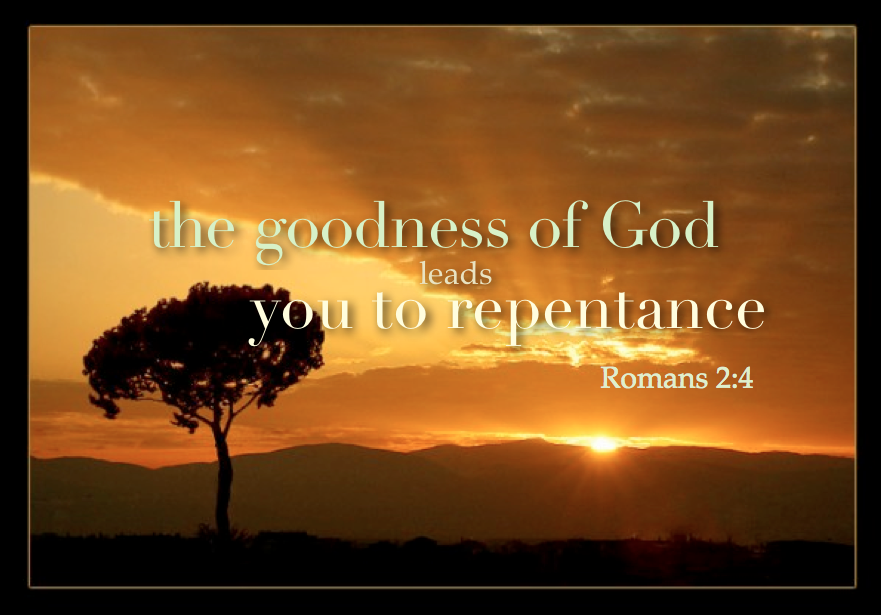
There Is No Merit in Repentance


When he preached at the Areopagus in Athens (Acts 17:16-34), one of the things the Apostle Paul told his hearers was, "[God] commands everyone everywhere to repent of their sins and turn to Him" (verse 30). Pelagians will often claim that a command to repent must imply that the ability to do so is natural to every man. Of course, that claim is consistent with the a priori belief of the Pelagian that men are capable of all forms of spiritual good, not just repentance. And it is just as false.

That is certainly not how repentance is described in Scripture.

Consider, first, Psalm 80:3: "Restore us, O God; let Your face shine, that we may be saved." The word "repentance" does not appear here. However, in order to be "restored," do we not have to repent? Yet, restoration in this verse is something that God does, not us.

Second, look at Jeremiah 31:18: "Bring me back that I may be restored, for You are the Lord my God." This sentence contains two verbs, "bring" and "restore," that make the same point, that it is God's initiative to bring us to repentance, not something that a sinner creates in himself.

And third, turn to Lamentations 5:21: "Restore us to Yourself, O Lord, that we may be restored!" Again, the same Prophet uses that word, "restore."

In the New Testament, we find the same concept, but using the word "repent," in Acts 5:31: "God exalted Him at his right hand as Leader and Savior, to give repentance to Israel and forgiveness of sins." Just as fallen Israel cannot forgive her own sins, neither can she create her own repentance. Rather, God must give both. This verse is especially important, because, by pairing those two things, no one can claim that one is by free will, without the implication that the other is, as well.

Also, look at the words of Paul in II Timothy 2:24-25: "And the Lord’s servant must not be quarrelsome but kind to everyone, able to teach, patiently enduring evil, correcting his opponents with gentleness. God may perhaps grant them repentance leading to a knowledge of the truth." Not only does he describe repentance as having its origin in God, not in us, but he also tells us that God is under no obligation to give it. When He does, it is an act of grace and mercy, not of imperative.

Unlike its common perversion even among Evangelicals, repentance is not an act of human merit. It is not a thing that fallen man can produce and offer to God. Rather, it is something that God, out of His goodness, mercy, and sovereign will, gives to the elect alone. Pelagianism is the natural religion of the sinful human heart, but the Scriptures refute it.

Monday, August 7, 2017

Why Do Men Sin? Did the Devil Make Me Do it?

It is unpopular to talk about sin, even among professing Christians. On one hand, we have the Osteen-style preachers who won't use the word lest they damage someone's self-esteem. On the other, we have liberals who deny sin, and claim that men are naturally good, but merely make mistakes, or have been led off the right track by their environment.

In contrast, the Bible, the expression of God's opinion on the subject, talks a lot about sin. For example, James, the half-brother (or step-brother) of Jesus, makes this declaration: "Each person is tempted when he is lured and enticed by his own desire. Then desire when it has conceived gives birth to sin, and sin when it is fully grown brings forth death" (James 1:14-15). He was paraphrasing the words of his better-known sibling: "Do you not see that whatever goes into the mouth passes into the stomach and is expelled? But what comes out of the mouth proceeds from the heart, and this defiles a person, for out of the heart come evil thoughts, murder, adultery, sexual immorality, theft, false witness, slander. These are what defile a person" (Matthew 15:17-20). Both men describe sin's origin, not in external influences, but rather from within, from a man's heart itself. As the Prophet Jeremiah also said, "The heart is deceitful above all things, and desperately sick" (Jeremiah 17:9).

When Scripture describes the hatred of God toward sin, it cannot be understood to mean that He is angry at poverty, or bad schools, or low self-esteem, or any of the other popular justifications for sin. Rather, as Jeremiah also says, "Your evil will chastise you, and your apostasy will reprove you" (Jeremiah 2:19). God's wrath is against what comes from us, not what goes into us! Therefore, the same Prophet asks, "Why should a living man complain, a man, about the punishment of his sins?" (Lamentations 3:39).

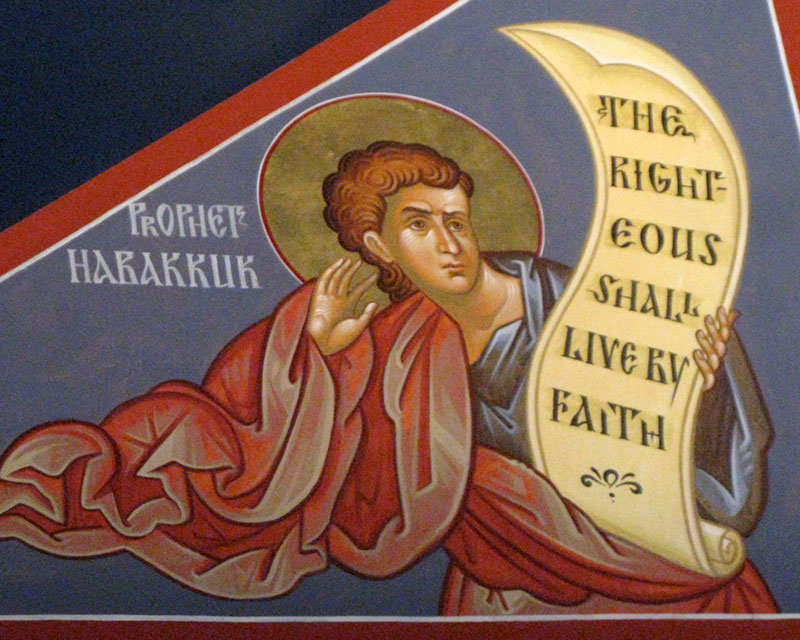
The self-esteem preachers are propagating a lie! God is no Santa Claus, no therapist, no personal life coach, no cheerleader. Rather, He is God, and an absolutely righteous one at that! He cannot, and will not, tolerate wickedness: "You [God] are of purer eyes than to see evil and cannot look at wrong" (Habakkuk 1:13). When the self-esteem preachers hide that information, then they are condemning men to Hell. And it is not good enough that anyone feel good about himself in Hell. God will judge those preachers, and hold them accountable for their wicked refusal to tell the truth (Ezekiel 3:18).

Saturday, August 5, 2017

Hope for the Sinner

"If You, O Lord, should mark iniquities,
     O Lord, who could stand?
But with You there is forgiveness,
     that You may be feared.

O Israel, hope in the Lord!
     For with the Lord there is steadfast love,
and with Him is plentiful redemption.
     And He will redeem Israel
from all his iniquities."
- Psalm 130:3-4, 7-8 

While it is rare in American evangelicalism to hear any mention of sin, among those who will utter the word, there is till a humanistic concept of righteousness. "Yes, I am a sinner, but I will try harder, and God will accept me on the basis of my sincerity." I will do my part, we say, and God will fill in the rest. Yet, that so far underestimates the sinfulness of sin that it eviscerates the word of any meaning. 

Observe, instead, what the Psalmist here says about sin. "If You, O Lord, should mark iniquities, O Lord, who could stand?" He starts with the consequences of sin. It isn't a mistake, or something we can overcome by trying harder. Rather, sin brings us into the judgment of God. He hates sin! "You [God] are of purer eyes than to see evil and cannot look at wrong" (Habakkuk 1:13). 

What answer can there be to a righteous God? Are we without hope? no, as the Psalmist also tells us: "with You there is forgiveness" (verse 4). How so? On what basis does He forgive? "With Him is plentiful redemption.  And He will redeem Israel from all his iniquities" (verses7-8). He has provided for the redemption of sinners. Every sinner? No, but the sinners of Israel, His people, called the church in the New Testament (Galatians 3:7, 6:16).

What is the method of redemption? "God shows His love for us in that while we were still sinners, Christ died for us" (Romans 5:8). The Psalmist had a proper concern: What can I do about my sin? And the answer is nothing. However, what can God do? Everything. And He did!

Wednesday, August 2, 2017

Judicial Hardening: When God Withdraws His Influences

"But My people did not listen to My voice;
     Israel would not submit to Me.
So I gave them over to their stubborn hearts,
     

     to follow their own counsels."
- Psalm 81:11-12 

This a hard message from God. His covenant people, the visible church, Israel, had become so enamored of her apostasy that God says, to paraphrase, "I wash My hands of you." What a sorrowful message! How could any child survive if a parent said this to him: "You are so evil that I cannot bear to be around you anymore"? Yet, Israel was content with this withdrawal of the God she professed. Why? Because she had resented His interference throughout her history. Read of her complaining after He liberated them from Egypt (e. g., Numbers 11:5). Especially egregious was the creation of the Golden Calf (Exodus 32:1-35).

And now, through Asaph, God tells Israel, "I have had enough." 

There were many judgments on Israel's apostasy. The Book of Judges gives the account of numerous foreign conquests, such as by the Midianites and the Philistines. Yet, each time, Israel repented, and God rescued them. Even greater was the conquest and deportation by the Assyrians in the Eighth Century BC, from which the Northern Kingdom never returned. And then the Southern Kingdom was destroyed and exiled by the Babylonians in the Sixth Century BC. Yet, God brought Judah back. Then the final destruction came in 70 AD, when the Romans destroyed Jerusalem and the Temple. It was nineteen centuries before the Jews returned this time, yet there has been no spiritual restoration. 

Her final restoration will bring Israel, not back to a physical land, but rather to her God. It has been prophesied in Zechariah, especially Zechariah 12:10, and in Romans 11. After almost three thousand years (and counting), Israel and her God will be Groom and Bride again.