Saturday, October 28, 2017

Abandoning the Law is Abandoning Righteousness

I admit that it is chic to speak against biblical Law. Even among non-dispensationalists, the idea has become accepted that the Law was a standard of righteousness under the Old Testament, but not under the New. It is usually expressed by a perversion of Romans 6:14: "You are not under law but under grace." That it is a perversion, not a legitimate use of Paul, is evident if the reader continues to the next verse: "What then? Are we to sin because we are not under law but under grace? By no means!" And, of course, none of these people ever quotes Romans 3:31: "Do we then overthrow the law by this faith? By no means! On the contrary, we uphold the law." Paul is addressing the question of the origin of righteousness. Can any man be made righteous by the Law? No! Righteousness comes only by grace through faith: "Not having a righteousness of my own that comes from the law, but that which comes through faith in Christ, the righteousness from God that depends on faith" (Philippians 3:9, see also Romans 9:31-32).

This error among Christians has had a devastating effect on American society. By presupposing a false view of the Law, Christians have had no platform for addressing public wickedness. And Scripture warns of this consequence: "Those who forsake the law praise the wicked, but those who keep the law strive against them" (Proverbs 28:4). The great catastrophes of today's society, such as abortion, are not the result of abandonment of biblical morality by the wicked, but by its abandonment by Christians! 

Christians hold protests, rallies, prayer meetings, in fact every variety of spiritual activity, hoping to change society. Why has our effort been such a dismal failure? Scripture answers that question, too: "If one turns away his ear from hearing the law, even his prayer is an abomination" (Proverbs 28:9). While God's professing people are refusing to hear His word, He is refusing to hear our prayers. Immoral people are not the cause of that; the self-righteous supposed people of God are!

Jesus's words to the Pharisees apply equally to modern America's evangelicals: "You leave the commandment of God and hold to the tradition of men" (Mark 7:8). What tradition? The tradition of despising God's Law.


Wednesday, October 25, 2017

The Will of Men Versus the Glory of God

"In Him [Christ] we have obtained an inheritance, having been predestined according to the purpose of Him [the Father] who works all things according to the counsel of His will, so that we who were the first to hope in Christ might be to the praise of His glory."
- Ephesians 1:11-12

I'll be the first to admit that I am completely mystified by the Arminian use of Scripture. In the case of an unbeliever, I can understand that he simply rejects the authority of Scripture. The Arminian, on the other hand, professes to believe in the Bible as God's revelation. Yet, he ignores the plain statements of the Bible that go against his theology. These verses are one example.

Arminians and Catholics claim a form of predestination. They say that God looks ahead in the future, sees who will believe, and then predestines those individuals. That is, predestination is a reaction to, not the cause of, a person's faith.

That claim is simply not allowed by this sentence. How are we predestined? Is it according to our faith? No, it is according to His purpose. Is it a preview of something that would occur in the future? No, it was according to His will. Unless, of course, it was a response to what His will would be in the future, which is silly. Yet, that is the same logic that the Arminian uses.

And what is God's goal in our predestination? Is it a reward for our wisdom in believing in Him? No, the purpose was His own glory. That is the key: predestination is not for our sakes, but for Christ's, that He would be glorified in our salvation.

I understand why Arminians want this passage to read differently. Just as with their Pelagian predecessors, the Arminians want to maintain the sovereignty of man. They talk about "free will," but their definition of it is the right of men to choose their destinies, not the right of a sovereign God, just as Satan offered to Adam in Genesis 3:5. Yet, God does not concede His sovereignty (Isaiah 42:8, 48:11).

Not only do these verses assign priority to God's will, but the same writer, the Apostle Paul, elsewhere explicitly denies it to men: "So then it depends not on human will or exertion, but on God, who has mercy" (Romans 9:16, see also John 1:13). So, even in the face of all the calls of "free will," the Bible says that it is not by the will of men, but of God.

Monday, October 23, 2017

The Eternity of God's Judgment: Contra Annihilationism

I have directed my attention before to the Millerite doctrine of annihilationism, the belief that the wicked will not suffer for eternity, but rather be eternally destroyed. This view is found most-publicly among Seventh-Day Adventists and Jehovah's Witnesses (the details vary, but my comments will cover both). Both
groups devote a lot of attention to the Revelation, yet they have completely missed what it says on the subject.

In Revelation 14:9-11, John reports the announcement of an angel: "If anyone worships the beast and its image and receives a mark on his forehead or on his hand, he also will drink the wine of God’s wrath, poured full strength into the cup of His anger, and he will be tormented with fire and sulfur in the presence of the holy angels and in the presence of the Lamb. And the smoke of their torment goes up forever and ever, and they have no rest, day or night, these worshipers of the beast and its image, and whoever receives the mark of its name."

The angel describes several elements of this judgment which are relevant to this issue. First, the punishment will be in the presence of the faithful angels and Jesus Christ. That is, there are witnesses to the continuing punishment. If the wicked are merely annihilated, then what is there for Jesus and the angels to witness? Second, the smoke of their torment rises forever. In other words, the punishment does not have an end. Also, since it is torment, the wicked are conscious. They are not unconscious, as some liberals claim. What kind of demented Judge would Jesus be, if He remained to witness the punishment of an anesthetized prisoner? And third, and most importantly, the wicked have no rest. There is no relief, no cessation of their punishment. That one phrase itself is the opposite of what is asserted by the Millerites.

There is a question that isn't really related to this matter, but is, no doubt, coming to the mind of some who read this. How can it be just for there to be eternal punishment for the sins of a life of limited duration? While that is a common question, it is really asked without much consideration. First, the punishment of a crime is proportional, not only to the action, but also to the victim. For example, a man who kills his neighbor is not punished as severely as a man who kills the president. And, since all sin is an assault on the eternal, holy God, how can the punishment be limited to the nature of a mere man? Furthermore, the question is actually based on a circular presupposition, i. e., that the wicked in Hell ceases to be active, is asleep, or in some other way disconnected from what is happening. On the contrary, all social restrictions are removed, so all the wicked in Hell are free to proclaim their hatred of God without ceasing, and in the vilest language known to created beings. Therefore, the wicked continue to sin, and, thus, to earn judgment.

Saturday, October 21, 2017

Science Without God Results in an Irrational Universe


Science assumes that things can be understood because they operate according to rules, resulting in predictable and testable outcomes. However, a philosophy of science that excludes God introduces an assumption that some things, at least, and fundamental things, in particular, happen by chance, and are, therefore, neither predictable nor testable.

This results in an atheism (or a theism which assumes that God is not relevant, i. e., deism) that depends for its rational basis on holding two mutually-exclusive presuppositions simultaneously. That is, to use the terminology of logic, it holds "A" and "not-A" together, in violation of the Law of Non-Contradiction. This basic law of logic says simply that a premise and its contrary cannot both be true at the same time.

In contrast, positing God as the origin, not chance, provides the basis of rationality on which science depends. It is the biblical God who testifies that it is "in Him [that] we live and move and have our being" (Acts 17:28). It is His a priori rationality that gives order and comprehensibility to all other things: "He is before all things, and in Him all things hold together" (Colossians 1:17).

In other words, the logic of science requires, not the exclusion of the concept of God, but rather the assumption of the biblical God. When scientists perform their research or their experiments, they are assuming the very rationality of God, while repudiating it in their conscious statements. In fact, that is the only way that science can function, by acting on principles that it denies, while advocating principles which undermine its very existence.

Wednesday, October 18, 2017

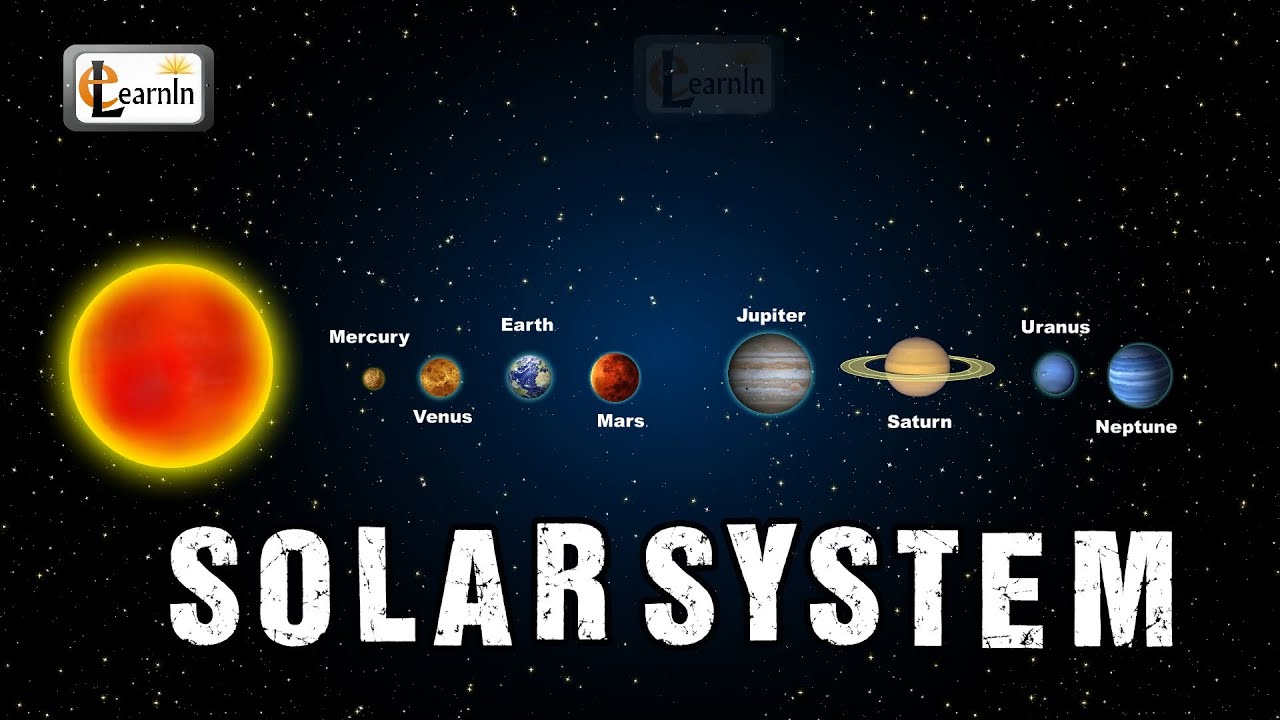
Astrology: Is Our Destiny in the Stars?

There's a big word that I want to talk about: syncretism. Have you ever heard it? Syncretism is the combination, usually unconscious, of contrasting worldviews. An example is the word that is being bandied about in some quarters, "Chrislam," to refer to a combination of Christianity and Islam. Paul describes syncretism in Colossians 2:8: "See to it that no one takes you captive by philosophy and empty deceit, according to human tradition, according to the elemental spirits of the world, and not according to Christ." The particular form that I want to address is the use of astrology by professing Christians, such as this woman who describes herself as "a Christian astrologer."

Her justification is from Genesis 1:14: "And God said, 'Let there be lights in the expanse of the heavens to separate the day from the night. And let them be for signs and for seasons, and for days and years.'" She says, "I feel that astrology was a tool created by God for us to understand ourselves better and to use as a spiritual tool. I feel that there are many biblical verses that support astrology." Notice her words, "I feel," not once, but twice. That is, her use of this verse (she also mentions Luke 21:25) isn't based on exegesis, an interpretation of the verse using grammar and its historical and biblical context, but rather on her feelings. That is always the start of syncretism, because "the heart is deceitful above all things, and desperately sick" (Jeremiah 17:9).

What does exegesis teach us about the role of the stars? Consider the case of Esau and Jacob, the twin sons of Isaac (Genesis 25:19-28). As twins, the two were born under the same planetary and stellar positions, the very things that are supposed to be determinative, according to astrologers. Yet, what do we know about their futures? "Jacob I loved, but Esau I hated" (Malachi 1:2-3, Romans 9:13), polar opposites. Paul uses these twins, born under the same astronomical circumstances, as a case study (Romans 9:16): "So then it depends not on human will or exertion, but on God, who has mercy." That is, Esau and Jacob don't tell us anything about the planets and stars, but rather about the sovereign grace of God.

And that's the problem with astrology. It posits ultimate sovereignty, not in the hands of a living, just, and loving God, but rather in the paths of stellar objects, though they, too, owe their existence and positions to that God (Genesis 1:14, Job 9:8, Zechariah 12:1). And God has no tolerance for giving His glory to anything or anyone else (Isaiah 42:8, 48:11). In fact, He rejects anyone who tries to do so (Deuteronomy 29:18-20): "Beware lest there be among you a man or woman or clan or tribe whose heart is turning away today from the Lord our God to go and serve the gods of those nations. Beware lest there be among you a root bearing poisonous and bitter fruit, one who, when he hears the words of this sworn covenant, blesses himself in his heart, saying, ‘I shall be safe, though I walk in the stubbornness of my heart.’ This will lead to the sweeping away of moist and dry alike. The Lord will not be willing to forgive him, but rather the anger of the Lord and His jealousy will smoke against that man, and the curses written in this book will settle upon him, and the Lord will blot out his name from under heaven."

Monday, October 16, 2017

Christ, Our Conquering King!

Question 45 of the Westminster Larger Catechism asks, How does Christ execute the office of a king? And answers it this way: "Christ executes the office of a king, in calling out of the world a people to himself, and giving them officers, laws, and censures, by which he visibly governs them; in bestowing saving grace upon his elect, rewarding their obedience, and correcting them for their sins, preserving and supporting them under all their temptations and sufferings, restraining and overcoming all their enemies, and powerfully ordering all things for his own glory, and their good; and also in taking vengeance on the rest, who know not God, and obey not the gospel."

There's a lot there, and I won't even try to address it all.

In Psalm 110:1, the Father gave a promise to the Son as part of the intra-Trinitarian covenant in prehistory: "Sit at My right hand, until I make Your enemies Your footstool" (applied to the Son in Hebrews 1:13). The Father had determined to glorify the Son by giving Him visible rule over the creation. History has been the record of the fulfillment of that promise, as the rule of Christ is established over the kingdoms of the world (compare Daniel 2:44-45, Revelation 11:15).

The theme of the royal destiny of the Son is especially described in the second Psalm:
"'As for Me, I have set my King
     on Zion, My holy hill.' 

I will tell of the decree:
     The Lord said to Me, 'You are My Son;
today I have begotten You.       
     Ask of Me, and I will make the nations Your heritage,
and the ends of the earth Your possession.
     You shall break them with a rod of iron
and dash them in pieces like a potter’s vessel.' 

     Now therefore, O kings, be wise;
be warned, O rulers of the earth.
     Serve the Lord with fear,
and rejoice with trembling.
     Kiss the Son,
lest He be angry, and you perish in the way,
     for His wrath is quickly kindled.
 
Blessed are all who take refuge in Him."
- Psalm 2:6-12 

What we don't see here is a description of the means of that conquest. There are militaristic expressions, but no mention of armies or weapons. In fact, Scripture denies a spiritual role for weapons of war: "The weapons of our warfare are not of the flesh but have divine power to destroy strongholds" (II Corinthians 10:4). So, no tanks or nuclear bombs, or even swords or arrows. What then?

Some of Jesus's last words during His earthly ministry are found in the Great Commission: "Jesus came and said to them, 'All authority in heaven and on earth has been given to Me. Go therefore and make disciples of all nations, baptizing them in the name of the Father and of the Son and of the Holy Spirit, teaching them to observe all that I have commanded you. And behold, I am with you always, to the end of the age'" (Matthew 28:18-20). Here, Jesus claims "all authority," that is, the very delegation of royal prerogative we find in Psalm 2. As King, what assignment does He then give His captains, the Apostles (and we after them)? To disciple the nations, part of which is to teach them to obey His Law.

Therefore, the answer to the assignment in Psalm 2 is no military conquest. Nor is it some waving of a divine hand from heaven. This is in spite of the obvious fact that either one would be within the power on omnipotent deity. Rather, the submission of all things to the crown rights of Jesus is through His people, as we proclaim the Gospel and train the nations to live as Christians. Evangelism and missions will conquer the world, because our Savior is already king!

Saturday, October 14, 2017

Can There Be a Doctrine of "Evangelical Universalism"?

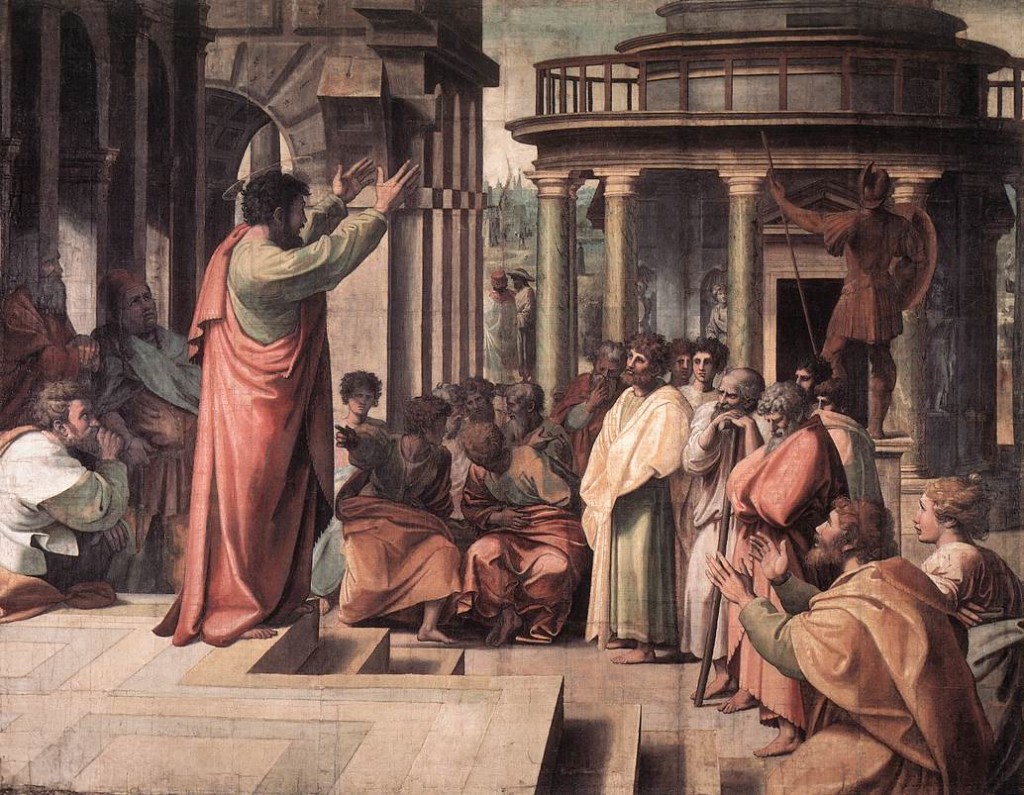
Paul, Preaching the Gospel on Mars Hill
This is something that I have been running into over the last two years or so. "Evangelical Universalism" is a doctrine held by people who claim to honor Scripture, but believe that all humans, without exception, will eventually be saved.

I admit that I am mystified by any such assertion. More particularly, I see explicit statements in Scripture that preclude such a possibility. I am including statements of judgment against unbelievers. However, the Evangelical Universalists (hereafter, EU's) aren't moved by those statements. Therefore, I am going to take a different tack.

To my mind, the bluntest statement precluding any form of universalism, evangelical or otherwise, is one sentence from Paul (Romans 14:23): "Whatever does not proceed from faith is sin." That one sentence leaves no room to suppose that there can be an unconscious means to eternal life. Rather, all such unconscious motivation is itself sin. Rather, what pleases God is only that which arises from faith, which must mean a knowledge and acceptance of His nature, His word, and the rule of life that He has given us in the Bible.

The writer of the Epistle to the Hebrews (either Paul or a close associate of his) stated it even more forcefully: "Without faith it is impossible to please Him, for whoever would draw near to God must believe that He exists and that He rewards those who seek Him." He repeats the requirement of faith, but then adds content to that faith. That is, faith, per se, faith in faith, is not meritorious, but rather faith in the proper object!

The EU movement claims a scriptural basis, in their effort to retain their "evangelical" bonafides. Yet, just by these two verses, I think they are completely excluded from making any such claim legitimately.