Saturday, November 17, 2018

The Continuing Obligation of the Law of God

Among professing Christians, there is a competition to find ways to twist the second clause of Romans 6:14: "You are not under law but under grace." For some reason, those interpretations never involve the first clause of the sentence. You will hear different versions, such as that the Law was done away in Christ, or that it was only for Jews, not Gentiles. But, in whatever way, such people think that the truly spiritual person despises the biblical Law.

I don't believe any such thing. Nor did the author of Romans, the Apostle Paul.

Consider what he said earlier in that same epistle: "Since they did not see fit to acknowledge God, God gave them up to a debased mind to do what ought not to be done. They were filled with all manner of unrighteousness, evil, covetousness, malice. They are full of envy, murder, strife, deceit, maliciousness. They are gossips, slanderers, haters of God, insolent, haughty, boastful, inventors of evil, disobedient to parents, foolish, faithless, heartless, ruthless. Though they know God’s righteous decree that those who practice such things deserve to die, they not only do them but give approval to those who practice them" (Romans 1:28-32). OK, so "they" who? The context is a description of the unrighteousness of unbelievers. And to whom is the passage addressed? While the Church at Rome included Jews, it was predominantly a Gentile church, including members even of the emperor's family (Philippians 4:22). So, Paul is talking to Gentile Christians about unbelievers, and describes horrific sins that are properly subject to capital punishment. According to what? Not according to Roman law. Rather, according to God's law (compare I Timothy 1:8-11).

These verses are contrary to the whole popular evangelical theology of Law, which is properly known as antinomianism. The moral law is still in force, whether for Jew or for Gentile.

The Westminster Confession of Faith (XIX:5) correctly summarizes this: "The moral law doth forever bind all, as well justified persons as others, to the obedience thereof; and that not only in regard of the matter contained in it, but also in respect of the authority of God the Creator who gave it. Neither doth Christ in the gospel any way dissolve, but much strengthen, this obligation."

Wednesday, November 14, 2018

Faith of the Prophets versus the Faithlessness of Arminianism

"O LORD, You are my God; I will exalt You; I will praise Your name, for You have done wonderful things, plans formed of old, faithful and sure" (Isaiah 25:1). 

Recently, I have been in conversations with Arminians in which they claimed that predestination is based in foreknowledge. That part is fine. However, then they claim that "foreknowledge" merely means knowing in advance, denying any element of predetermination. Thus, they claim, God predestines those whom He knew
in advance would believe in Him. That imposes a tautology on God.

However, these Arminians build their doctrine on their (ab)use of one single word (used in various forms five times), and ignore everything else.

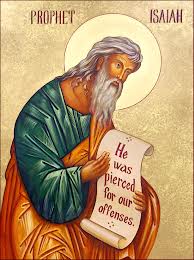
Note, for example, the verse quoted above. If that isn't predetermination, then language has no meaning. It makes no allowance for a passive deity, who merely rubberstamps the sovereign choices of men. The Prophet describes a God who makes and actualizes His own sovereign plans.

And notice, too, that Isaiah considers that concept one for which to be grateful!

So, when Arminians are doing their handwringing for the same thing for which Isaiah praises God, what are we to surmise about the faith of Arminians? 

For one thing, it certainly isn't biblical!

Saturday, November 10, 2018

The Daughter of Jairus versus Soul Sleep

In Luke 8:40-42, 49-56, the Evangelist tells us the story of Jesus's healing of the daughter of Jairus, the leader of a synagogue. We aren't told what the girl's malady was. However, Jesus is interrupted on His way to her when He was distracted by the woman with the issue of blood (verses 43-48), and the girl dies. To say that He was interrupted is not to say that He was caught by surprise, of course. These events happened according to His providence.

In the case of the girl, Luke the Physician makes an odd observation: "Her spirit returned and she arose immediately" (verse 55). I don't recall a similar comment from any of His other healings or resuscitations.

I want to focus on that one phrase, "her spirit returned to her."

As is commonly known, Jehovah's Witnesses and Seventh-Day Adventists assert that the spirit has no existence apart from the body, commonly called "soul sleep." While the details differ, they both claim that whatever spirit there is remains in the grave with the body.

But then we have this verse. "Her spirit returned."

If the spirit of the dead is unconscious, remaining with the corpse, as SDA's believe, or obliterated, to be re-created at the Judgment, as Jehovah's Witnesses claim, then from where did her spirit return? At most, it should have remained unconscious in her body.

Of course, the orthodox view has no problem explaining this, since we understand that the existence of human spirit, while joined with the body, is distinct from it. When a believer dies, he or she is immediately ushered into the presence of Jesus in Heaven (II Corinthians 5:8, Philippians 1:21-23). The spirit of the unbeliever is immediately dismissed to Hell (John 3:18, II Peter 2:9). That is because each person is judged by his condition at death (Hebrews 9:27). Witnesses and SDA's (together with many misinformed Christians) wrongly believe that the judgment awaits the great Judgment at the return of Christ. Really? Are we supposed to believe that Jesus doesn't know our spiritual condition until then? No, but rather that judgment is a public display of the righteousness of God's justice.

Whether the girl was regenerate or not, we are not told. Whether she returned from Heaven or Hell, we cannot know.  Why she should want to return if she were in Heaven, we do not know. Those questions are often asked, but any possible answer would only be speculation.

Think of Pilate's judgment of Jesus. Pilate examined Him privately, and then went out to the crowd to announce his judgment. He didn't make that judgment in front of the crowd, but announced it "at the feast" (Matthew 27:15, Mark 15:6, Luke 23:13). This is the same division between the personal judgment of each person at death and the general judgment at the end of history

Wednesday, November 7, 2018

Jesus and Alcohol

I often see people of various Christian professions - fundamentalist, Mormon, Jehovah's Witness, etc. - who claim that drinking alcohol is an absolute sin. Even my own church, which does not hold to that doctrine, serves grape juice for communion, in order not to offend teetotalers, in spite of the explicit biblical instruction that it is to be wine!

I have dealt with this question before. However, this time, I am going to take a different tack.

In Luke 7:33-34, we have the words of Jesus: "John the Baptist has come eating no bread and drinking no wine, and you say, ‘He has a demon.’ The Son of Man has come eating and drinking, and you say, ‘Look at him! A glutton and a drunkard, a friend of tax collectors and sinners!'"

Do you see His complaint? The Pharisees had seen John the Baptist, not drinking wine, and criticized him for it. Now, they see Jesus, drinking wine, and they still criticize in the opposite direction. His point is that the Pharisees were more about criticizing than they were about consistency or real morality.

Yet, we must not gloss over His own words indicating that He drank wine! 

Thus, my question to those who claim that drinking alcohol is always a sin is this: Are you not putting yourself in the same place as those Pharisees, for which Jesus rebuked them? And, furthermore, do you believe that your standard of holiness is higher than that of Jesus?


Saturday, November 3, 2018

The Salvation of Men: Impossible for Us, but Certain by Jesus

I have been having a lot of interactions with Arminians recently. They all want to hold on to some natural ability in men to bring themselves to Jesus, a form of Pelagianism. And this in spite of what we are told in Scripture: "No one seeks for God" (Romans 3:11). They just can't let go of some modicum of sovereignty for the human will. 

Jesus addressed this same attitude in His disciples. The Bible tells us the story of the interaction between Jesus and a rich man (Mark 10:17-31). To show where the man's true loyalties lay (as addressed in the First Commandment), He commanded him to give all of his wealth to the poor, and then to come follow Him. However, the man chose his possession rather than Jesus.

In response, Jesus told His disciples, "It is easier for a camel to go through the eye of a needle than for a rich person to enter the kingdom of God" (verse 25). Shocked, His disciples despaired, "Then who can be saved?" (verse 26). 

The response of Jesus is the climax of the story: "With man it is impossible, but not with God. For all things are possible with God" (verse 27). The disciples thought what many today still think, that it is easier to trust God when you're wealthy. Yet, Jesus tells them that it is impossible for a rich man to come to Jesus on his own. And if it is impossible for the rich man, who would have the least reason to resist, then how much harder it must be for anyone else. With man, it is impossible. Or, as Paul put it, "No one seeks for God."

Yet, Jesus did not leave His disciples in their despair. Rather, He told them, "Not with God, for all things are possible with God" (verse 27). God does not leave men in our natural, unsalvable condition. Rather, He announces, "I will have mercy on whom I have mercy, and I will have compassion on whom I have compassion" (Romans 9:14). Where men are naturally unsalvable, hardened and lost in our sin, impossible to save, He presents Himself in His mercy, which overcomes our resistance, and saves us by giving us faith in the finished redeeming work of Jesus. 

This is the marvel of what Calvinism has over Arminianism. The Arminian defends that which is impossible, leaving sinners with no hope of salvation.  The Calvinist looks to Jesus alone, and trusts Him to break through our resistance, causing us to love and obey Him, and to turn to Jesus alone for our eternal life.


Wednesday, October 31, 2018

The God of the Covenant versus the God of Dispensationalism

The doctrine taught by dispensationalists (that is, classical dispensationalists, such as Scofield) that I find most objectionable is that God has provided different methods of salvation down through history, as man has failed each previous one. Some of them claim, for example, that Jews were (or still are, some say) saved by obeying the Law. They claim that salvation by grace through faith only became an option when the Jews rejected their Mosaic Messiah by killing Jesus. Grace through faith is Plan B. Actually it is Plan G, if you go by Scofield's seven dispensations.

I think that is ridiculous! And, apparently, so do most dispensationalists, because few still hold to that doctrine. Yet, even these progressive dispensationalists, as they call themselves, place a firewall between the Old Testament and the New Testament. In order still to be applicable, they claim, an Old Testament commandment must be repeated in the New Testament.

Where is the biblical justification for that claim? I can't seem to find it.

Rather, I find just the opposite.

One problem with that is that it has God coming up with a new plan, because His previous ones have failed. What kind of God is that?

In contrast, the bible tells us of God that, "God is not man, that He should lie, or a son of man, that He should change His mind. Has He said, and will He not do it? Or has He spoken, and will He not fulfill it?" (Numbers 23:19). And, "The Glory of Israel will not lie or have regret, for He is not a man, that He should have regret" (I Samuel 15:29). In other words, the God of the Bible is not a bumbling human being, who cannot achieve what He says, and has to come up with contingency plans! Yet, that is exactly the God described by dispensationalism.

In contrast, the God described by covenant theology is a God who has had one plan from before the creation of the world. He has had one expectation, that man would fall into sin; it was not a surprise. And He has had one plan to deal with sin, to send His divine Son to shed His own blood for those sinners chosen for salvation. That plan was first revealed, in seed form, in Genesis 3:15, called the Protevangelium by theologians: "I will put enmity between you and the woman, and between your offspring and her offspring; He shall bruise your head, and you shall bruise His heel." And that plan has been shown in increasing light ever since, until it was achieved on the cross and in the resurrection of that same Son, Jesus Christ. More light, not different light.

Saturday, October 27, 2018

The True Tradition of the Eucharist Held by the Reformed

The Church of Rome teaches that the elements of the Eucharist - or communion, if you prefer - are literally changed into the flesh and blood of Jesus. The Council of Trent made that dogma official: "Because Christ our Redeemer said that it was truly His body that He was offering under the species of bread, it has always been the conviction of the Church of God, and this holy Council now declares again, that by the consecration of the bread and wine there takes place a change of the whole substance of the bread into the substance of the body of Christ our Lord and of the whole substance of the wine into the substance of His blood. This change the holy Catholic Church has fittingly and properly called transubstantiation." Notice especially the assertion that "it has always been the conviction of the Church of God." 

However, I deny that it has "always been the conviction." Rather, within the Catholic Church, there was a debate on the topic, and the doctrine of transubstantiation merely became the dominant view.

For example, Saint Augustine very explicitly states that Jesus is present in the Eucharist, but only to the faithful! He starts Sermon 272, which is about this very topic, with, "What you see on God's altar, you've already observed during the night that has now ended. But you've heard nothing about just what it might be, or what it might mean, or what great thing it might be said to symbolize. For what you see is simply bread and cup - this is the information your eyes report. But your faith demands far subtler insight: the bread is Christ's body; the cup is Christ's blood. Faith can grasp the fundamentals quickly, succinctly, yet it hungers for a fuller account of the matter." I recommend reading the whole thing (it is very brief), so that you can see that I have not  misrepresented his overall message. He describes the elements as the body and blood of Christ to the faithful, not as a physical reality to which the unbeliever would have access.

This view was unchallenged until a debate broke out between Radbertus and Ratramnus in the Ninth Century. Radbertus advocated the doctrine of transubstantiation as we now know it. Ratramnus defended the Augustinian view of a spiritual real presence to the believer only. The position of Radbertus came to dominate, and was later spread further by Aquinas and, as quoted above, Trent.

The significance of this is that the view expounded by Augustine and Ratrumnus is exactly that taught by Calvin and held by the orthodox Reformed (excluding Zwingli and his descendants) to this day. For example, the Westminster Confession of Faith XXIX:7 (1646) says, "Worthy receivers, outwardly partaking of the visible elements in this sacrament, do then also inwardly by faith, really and indeed, yet not carnally and corporally, but spiritually, receive and feed upon Christ crucified, and all benefits of His death: the body and blood of Christ being then not corporally or carnally in, with, or under the bread and wine; yet as really, but spiritually, present to the faith of believers in that ordinance, as the elements themselves are to their outward senses."

What we see here is that the claims of Rome to be holding to the "traditional" view in her doctrine of transubstantiation is committing historical revision. The fact is that she repudiated what had been the historical view to adopt a particularly-superstitious perversion. It is the Reformed alone who hold the historical doctrine of the church.