Wednesday, August 9, 2023

Wicked America in Scripture

"Your prophets have seen for you false and deceptive visions; they have not exposed your iniquity to restore your fortunes, but have seen for you oracles that are false and misleading." - Lamentations 2:14 

As I read this verse again recently, I was struck by how well it describes today's America. Ours is a country in which an overwhelming majority of the people describe ourselves as Christians. Yet immorality is rampant, and our government is progressing further and further into fascism. How can these things coexist with that Christian profession? 

When Europeans first colonized our continent, they brought with them a vigorous and all-encompassing faith. the settlers on the Mayflower signed a compact, an early form of constitution, committing themselves and their new colony to the glory of God. Later, the Puritans of the New England colonies built their laws on the Scriptures, conscientiously establishing a society which practiced the justice of God. 

Yet, now, we their descendants look on a country which celebrates "pride" in the very things which were crimes in those days. And their church-centered communities have evolved into a society in which naming the name of Christ is considered to be a sign of fanaticism. 

The answer is seen above, spoken to Israel an estimated twenty-six centuries ago. Due to liberalism, dispensationalism, and pietism, our clergy have turned silent about the sins of our culture. Instead, they preach nice things, uncontroversial things, inoffensive things. There is little talk of sin, except to criticize those who still speak biblically. The sin is no longer the wicked acts of men, but rather the wicked act of pointing out the wickedness. 

Ancient Israel was punished for her apostasy by the destruction and exile perpetrated by the Babylonians. What is the judgment waiting for America? 


Saturday, May 27, 2023

The Scriptures as the Basis of Our Apologetic

 Psalm 119 is the longest chapter in the Bible, with 176 verses. Of those verses, only three don't contain a word referring to the scriptures, such as law, commandments, or testimonies. The Psalm is 176 references to the benefits of God's Word in the life of the believer. I will focus on the section labeled "Waw," verses 41-48. 

"Let Your steadfast love come to me, O Lord, Your salvation according to Your promise; then shall I have an answer for him who taunts me, for I trust in your Word. And take not the word of truth utterly out of my mouth, for my hope is in Your rules. I will keep Your law continually, forever and ever, and I shall walk in a wide place, for I have sought your precepts. I will also speak of Your testimonies before kings and shall not be put to shame, for I find my delight in Your commandments, which I love. I will lift up my hands toward Your commandments, which I love, and I will mediate on Your statutes" (Psalm 119:41-48).  

The Psalmist here uses the same encouragement that Jesus gave to His disciples: "Behold, I am sending you out as sheep in the midst of wolves, so be wise as serpents and innocent as doves. Beware of men, for they will deliver you over to courts and flog you in the synagogues, and you will be dragged before governors and kings for My sake, to bear witness before them and the Gentiles. When they deliver you over, do not be anxious how you are to speak or what you are to say, for what you are to say will be given to you in that hour. For it not you who speak, but the Spirit of your Father speaking through you" (Matthew 10:16-20). 

In both passages, it is the source of our answers that should give us confidence, because it is the very Word of God, inspired  by the Holy Spirit. The rest of Psalm 119 relays the means to this end, the constant study of, and obedience to, the Word of God. 

What is often forgotten in our apologetical confrontations is that there is no promise in Scripture that God will give success to our clever response. Rather, He promises His power to attend His word: "So shall My word be, that goes out from My mouth; it shall not return to Me empty, but it shall accomplish that which I purpose, and shall succeed in the thing for which I sent it" (Isaiah 55:11). 


Wednesday, May 24, 2023

Is Rape a Justification for Abortion?

Rape is a horrible crime. Not only does it violate the physical wholeness of the victim, but it is also an assault on her mental wholeness. It often causes an unjustified sense of shame, and it always deprives her of a sense of security, especially around men. Some people claim that those consequences justify making rape an exception to the immorality of rape. Doesn't that baby cause the mother continuing emotional damage from the attack? 

And a moral person can agree with that statement. A baby resulting from rape is a constant physical reminder of the worst experience most people can imagine. However, the question of whether that justifies aborting the baby is a step beyond sympathy. 

"Fathers shall not be put to death because of their children, nor shall children be put to death because of their fathers. Each one shall be put to death for his own sin" (Deuteronomy 24:16). 

This verse is an expression of God's justice, one with which most people would otherwise agree. Contrary to the custom in the ancient world, no person is responsible for the criminal act of his kin. In the example before us, that applies to the child of a rapist. No one claims that there is any moral culpability in the child from the circumstances of his conception. It is the father alone who should receive the legal penalty for the crime of rape. 

Therefore, from the perspective of God, rape is no justification for the additional act of violence against an innocent preborn child. This would apply as well to babies conceived by incest. 


Saturday, May 6, 2023

God's Judgment on Abortion

"They [i. e., Israel] served their idols, which became a snare to them. They sacrificed their sons and daughters to the demons; they poured out innocent blood, the blood of their sons and daughters, whom they sacrificed to the idols of Canaan, and the land was polluted with blood" (Psalm 106:36-38).

I have been reading of  "progressive Christians" who claim that the Bible says nothing about abortion. Yet here we have God's wrath spoken against the sacrifice of the children of Israel to pagan deities. If that is not the essence of abortion, I don't know how we could put it more clearly. 

Are Americans not aborting our sons and daughters as sacrifices to something - the universe, maybe - as an act of worship in exchange for prosperity? Our jobs will be better, we will have more money, we will avoid embarrassment, however we justify it. It is that paganism which is judged by God, because it is the shedding of blood - innocent blood - as an exchange for personal prosperity, the ultimate act of self-involvement!


Wednesday, May 3, 2023

Book of Numbers and Sprinkling as the Mode of Baptism

Most Christians would say that Numbers is a book that they avoid reading. And I admit that the censuses of Israel, from which the book gets its name in English, are tedious, and I usually skip over them. However, to skip the entire book is to miss some hidden gems within it. 

What struck me recently is the rite of purification, described in chapter 19: "Now the Lord spoke to Moses and to Aaron, saying, 'This is the statute of the law that the Lord has commanded: Tell the people of Israel to being you a red heifer without defect, in which there is no blemish, and on which a yoke has never come. And you shall give it to Eleazar the priest, and it shall be taken outside the camp and slaughtered before him. And Eleazar the priest shall take some of its blood with his finger and sprinkle some of its blood toward the front of the tent of meeting seven times. And the heifer shall be burned in his sight. Its skin, its flesh, and its blood, with its dung, shall be burned. And the priest shall take cedarwood and hyssop and scarlet yarn and throw them into the fire burning the heifer... And a man who is clean shall gather up the ashes of the heifer and deposit them outside the camp in a clean place. And they shall be kept for the water for impurity for the congregation of the people of Israel; it is a sin offering'" (Numbers 19:1-6, 9, emphasis added). 

So we have a ceremony described by God, in which a heifer, that is, a cow that has not yet been bred or worked, is to be sacrificed. Its blood is to be sprinkled before the tabernacle, the symbol of God's presence among His people. It was then to be burned and its ashes gathered and saved for "the water of impurity." 

"'This is the law when someone dies in a tent: everyone who comes into the tent and everyone who is in the tent shall be unclean seven days... For the unclean they shall take some ashes of the burnt sin offering, and fresh water shall be added in a vessel. Then a clean person shall take hyssop and dip it in the water and sprinkle it on the tent and on all the furnishings and on whoever touched the bone or the slain or the dead or the grave. And the clean person shall sprinkle it on the unclean on the third day and on the seventh day. Thus, on the seventh day he shall cleanse him, and he shall wash his clothes and bathe himself in water, and at evening he shall be clean'" (Numbers 19:14, 17-19). Reference to sprinkling can also be found in verse 21. Thus, the rest of the ceremony is that the ashes from the heifer would be mixed with water and sprinkled on the unclean person, and he would be cleansed. 

Finally, in Isaiah 52:15, part of the Suffering Servant passage, we read the words of the prophet to Israel of the coming Messiah who would cleanse His people from their sins. How? "He shall sprinkle many nations." The blood of Jesus is to sprinkled by faith on unclean sinners just as the ashes of the heifer were sprinkled on the unclean under the law of Moses. That is no coincidence! The one is a type of the other. 

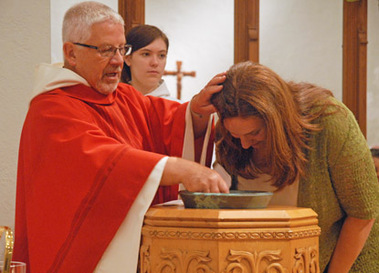
To my Baptist brethren, I would also point out that the recipient of cleansing wasn't dipped in the water of impurity. On the contrary, it was the finger of the priest, who would then sprinkle both the blood of the sacrifice and the water of cleansing. This strongly refutes the claim of Baptists that baptism is properly done only by immersion. Rather, the type in Numbers indicates that the proper mode of baptism is by sprinkling (by which I do not mean that baptisms by other modes are, therefore, invalid). 

This Scripture points to what the Westminster Assembly would say on the subject of baptism some three millennia later: "Dipping of the person into the water is not necessary; but baptism is rightly administered by pouring or sprinkling water upon the person" (Westminster Confession of Faith XXVIII:3).


Saturday, April 29, 2023

Pentecost and the Christian Sabbath

In Leviticus 23, God reveals to Moses the holy festivals that He has given to Israel for His worship. He introduces these festivals with a renewal of the Sabbath: "Six days shall work be done, but on the seventh day is a Sabbath of solemn rest, a holy convocation. You shall do not work. It is a Sabbath to the Lord in all your dwelling places" (Leviticus 23:3). That opening may strike us as odd, because we don't think of the Sabbath as feast day. However, it is significant, because it sets the context of what is to follow, a not accidental introduction. 

Moses then describes the Passover, perhaps the most important of the Jewish festivals. Then the Feast of Firstfruits, a holiday much like our American Thanksgiving. 

Then, in verse 15, God turns to the Feast of Weeks, better known to us by its Greek name, Pentecost. "You shall count seven weeks from the day after the Sabbath, from the day that you brought the sheaf of the wave offering. You shall count fifty days to the day after the seventh Sabbath. then you shall present a grain offering of new grain to the Lord" (Leviticus 23:15-16). So fifty days was to be counted from the Sabbath of Passover. That would be seven weeks, each ending on the seventh day. Then one more day, the first day of the eight week. "You shall make a proclamation on the same day. You shall not do any work. It is a statute forever in all your dwelling places throughout your generations" (Leviticus 23:21). 

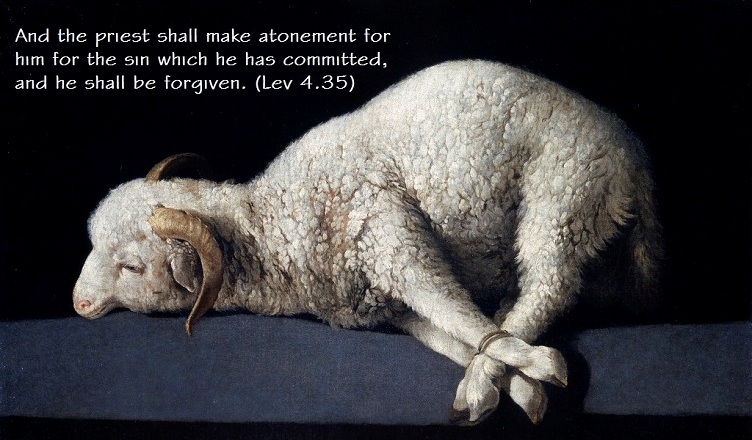
So we have the account of instructions to Moses, in which he was to celebrate the day of Passover, the anniversary of the day that the angel of death passed over every Israelite household that was marked by the blood of a sacrificial lamb. To whom did that point? To Jesus, the Lamb of God who would mark the elect with blood so that God's judgment would pass over us. Then another holiday is commanded, following seven Jewish Sabbaths plus one day. What happened on the day to which the feast pointed? The coming of the Holy Spirit (Acts 2) as the gift to His people from the resurrected and ascended Christ. 

That next day was Sunday, just as Sunday was the day on which Jesus rose from the dead, and just as the Apostles made Sunday the day of Christian gathering and worship (Acts 20:7 and I Corinthians 16:2). After a transitional period in Acts, we never see again a Christian activity on a Saturday. 

Did the Apostles use the word "Sabbath" for that day? No. We can grant that without affecting the argument presented here. However, we have a saying in America: "If it walks like a duck and quacks like a duck, then it is a duck." In the same way, as Moses foretold the shift of the Sabbath from the last to the first day of the week and the Apostles treated the first day like the Sabbath, then it is the Sabbath, whether the word occurs there or not. 


Saturday, April 22, 2023

God's Judgment on Human Sacrifice: Abortion

"Any one of the people of Israel or of the strangers who sojourn in Israel who gives any of his children to Molech shall surely be put to death. The people of the land shall stone him with stones. I Myself will set My face against that man and will cut him off from among his people, because he has given one of his children to Molech, to make My sanctuary unclean and to profane My holy name. And if the people of the land do at all close their eyes to that man when he gives one of his children to Molech, and do not put him to death, then I will set My face against that man and against his clan and will cut them off from among their people, him and all who follow him in whoring after Molech.

-Leviticus 20:2-5 

There is a lot in this short passage. 

First, what was it to give one of ones children to Molech? Molech was a Canaanite deity. After the Conquest, he was adopted by the degenerating people of Israel, and that adoption flowered into a cult to an idol, marked by the sacrifice of small children, their own children, to the idol in return for material prosperity. Of course, no one walks into Planned Parenthood for an appointment with a priest of Molech, but the mindset is the same. The mother, at least, expects that her life will be better if she executes the child within her womb. The father may or may not be party to that choice. 

Second, what is the reaction of God, the true and living God of the Bible? His judgment is severe, demanding the public execution of the father of that child. And that itself is interesting, that He directs his judgment less toward the mother and more toward the father. After all, he conceived a child on this woman, and then failed to give her the material and emotional support necessary for her to sustain that new life. Not, of course, that we can assume that He places no blame on the mother. It is a matter of the greater accountability for fathers, the same fathers that are denied a legal right to block the murder of their children in modern America. Yet no law requires fathers to be silent. 

Notice, third, that God does not stop merely at the parents of the aborted child. Rather, He castigates the community which turns a blind eye to the horror of human sacrifice. Ignoring murder is a crime in its own right. Not as severe, perhaps, as the murder, but bringing, not material blessings, but rather material curses on that community. Do we not see this in America? As we have devalued life in the womb, we have devalued life everywhere in society, even as many act bewildered at the cheapness of death in these times.