Wednesday, June 29, 2022

The One and Only People of God

"Therefore, remember that, at one time, you Gentiles in the flesh, called the 'uncircumcision' by what is called the 'circumcision,' which is made in the flesh by hands - remember that you were, at that time, separated from Christ, alienated from the commonwealth of Israel and strangers to the covenants of promise, having no hope and without God in the world. But now in Christ Jesus, you who were once far off have been brought near by the blood of Christ. For He Himself is our peace, who has made us both one and has broken down in His flesh the dividing wall of hostility by abolishing the law of commandments expressed in ordinances, that He might create in Himself one new man in place of the two, so making peace, and might reconcile us both to God in one body through the cross, thereby killing the hostility. And He came and preached peace to you were far off and peace to those who were near. For through Him we both have access in one Spirit to the Father" (Ephesians 2:11-18). 

The hallmark of classical dispensationalism is its radical discontinuity between Israel and the church. The former is said to have been saved by obeying the Mosaic law, while the latter is saved by grace. Scofield supposed that Jesus intended to be made king of Israel at His first coming, but was surprised, instead, by His rejection by the Jews. As a result, He made an impromptu, unplanned parenthesis for the church, until such time as He takes the church away and renews the works program for Israel. Most dispensationalists today have rejected that rigid program of to-and-fro methods of salvation. 

They reject it with good cause.

As we see in Paul's writing quoted above, the program of Jesus was never to establish two systems of salvation, but rather to  bring in the Gentiles, excluded under the Mosaic program, into His only method of justification, which is by grace through faith. By this plan, He created not two distinct peoples of God, but rather united two cultures, one blessed and the other previously excluded, into one people, saved by the atoning death of Christ on the cross, applied to all by grace through faith alone


Saturday, June 25, 2022

The Destiny in This World of the Godly and of the Wicked: Psalm 37

In Deuteronomy, Moses laid out for the Israelites the blessings and curses that would come from the obeying or disobeying of the commandments of God. In Psalm 37, David, the man after God's own heart, lays out the same dichotomy in poetic form. Even as poetry, though, the psalm has much to say to modern America regarding her growing devolution from biblical Christianity. 

On the plus side, the godly are shown a wonderful future. Though David speaks generally, not necessarily as to individual experience, the blessings should produce a delighted hope in the heart of the believer. 

"Trust in the Lord and do good; dwell in the land and befriend faithfulness. Delight yourself in the Lord, and He will give you the desires of your heart. Commit your way to the Lord; trust in Him and He will act... The meek shall inherit the land and delight themselves in abundant peace... The Lord knows the days of the blameless, and their heritage will remain forever; they are not put to shame in evil times; in the days of famine, they have abundance... The steps of a man are established by the Lord, when he delights in His way; though he fall, he shall not be cast headlong, for the Lord upholds his hand. I have been young, and now am old, yet I have not seen the righteous forsaken or his children begging for bread. He is ever lending generously, and his children become a blessing... Wait for the Lord and keep His way, and He will exalt you to inherit the land; you will look on when the wicked are cut off... The salvation of the righteous is from the Lord; He is their stronghold in the time of trouble. The Lord helps them and delivers them from the wicked and saves them, because they take refuge in Him" (Psalm 37:3-5, 11, 18-19, 23-26, 34, 39-40). 

In these verses, we see the same blessings promised for obedience in Deuteronomy 28: agricultural bounty, happy and blessed children, wealth, and the inheritance of the land. 

The cursings promised to the wicked provide a stark contrast: "They will soon fade like the grass and wither like the green herb... In just a little while, the wicked will be no more; though you look carefully at his place, he will not be there... The wicked plots against the righteous and gnashes his teeth at him, but the lord laughs at the wicked, for He sees that his day is coming. the wicked draw the sword and bend their bows to bring down the poor and needy, to slay those whose way is upright; their sword shall enter their own heart, and their bows shall be broken... The wicked will perish; the enemies of the Lord are like the glory of the pastures; they vanish - like smoke they vanish away... The wicked watches for the righteous and seeks to put him to death. The Lord will not abandon him to his power or let him be condemned when he is brought to trial... I have seen a wicked, ruthless man, spreading himself like a green laurel tree. But he passed away, and behold, he was no more; though I sought him, he could not be found... Transgressors shall be altogether destroyed; the future of the wicked shall be cut off" (Psalm 37:2, 10, 12-15, 20, 32-33, 35-36, 38). 

What we see of the wicked is a delusion of cleverness, but his ways lead only to futility and brevity of life. His posterity are cut off, and the land passes to the righteous. 


Saturday, June 18, 2022

The Intra-Trinitarian Covenant as the Starting Point for Paul


In two places, Paul initiates a theological point  by placing the foundation of his doctrine before time. In Ephesians 1:4, he tells us of the choosing of the elect "in Him," that is, in Christ, "before the foundation of the world." And again in II Timothy 1:8-10, he tells us that the elect are the objects of His calling "before the ages began," but which has now been manifested. We see similar phrases used by John in John 17:24 and Revelation 13:8, and by Peter in I Peter 1:20. 

In each case, we see the salvific purposes of God exercised in time, in history, but based on decisions made before time and history. If it was before creation, then in what context did God work out these plans? Within the fellowship of the three Persons of the Trinity, co-eternal and co-equal. Paul tells us of the plan among the Father (such as verses 3 and 5), the Son (verses 3,4, and 5), and the Holy Spirit (verse 13). Thus Paul displays to us that his soteriology is inherently trinitarian; God's purposes could be carried out only by the intimate involvement of all three of the divine Persons. 

I have shown the scriptural glimpses of this intra-Trinitarian covenant, or convenant of redemption, from the Old Testament (such as here and here), but we must also see that it underpins the theology of the New Testament. Among other things, it necessarily precludes any christological heresy denying the Trinity or any of the Persons, or their deity and preexistence, especially the heresy of modalism. But it also shows the step by step purposes of God in the redemption of His people, not for our sake, but because of the Father's love of the Son. Thus, it cannot fail or be undone. The intra-Trinitarian covenant provides a sound basis for the assurance of salvation. that again precludes most of the aberrant sects, who all maintain a fragility of their version of salvation, such that it can be lost at any time. 

Saturday, June 11, 2022

Christian Apologetics Against Unbelief in Psalm 10

"The wicked boasts of the desires of his soul, and the one greedy for gain curses and renounces the Lord. In the pride of his face the wicked does not seek Him; all his thoughts are, 'There is no God.' His ways prosper at all times; Your judgments are on high, out of his sight; as for all his foes, he puffs at them. He says in his heart, 'I shall not be moved; throughout all generations, I shall not meet adversity'... He says in his heart, 'God has forgotten; He has hidden His face, and He will never see it'... Why does the wicked renounce God and say in his heart, 'You will not call me to account'?" (Psalm 10:3-6, 11, 13). 

This is poetry, from an unknown poet, written hundreds of years earlier, but should call to mind a later prose text: "The wrath of God is revealed from Heaven against all ungodliness and unrighteousness of men, who, by their unrighteousness, suppress [their awareness of] the truth... And, since they did not see fit to acknowledge God, God gave them up to a debased mind to do what ought not to be done. they were filled with all manner of unrighteousness, evil, covetousness, malice. They are gossips, slanderers, haters of God, insolent, haughty, boastful, inventors of evil, disobedient to parents, foolish, faithless, heartless, ruthless. Though they knew God's righteous decree that those who practice such things deserve to die, they not only do them but give approval to those who practice them" (Romans 1:18, 28-32). Also Romans 3:18, "There is no fear of God before their eyes." 

What the two writers have in common is something that we often forget about the unbeliever: That he knows that the biblical god exists and holds us accountable for our wicked acts. The difference is that the believer repents of those actions, and flees to Christ for redemption and forgiveness. the unbeliever just shuts the awareness out of his mind, believing, though irrationally, that, if he merely suppresses his knowledge of God, then God will not observe his wickedness or call him to judgment. 

However, denying the consequences in no way dispenses with them. "But You do see, for You note mischief and vexation, that You may take it into Your hands; to You the helpless commits himself; You have been the helper of the fatherless. Break the arm of the wicked and evildoer; call his wickedness to account till You find none. The Lord is king forever and ever; the nations perish from his land. O Lord, you hear the desire of the afflicted; You will strengthen their heart; You will incline Your ear to do justice to the fatherless and the oppressed, so that man who is of the earth may strike terror no more" (Psalm 10:14-18).


Saturday, May 28, 2022

The Importance of the Bad News to Prepare for the Good News

"Against such as these [i. e., unbelievers], the doctrine of justification may be defended, but it is vain to attempt their satisfaction in it. Whilst men have no sense in their own hearts and consciences of the spiritual disorder of their souls, of the secret continual actings of sin with deceit and violence, obstructing all that is good, promoting all that is evil, defiling all that is done by them; who are not engaged in a constant watchful conflict against the first motions of sin, to whom they are not the greatest burden and sorrow, causing them to cry out for deliverance from them; they will reject what is proposed about justification through the righteousness of Christ imputed to us. Neither the consideration of the holiness or terror of the Lord, nor the severity of the law, nor the promise of the Gospel, nor the secret disquietude of their consciences can prevail with them, who have such slight conceptions of the state and guilt of sin, to fly for refuge unto the only hope set before them, or really and distinctly to comport with the only way of salvation." -John Owen, "The Doctrine of Justification by Faith Through the Imputation of the Righteousness of Christ"

In his well-known prolix manner, Owen is advising us of an important consideration: until the unbeliever is conscious of his sin and its consequences, he has no interest in hearing about what Jesus has done for His people. This is a message that too many American evangelicals need to hear, because they suffer from the Gospel of Joel Osteen, that "Jesus loves everybody and wants us to be happy." It is too negative, we suppose, to tell about the sin in men and God's hatred of it. Yet, that is why the evangelical church has turned into a circus of self-esteem, rather than the body of Christ confronting the fallen world.

Wednesday, May 25, 2022

Free Grace and the Creator-Creature Distinction

"Esteem not yourself the better for what you may carry with you. Think not to be accepted because of your present. It is not your money, Isaiah 55:1, John 7:37, nor your double money in your hand that will fetch you corn from above, though it may come from Egypt. Silver and gold, your own works and worthiness, are of no value at the mint of free grace. But there it is, and thence you must have whatever may hinder you welcome at the court of Heaven." -Puritan Elisha Coles, "A Practical Discourse of God's Sovereignty" 

People like to bargain. "If you do X, then I will do Y for you." That is part of our existence as creatures of a similar class. However, seeing our autonomy from our fellow creatures, we imagine that we have a comparable stand with our Creator, offering Him some good works, according to our own standards, in exchange for His forgiveness. 

However, our relationship with God is not of the same sort as that with our fellow creatures. We may be equal to them, and with the autonomous right to offer voluntary exchanges, but neither applies to our relationship as creature to our Creator. 

As our Maker, God retains an absolute right over His creatures. The Bible compares that relationship to that between the potter and his clay: "O House of Israel, can I not do with you as this potter has done? declares the Lord. Behold, like the clay in the potter's hand, so are you in My hand, O House of Israel" (Jeremiah 18:6; see also Romans 9:21). And what does the lump of clay have that it can exchange with the potter to change its form? Nothing. 

That is why the justification of God's people can be only by His voluntary condescension. "What shall we say then? Is there injustice on God's part? By no means! For He says to Moses, 'I will have mercy on whom I have mercy, and I will have compassion on whom I have compassion.' So then, it depends not on human will or exertion, but on God, who has mercy... So then, He has mercy on whomever He wills, and He hardens whomever He wills" (Romans 9:14-18). 


Wednesday, May 18, 2022

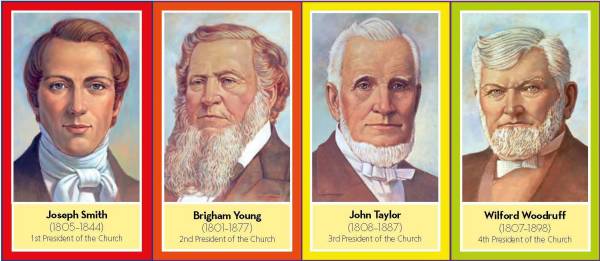
An Ancient Prophetic Warning to Today's Mormons

"The prophets are prophesying lies in My name. I did not send them, nor did I command them or speak to them. They are prophesying to you a lying vision, worthless divination, and the deceit of their own minds. Therefore, thus says the Lord concerning the prophets who prophesy in My name, although I did not send them, and who say, 'Sword and famine shall not come upon this land':  By sword and famine those prophets shall be consumed. And the people to whom they prophesy shall be cast out in the streets in Jerusalem, victims of famine and sword, with none to bury them - them, their wives, their sons, and their daughters - for I will pour out their evil upon them" (Jeremiah 14:14-16). 

This warning was expressed to Israel by a God-sent prophet, because they had been receiving the false prophecies and promises of fake prophets. Those prophets gained status and wealth by making promises to the people, promises which those people gobbled up greedily. Why? Because these prophecies exalted them, in contrast to Jeremiah, who preached warnings and judgments which were true, but not what they wanted to hear. 

In the same way, the modern members of the so-called Church of Jesus Christ of Latter-Day Saints, or more-commonly the Mormons, have their own prophets, who preach to them pleasing words, promising godhood and rewards to them, while those same Mormons turn their backs on true Christians who try to point out the failed prophecies and false doctrines proclaimed by the Mormon prophets.