Thursday, February 19, 2015

Is This the Time for Signs and Wonders?


In the debate between cessationists, those who believe that the Pentecostal gifts were for a particular time only, and continuationists, those who hold that they are permanent gifts in the church, the cessationist case is usually based on I Corinthians 13:10: "When the perfect comes, the partial will pass away," which is understood to refer to the completion of the New Testament canon. And I grant the importance of that. Pentecostals play fast and loose with the implications of continuing revelation, like teasing an unfamiliar dog. But I think there is more in Scripture to indicate that the extraordinary gifts were intended for the apostolic period only, not as a continuing phenomenon.

There are four verses that I want to consider.

The first is Mark 16:20: "They [i. e., the Apostles, v.14] went out and preached everywhere, while the Lord worked with them and confirmed the message by accompanying signs." This verse is especially important, because it is in the context of one of the strongest descriptions of the Pentecostal gifts, especially verses 17 and 18.

Next is Acts 14:3: "They [i. e., Paul and Barnabas] remained for a long time, speaking boldly for the Lord, who bore witness to the word of his grace, granting signs and wonders to be done by their hands."

The third is II Corinthians 12:12: "The signs of a true apostle were performed among you with utmost patience, with signs and wonders and mighty works." Here the context is Paul's defense of his apostleship as equal to that of the original Twelve.

And finally, I refer to Hebrews 2:3-4: "It [i. e., the message of salvation] was declared at first by the Lord, and it was attested to us by those who heard, while God also bore witness by signs and wonders and various miracles and by gifts of the Holy Spirit distributed according to His will."

What do all of these passages have in common?  They refer to signs and wonders, not as a permanent state of the church or as general to all Christians, but rather as proofs of the ministry of the Apostles in their evangelistic work. Now, that office is the role that was ultimately fulfilled by the completion of the canon, thus closing the office of apostleship.

Some Pentecostals, conceding the apostolic connection, claim to have a continuing office of Apostle (as does the Catholic Church). The error of that claim is particularly bold, considering that one of the qualifications for an Apostle was to have seen the resurrected Christ (Acts 1:22). Observe also the doctrines associated with these so-called new Apostles: Pelagianism, Sabellianism, and the arrogance of claims to new revelation. Heresies of a feather flock together!

Monday, February 2, 2015

Bishops in the Church (Part 2): the Bible versus Catholic Tradition

I have addressed this topic more generally here, but I want to emphasize one passage in particular, that of Philippians 1:1. In it, Paul addresses his epistle "to all the saints in Christ Jesus who are at Philippi, with the overseers and deacons."

"Overseers," here, is a translation of the Greek word, "episkopos," which has been brought into English as "bishop." As I have said before, "episkopos," in the New Testament, in used interchangeably with  "presbuteros," i. e., "elder," not for two separate castes of officers. Click on the "church government" tag below to see some of those posts. In summary, I would refer you especially to Titus 1:5-9, where episkopos" and "presbuteros" are used to name the same officers,
"

The difference in the epistle to the church at Philippi, is that the term is used in the plural, "bishops," contrary to its monarchical use by by the Catholic, Eastern Orthodox, and Anglican Churches. Their view of a bishop as a higher-status governor over a region of churches cannot coexist with the plurality of such officers. However, the presbyterian form of church government not only permits a plurality of overseers, but actually requires it (see "elders in every town," Titus 1:5).

What is my point? Am I really concerned with how many overseers my church has? While I consider that important, my reader is correct to question my devotion of this effort to that minor issue.

Rather, the Church of Rome claims the "apostolic succession" of its bishops as proof that it has a legitimate claim to being the one true Church. My effort is devoted to demonstrating that that claim not only has no basis in Scripture, but is actually contrary to God's Word. Rome's form of church government not only lacks the imprimatur of Christ as Head of the Church (Col. 1:18, Eph. 1:23), but, more importantly, violates those portions of scripture which proscribe her constitutional form.

Thursday, January 15, 2015

The Antichrist in Saint Peter's

Reposted from the Contra Mundum blog, with permission. As I have mentioned elsewhere, here for example, I do not take a futurist approach to New Testament prophecy. In particular, I don't believe in a personal Antichrist. That term occurs only in the Epistles of John, who says (I John 2:18), "now many antichrists have come." However, I give a lot of deference to the view expressed below because it was also the view of the Reformers. Even the Westminster Confession of Faith (XXV:6) says, "There is no other head of the Church but the Lord Jesus Christ: nor can the Pope of Rome in any sense be head thereof; but is that Antichrist, that man of sin and son of perdition, that exalteth himself in the Church against Christ, and all that is called God." It's just that, in my mind, while the papacy is certainly antichristian, I wouldn't thereby name it Antichrist.

Hippolytus On The Antichrist 
 
The Reformers are frequently accused of malice when they identify the Pope with the Antichrist. It is asserted, or at least, assumed, that they were retaliating against Rome for persecuting them. What has been largely forgotten is the eschatology of the early Church Fathers, particularly the 2nd & 3rd Century Fathers, such as Irenaeus, Tertullian, and Hippolytus.
Of particular interest is the short work of Hippolytus (died ca. 236), entitled “On the Antichrist.” Several factors are highly prominent in this work.

1. Rome is the 4th beast of Daniel 7.
2. The great whore in Revelation 17 is identical with the reorganized Roman kingdom, ruled by the Antichrist. 
3. The Antichrist will rule over a “whore,” which is a universally understood Scriptural figure for an apostate church.
4. This “whore” will be a kingdom that will arise out of the remnants of a destroyed Roman Empire.
5. This “whore” will be Latin in orientation.
6. Antichrist, as head to this whore church-kingdom, will wage war on the saints, sending a second crop of martyrs to join those who were crying out under the altar (Rev. 6:9-10).
7. The Roman Empire is that which “letteth,” (hinders) the rise of Antichrist (2 Thess. 2:7).
8.  Antichrist is the “little horn” of Daniel 7 & 8.
9. Antichrist is the man of sin/son of perdition (2 Thess. 2).
These are all amazing observations. First of all, the idea that Rome would fall and be divided into 10 lesser kingdoms could never have been guessed without the prophecy of Daniel. Identifying Rome with Daniel’s 4th Beast is easy for us, centuries after the fact. It is astounding though for Hippolytus to have realized this and to have understood that Christ’s church would ultimately be victorious over pagan Rome. Hippolytus wrote during the Age of Martyrs!
Secondly, Hippolytus bluntly says that the Roman Empire is the hindrance, “that which letteth,” (2 Thess. 2:7) which must be removed for the Antichrist to rise to power. Again, this would have been easy to see in the 16th Century, but Hippolytus wrote during the 3rd. Tertullian had made the exact same assertion. In chapter 24 of “Resurrection of the Flesh,” Tertullian wrote, ““What obstacle is there but the Roman state, the falling away of which, by being scattered into ten kingdoms, shall introduce Antichrist upon its own ruins?” Compare this with the following from the commentary of Matthew Henry on 2 Thessalonians 2:7 – “Something hindered or withheld the man of sin. It is supposed to be the power of the Roman Empire, which the apostle did not mention more plainly at that time…These prophecies have, in a great measure, come to pass, and confirm the truth of the Scriptures. This passage exactly agrees with the system of popery, as it prevails in the Romish church, and under the Romish popes.”
Thirdly, he identifies the Antichrist with the little horn of Daniel 7 & 8. He identifies the great whore Babylon in Revelation 17 with the kingdom ruled by the little horn (Antichrist) who comes to power out of the remnants of the Roman Empire that is broken into 10 lesser kingdoms.
Fourthly, he affirms that this Antichristian kingdom will be Latin in orientation, based on understanding the number 666 as referring to Rome. Irenaeus made the exact same identification (Against Heresies 5.30.3).
Fifthly, Antichrist would persecute the Church with more ferocity than pagan Rome ever did. The martyrs of pagan Rome were under the altar (Rev. 6:9-10) crying out to God for justice. These martyrs would have to wait for their brothers who Antichrist’s Rome would kill. Tertullian understood Revelation 6 in exactly the same way. In chapter 25 of his “Resurrection of the Flesh,” Tertullian writes, “In the Revelation of John, again, the order of these times is spread out to view, which “the souls of the martyrs” are taught to wait for beneath the altar, whilst they earnestly pray to be avenged and judged: (taught, I say, to wait), in order that the world may first drink to the dregs the plagues that await it out of the vials of the angels, and that the city of fornication may receive from the ten kings its deserved doom, and that the beast Antichrist with his false prophet may wage war on the Church of God; and that, after the casting of the devil into the bottomless pit for a while, the blessed prerogative of the first resurrection may be ordained from the thrones; and then again, after the consignment of him to the fire, that the judgment of the final and universal resurrection may be determined out of the books.”
To read Hippolytus’ work on the Antichrist, you would think it was written in the 16th Century by a Reformer. The main difference was that the Fathers believed that the 1260 days of Revelation were a literal 3 ½ years. They knew Rome would fall, but they seemed to have expected Antichrist’s Rome to fall after only 3 ½ years.
It is therefore quite libelous against the Reformers to quibble with their interpretation of Scripture with regard to the Antichrist. Christ is the head of His Church. Antichrist, if he be an impostor (which he is), must be the head of a false church. Antichrist is not a secular political figure. The Fathers held the exact same view as the Reformers in this regard. How incredible is it to realize that in the 230's AD someone was asserting that the Antichrist will be the head of an apostate kingdom-church based in Rome, built on the ruins of the fallen Roman Empire? The Reformers were not innovators!
Hippolytus’ work can be found here.

Monday, January 12, 2015

The Self-Deception of Unbelief

Many excuses are used to explain why some people refuse to submit to the Lordship of Christ. Some claim evolution, for example. Some don't like the concept of Hell .

The Scriptures address these excuses in several places.

For example, in Isaiah 28:14-22, the nation of Judah thinks itself immune to God's chastisement for their apostasy because "we have made a covenant with death, and with Sheol [the grave] we have an agreement." That isn't meant to be literal, of course, since death and the grave aren't sentient persons. Rather, it is as if they said, "We can't be judged for our sins because we refuse to believe in sin or judgment." It is like the child who sticks his fingers in his ears, and sing-songs, "La-la-la I can't hear you," in the belief that he will will thereby not be accountable for violating his parents' rules.

How does God respond to Judah's claimed immunity? Verse 17, "I will make justice the plumb line; and hail will sweep away the refuge of lies..." He is no more impressed with Judah's pretenses than are the parents of that bratty child. In both cases, punishment is assured.

The Apostle Paul addresses the same deception in Romans 1:18-22: "For the wrath of God is revealed from heaven against all ungodliness and unrighteousness of men, who by their unrighteousness suppress the truth, for what can be known about God is plain to them, because God has shown it to them, for His invisible attributes, namely His power and divine nature, have been perceived, ever since the creation of the world, in the things that have been made, so that they are without excuse. For, although they knew God, they did not honor Him as God or give thanks to Him, but they became futile in their thinking, and their foolish hearts were darkened. Claiming to be wise, they became fools."

These remarks are primarily addressed to the professed atheist. God congratulates you on the cleverness for which you congratulate yourself, and which so impresses your friends. However, He is not impressed. Just as a responsible parent would never allow his children to pretend ignorance as an excuse for misbehavior, neither does God allow you to escape the consequences for your rebellion, just because you can come up with clever excuses.

For you, as it was once for me, the only answer is also given by Paul in Romans 10:9-10: "If you confess with your mouth that Jesus is Lord and believe in your heart that God raised Him from the dead, you will be saved, for with the heart, one believes and is justified, and with the mouth, one confesses and is saved."

Friday, January 2, 2015

Mariolatry and the Deceit of Rome

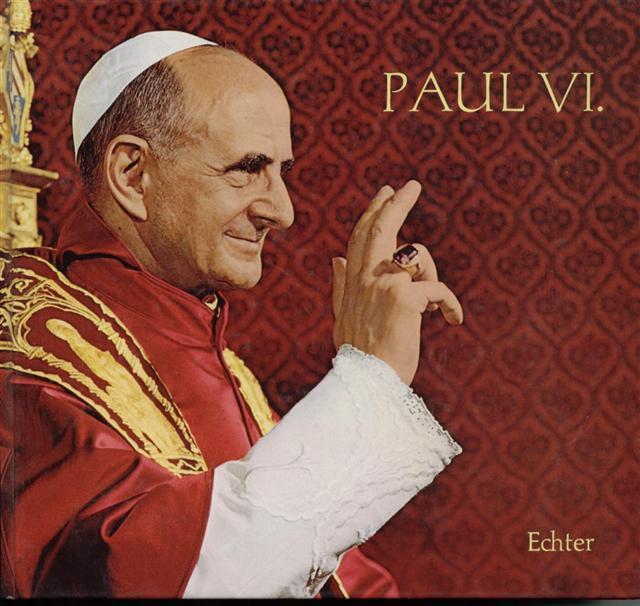
One of the points of controversy that is still acknowledged between biblical Protestants and the Church of Rome is over the place of Mary, the Mother of Jesus. I want to examine what the official documents of the Catholic Church say, because Catholic apologists often tell a different story. The quotes below are from Lumen Gentium ("Light of the Nations"), promulgated by Pope Paul VI in 1964, out of the work of the Second Vatican Council. So, it is not one man's opinion, nor is it some obscure ancient document. These portions, from Chapter VIII, "The Blessed Virgin Mary, Mother of God, in the Mystery of Christ and the Church," are from the English translation found on the Vatican's own website. So, again, there is no allowance for claiming that I am using distorted or obscure sources.

"She is already prophetically foreshadowed in the promise of victory over the serpent, which was given to our first parents after their fall into sin" (sec. 55). The text cites Genesis 3:15 for this statement. In the Douay-Rheims translation, that verse reads, "I will put enmities [sic] between thee and the woman, and thy seed and her seed: she [sic] shall crush thy head, and thou shalt lie in wait for her heel." "She" is from the Latin version. In the Hebrew, the pronoun is masculine singular, which is why most translations read "he" (or "He"). In apparent embarrassment over this error, the New Jerusalem Bible reads "it," and the New American Bible puts "they." All three are Catholic versions of the Bible. The use of "He" points to Jesus as the seed of the woman, i. e., of Eve, not Mary, who shall crush the head of Satan, and we in Him (Romans 16:20). Pope Pius IX (in Ineffabilis Deus) said of this verse, "These ecclesiastical writers in quoting the words by which at the beginning of the world God announced his merciful remedies prepared for the regeneration of mankind . . . saying, 'I will put enmities between you and the woman, between your seed and her seed' taught . . . that his most Blessed Mother, the Virgin Mary, was prophetically indicated; and, at the same time, the very enmity of both [Mary and her Son] against the evil one was significantly expressed." And Pope John-Paul II wrote (in Mulieris Dignitatem) "It is significant that [in Galatians 4:4] St. Paul does not call the Mother of Christ by her own name, 'Mary,' but calls her 'woman': This coincides with the words of the Protoevangelium in the book of Genesis (cf. Gen. 3:15). She is that 'woman' who is present in the central salvific event that marks the 'fullness of time: This event is realized in her and through her."

"The Blessed Virgin is invoked by the Church under the titles of Advocate, Auxiliatrix ["helper"], Adjutrix [also meaning "helper"], and Mediatrix [the Latin feminine form of "mediator"]. This, however, is to be so understood that it neither takes away from nor adds anything to the dignity and efficaciousness of Christ, the one Mediator" (sec. 62). So, Mary is called "advocate," "helper," and "mediator." "Advocate" (I John 2:1) and "Mediator" (I Timothy 2:5) are titles of Christ, and "helper" (John 14:16) is a title of the Holy Spirit, but,
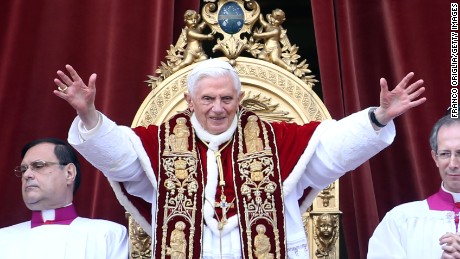
The Pope
we are assured, the use of those titles for Mary does not impinge on the dignity of Christ. Well, if they say so, who am I to argue? The document continues, "The unique mediation of the Redeemer does not exclude, but rather gives rise to, a manifold cooperation, which is but a sharing in this one source." That is utter gobbledygook. If one gives the title of mediator to someone other than Christ, it is mere doublespeak then to claim that the title does not impinge on the mediatorial role of Christ.

"The Church indeed, contemplating her [i. e., Mary's] hidden sanctity, imitating her charity, and faithfully fulfilling the Father's will by receiving the word of God in faith, becomes, herself, a mother... Imitating the mother of her Lord, and by the Holy Spirit, she keeps with virginal purity an entire faith, a firm hope, and a sincere charity" (sec. 64). So, here, the Catholic Church applies to herself the attributes that she has ascribed to her mythical Mother Mary. Thus, all the circumlocutions that they have used to worship (without worshiping) Mary were really for the benefit of creating an aura of perfection for herself! "While in the most holy Virgin the Church has already reached that perfection whereby she is without spot or wrinkle, the followers of Christ still strive to increase in holiness by conquering sin" (sec. 65). So, while the Church is perfect, holy, and without sin, the members thereof are not. Is the subterfuge not plain? By proclaiming the church free of sin, but the members not, she can then assume a tyrannical place over her members, a place from which her teachings and demands are above scrutiny or doubt.

"Placed by the grace of God, as God's Mother, next to her Son, and exalted above all angels and men, Mary intervened in the mysteries of Christ, and is justly honored by a special cult [sic] in the Church" (sec. 66). So, while claiming that she doesn't worship Mary (or the other saints), Rome at the same time teaches a cult of Mary, a distinction without a difference. "The various forms of piety toward the Mother of God, which the Church, within the limits of sound and orthodox doctrine, according to the conditions of time and place and the nature and ingenuity of the faithful, has approved, bring it about that, while the Mother is honored, the Son, through Whom all things have their being, and in Whom it has pleased the Father that all fullness should dwell, is rightly known, loved, and glorified, and that all His commands are observed" (ibid.). So, how do we know that all the worship of Mary stays within "sound and orthodox" limits? Well, because the Catholic Church says so. And if that strikes you as circular, well, according to the Vatican Council, you just are not understanding things correctly. Maybe you should ask the "Helper" for help with that.

Why have I written all of this? Because Protestants have been pointing out the idolatry of the Catholic Church for hundreds of years. Yet, Rome has denied it from one side of their mouths while promoting it from the other. That is simple deception, equivocation, obfuscation. Use what term you will. What it cannot be called is Christian. It is baptized paganism, destructive of the soul, and under the judgment of God. All of the self-serving doublespeak of Rome merely proves all the more that she is no church of Christ, but a mere cult, the synagogue of Satan, the Whore of Revelation 17, and the enslaver of men's souls.

Friday, December 19, 2014

Who Is Sovereign? God? Or My Free Will?

"I am God, and there is no other;
     I am God, and there is none like Me,
Declaring the end from the beginning
     And from ancient times things not yet done,
Saying, 'My counsel shall stand,
     And I will accomplish all My purpose,'...
I have spoken, and I will bring it to pass;
     I have purposed, and I will do it."
- Isaiah 46:9-11

These verses occur in a portion of the Prophet in which God is revealing His plans for Babylon, for its conquest and exiling of Judah. While those events were part of God's plan for the punishment of the sins of His people, the Babylonians certainly didn't act for His glory, but for their own. And, as seen here, God had a plan, to "call a bird of prey from the East, the man of My counsel from a far country" (v. 11), i. e., Cyrus the Mede. These events occurred approximately two-hundred years after the prophecy was given.

Consider some of the contingencies that had to occur, in order for these prophesied events to occur. That is two-hundred years of politics, wars, geography. Even something as minuscule as sets of parents that had to come together to result in this particular person, and to name him this exact name (given explicitly in Is. 44:28). Yet, God planned all of those details to bring about His purposes, His counsel.

Whenever the subject of predestination comes up, someone will unfailingly claim that God cannot override the free will of men. Aside from the obvious question of where that is mentioned in Scripture, we have a problem here of how many steps of free will of men could have derailed the plans of God. Two-hundred years of free will!

Let's consider some other verses:

Psalm 33:11: "The counsel of the Lord stands forever, the plans of His heart to all generations."

Proverbs 19:21: "Many are the plans in the mind of a man, but it is the purpose of the Lord that will stand."

Isaiah 14:24: "The Lord of hosts has sworn, 'As I have planned, so shall it be, and, as I have purposed, so shall it stand.'"

And Isaiah 14:27: "The Lord of hosts has purposed, and who will annul it? His hand is stretched out, and who will turn it back?"

What is the consistent testimony of these verses? That the free will of men can veto the intentions of God? I certainly don't see that. Rather, I see God acting as God, fulfilling His own purposes out of His free will, for He is God and we are not! That is the way that Calvinism and Arminianism reflect utterly inconsistent worldviews. The Calvinist says that "the earth is the Lord's, and the fullness thereof" (PS. 24:1). Arminianism holds that men are little gods, with sovereignty in our own little spheres, our lives. What does God say to that? "My counsel shall stand, and I will accomplish all My purpose" (Is. 46:10). He is not restrained by our pretensions to independence.

I think that the Westminster Confession of Faith (III:1) says it well: "God from all eternity did, by the most and holy counsel of His own will, freely and unchangeably ordain whatsoever comes to pass; yet so as thereby neither is God the author of sin; nor is violence offered to the will of the creatures, nor is the liberty or contingency of second causes taken away, but rather established."

Tuesday, December 16, 2014

How Can a Man Be Righteous Before God?

In the Bible, we find comments like this (Habakkuk 1:13): "You are of purer eyes than to see evil, and cannot look at wrong." Or Job 13:16: "The godless shall not come before Him." And Isaiah 59:2: "Your iniquities have made a separation between you and your God, and your sins have hidden His face from you, so that He does not hear." Or the hardest of all (Hebrews 12:14): "Strive for the holiness without which no one will see the Lord" [emphasis mine].

Any person who hasn't completely hardened his conscience should tremble at those verses, "for all have sinned, and fall short of the glory of God" (Romans 3:23). How can any of us stand before God, knowing in our hearts that "all our righteous deeds are like a polluted garment" (Isaiah 64:6)? If the best I can do is a filthy rag by the standards of God's righteousness, how can I have any hope for more than His just judgment?

Thank God that He has given us an undeserved solution for our sin natures. Just before the verse above from Romans, the Apostle Paul tells us (Rom. 3:21-22), "The righteousness of God has been manifested apart from the Law, although the Law and Prophets bear witness to it - the righteousness of God through faith in Jesus Christ for all who believe." Ah, here is hope! Here is the holiness that we do not have in ourselves!

In theology, this is called "imputed righteousness," i. e., a righteousness, a holiness, that is outside
ourselves, but is considered ours in God's eyes, by the means of faith. "With the heart one believes and is justified, and with the mouth one confesses and is saved, for, the Scripture says, 'Everyone who believes in Him will not be put to shame'" (Romans 10:10-11). Even the Patriarch Abraham needed this holiness: "If Abraham was justified by works, he has something to boast about, but not before God. For what does the Scripture say? 'Abraham believed God, and it was counted to him as righteousness'" (Romans 4:2-3).

The Catholic Church tries to steal our assurance in this righteousness by quoting James 2:24, "You see that a person is justified by works and not by faith alone." She claims that this verse means that we receive eternal life only by a mixture of faith and good works. I ask, how can a person be saved, even in part, by offering God a "polluted garment" (Isaiah 64:6)? But they make their case only by ignoring the rest of what James says. In the same paragraph (James 2:18), that brother of Jesus tells us, "Show me your faith apart from works and I will show you my faith by my works." So, where Paul is talking about our justification before God, James is talking about our justification before men. And he is correct: a faith that justifies us before God will necessarily result in a changed life that demonstrates our justification before the people around us. 

In contrast, the Westminster Confession of Faith (XVIII:1) says, "such as truly believe in the Lord Jesus, and love him in sincerity, endeavoring to walk in all good conscience before him, may in this life be certainly assured that they are in a state of grace, and may rejoice in the hope of the glory of God: which hope shall never make them ashamed." I take great comfort in that. And I find this, alone, to be sufficient grounds to be a Presbyterian.

And knowing that Satan will throw other doubts in our path, the Confession continues correctly (paragraph 4): "True believers may have the assurance of their salvation divers ways shaken, diminished, and intermitted; as, by negligence in preserving of it; by falling into some special sin, which woundeth the conscience, and grieveth the Spirit; by some sudden or vehement temptation; by God's withdrawing the light of his countenance and suffering even such as fear him to walk in darkness and to have no light: yet are they never utterly destitute of that seed of God, and life of faith, that love of Christ and the brethren, that sincerity of heart and conscience of duty, out of which, by the operation of the Spirit, this assurance may in due time be revived, and by the which, in the meantime, they are supported from utter despair."