Showing posts with label cessationism. Show all posts

Wednesday, May 19, 2021

The End of the Apostolate in the First Century Contra Mormonism

"You are fellow citizens with the saints and members of the household of God, built on the foundation of the apostles and prophets, Christ Jesus Himself being the cornerstone, in whom the whole structure, being joined together, grows into a holy temple in the Lord. In Him you also are being built together into a dwelling place for God by the Spirit." 

-Ephesians 2:19-22

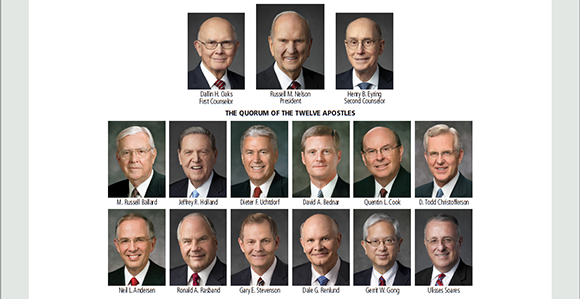
 In the passage above, the Apostle Paul is describing the development of the visible church, which began, of course, with the Person and work of Jesus, who then appointed the Apostles and prophets, who then provided the foundation for the rest of us in that church. Some aberrant groups, especially the Mormons, claim that Paul is teaching a continuous succession of apostles and prophets to govern the church. Yet, those same Mormons don't teach that the verse- in fact, the same sentence- teaches that they should have a succession of Jesuses  

There are other problems with the Mormon use of the passage. In addition to the contradiction in their interpretation, there is the simple fact that a building does not have a continuing succession of foundations. Rather, one foundation is laid, and then the other parts of the building are built upon that foundation. 

Another problem for the Mormon claim is found in other parts of Paul's writings. 

In Titus 1:5, the Apostle tells his student, "This is why I left you in Crete, so that you might put what remained into order, and appoint elders in every town as I directed you..." Appoint elders, not prophets, and not apostles. In I Timothy, chapter 3, and again in Titus 1, he gave instructions on the qualifications of those elders. Nowhere does Paul, or any other New Testament writer, give information about how to choose apostles or prophets! Yet, Mormons want us to believe that they have exactly those things of which the Bible never speaks! The implication is obvious, that those offices were temporary, foundational, and never intended for continuation. Rather, they have been replaced with elders and deacons who rule and teach, not by new revelation, but rather according to the completed word of God in the Old and New Testaments. 


Wednesday, February 12, 2020

Enthusiasm versus the Scriptures

In our day, the largest portion of evangelicalism consists of pentecostal denominations and charismatics within non-pentecostal denominations. Such groups are marked by their claims of miraculous gifts of unknown languages, prophecies, healings, etc.  I have explained before why I do not consider such "gifts" to be legitimate expressions of the Holy Spirit, such as here. Not only do I consider the original gifts to have ceased, but I do not believe that their modern forms are even like the biblical gifts.

One major concern I have with such claims is that people receive revelations from God. Especially in Africa and South America, so-called "evangelists" claim that God has given them messages, whether for the crowds they attract or for individuals. Sometimes they claim that such revelations are of less authority than Scripture; other times they don't. Theologian Wayne Grudem even claims that modern prophecy is fallible, while biblical prophecy was infallible. How can a revelation from God be fallible? And how can one revelation from God be less revelatory than another? These are distinctions without differences!

Furthermore, what happens when a "revelation" contradicts Scripture? That would be true of all of the revelations claimed by Mormonism. Yet, even a single isolated revelation would be the word of God! It would be from the same source as Scripture. Therefore, to claim that it has less authority is irrational.

This is why I don't just refuse to seek such revelations for myself, but I am forced to deny the biblical faith of those who claim such revelations. Either they are lying or they are under the influence of lying spirits. Either way, such claims are inconsistent with a sincere profession of faith, which must, necessarily, include receiving the Bible as the inerrant and all-sufficient word of God.

The Prophet Isaiah dealt with such men - let's call them by the term used by the Puritans, Enthusiasts - who claimed revelations from various methods of divination, including necromancy. Here was the answer that God gave such men through His real prophet: "When they say to you, 'Inquire of the mediums and the necromancers who chirp and mutter,' should not a people inquire of their God? Should they inquire of the dead on behalf of the living? To the teaching and to the testimony! If they will not speak according to this word, it is because they have no dawn" (Isaiah 8:19-20). Point them to the Scriptures! If their revelation agrees with them, then those revelations are unnecessary. If they conflict with the Scriptures, then those revelations are lies. 

"A deep conviction of the fullness and sufficiency of the Scriptures, combined with a hearty regard for their disclosures, is the only effectual check to this [inquisitive and speculative] presumptuous pride of intellect" (James Henley Thornwell, "Election and Reprobation").


Monday, June 26, 2017

What Is Baptism with Fire?

Speaking of the coming of Christ, John the Baptist told his audience (Matthew 3:11-12): "I baptize you with water for repentance, but He who is coming after me is mightier than I, whose sandals I am not
John the Baptist
worthy to carry. He will baptize you with the Holy Spirit and fire. His winnowing fork is in his hand, and He will clear His threshing floor and gather his wheat into the barn, but the chaff He will burn with unquenchable fire
."


We often hear verse 11 quoted, especially by Pentecostals, who claim that it refers to baptism with water and baptism with the Holy Spirit and fire, which is supposed to be what they're doing when they are writhing around spouting gibberish. Notice that they never go on to verse 12, because it shows that their interpretation is merely begging the question, not the actual intention of John.

John says that Jesus will do two things, baptize with the Holy Spirit, and baptize with fire. This is what the Pentecostals try to make into one thing. However, he goes on in verse 12 also to describe two different groups of people, the "wheat," and the "chaff" (compare the Parable of the Wheat and the Weeds (Matthew 13:24-30). The first group He will gather (cp., Matthew 24:31) into the barns, that is, to be kept, while the latter group is intended for fire. Thus the baptism with the Holy Spirit is for the first group, while the baptism with fire awaits the other.

Thus, taken together, the baptism with the Holy Spirit and the baptism with fire are two distinct things, the first for believers and the second for unbelievers.

This is consistent with the rest of Scripture. For example, Paul tells us that all believers, not just some of a special class, are baptized with the Spirit (I Corinthians 12:13, see also John 7:39). We also know from other passages that Jesus Himself described fire as the destiny of unbelievers (Matthew 25:46, Mark 9:42-49).

I think that this simple use of context and the analogy of faith, i. e., comparing one passage to another, demonstrates that the use of this passage is unwarranted, at best. It takes the mere proximity of two words to mean that the two words refer to the same thing. There is no glossolalia taught here.

Wednesday, May 10, 2017

Gnosticism: Where Are You on the Pentecostal Ladder?

In the Second Century, a heresy arose known as Gnosticism. That isn't my topic here. Rather, I want to concentrate on one element from that page: "The Gnostics supposedly had knowledge of God that was exclusive. They considered themselves superior to the average Christian." In other words, the Gnostics had a hierarchical view of the Christian community. One had to move up the ranks to gain more knowledge, knowledge that was withheld from the lower echelons. We see this in our day in the secret doctrines taught in Mormon temple rituals and the degree system of the Freemasons.

But it's too easy to point out the cultic and gnostic elements in organizations as aberrant as the Mormons and the Freemasons. I would point my finger just as surely at the Pentecostal branch of modern evangelicalism.

The Scriptures tell us that every believer receives the Holy Spirit; He comes to the believer as part of what happens to him at conversion. We see that in the words of the Apostle John: "This He said about the Spirit, whom those who believed in Him were to receive, for as yet the Spirit had not been given, because Jesus was not yet glorified" (John 7:39). John tells his readers that a change would come at Pentecost (Acts 2), in which the ascended Christ would send the Comforter, the Holy Spirit (John 15:26), who, from that point, would be present in every true believer. The Apostle Paul, writing to an audience converted after Pentecost, tells them: "In one Spirit we were all baptized into one body—Jews or Greeks, slaves or free—and all were made to drink of one Spirit" (I Corinthians 12:13). He tells these Christians that they had all, past tense and inclusive of the whole church, received the Holy Spirit. That reception was not reserved to an extra-spiritual group within the church. Nor is He offered as something future, for which spiritual people were to strive. He had come to each one, a done deal!

Notice how contrary that is to the program of Pentecostals, who claim that people first come to know Jesus, and then work to receive the Holy Spirit in a later experience. Only those who have done so are believed to be living a Christian life. That is, they have created a hierarchy, just as the Gnostics did, of those who merely know Jesus, and the higher class that have also received the Holy Spirit.

That is a false doctrine, and wrongly imposes guilt on those who believe that they have failed to achieve that next level, contrary both to the words of Jesus cited by John and to Paul.

Wednesday, February 15, 2017

"Baptism with Fire": What Is It?

In Matthew 3:11 (and the parallel in Luke 3:16), we see a quote from John the Baptist that has always seemed mysterious to me: "I baptize you with water for repentance, but He who is coming after me is mightier than I, whose sandals I am not worthy to carry. He will baptize you with the Holy Spirit and fire." John was making a clear distinction of status between himself and the One who was coming after him, i. e., Jesus. While John was performing an external rite with water, Jesus would do an internal work "with the Holy Spirit and fire."

Pentecostals take the reference as one thing, that "Holy Spirit" and "fire" are appositives, referring to their experiences of tongues, etc. Orthodox Protestants, on the other hand, consider the baptism with the Holy Spirit to be something that happens to every true believer when he is born again. I consider that understanding to be consistent with I Corinthians 12:13: "in one Spirit we were all baptized into one body—Jews or Greeks, slaves or free—and all were made to drink of one Spirit" (see also John 7:39).

That phrase, "baptized with the Holy Spirit," occurs several times in the New Testament. We find it in Mark 1:8, John 1:33, Acts 1:5, 11:16, and 18:25. In none of these verse is it paired with "fire," even in the parallel verses in Mark 1:8 and John 1:33.

I think we must take that to mean that "with the Holy Spirit" and "with fire" are not different words for the same thing, but rather references to contrasting things. "Baptism with the Holy Spirit," as Paul indicates, is something that happens to every believer. Then, to whom does the contrasting "baptism with fire" apply?

On whom else does Jesus attribute a pouring out of fire? He mentions Sodom and Gomorrah (Luke 17:29), and unrepentant unbelievers (Matthew 25:41). These verses indicate that "fire" is not used for an extra-spiritual experience of the saved, but rather for judgment on the wicked (compare Mark 9:42-49).

This gives, I think, by analogy of the faith, what John was saying of Jesus: "I baptize you with water for repentance, but He who is coming after me will baptize you [believers] with the Holy Spirit and [you unbelievers with] fire." Note that "you" is plural, so he is addressing the whole audience, not anyone in particular. That is why he would have used an inclusive comment. To have spoken as the Pentecostals interpret him would have him to assume that all of his audience was - or would be - believers, which is obviously not the case. Also, look at the verse in both Matthew and Luke, where Jesus makes it explicit: "The chaff He will burn with unquenchable fire."

Wednesday, February 1, 2017

The Pentecostal Signs: Jesus Said That a Time Would Come When They Would Cease


 My answer to the question above is "no." I am a strict cessationist, as I have written before (see the "cessationism" tag below). I am convinced that the extraordinary spiritual gifts were intended only for the minstry of the Apostles, and, therefore, ceased with their passing from history.

As part of my reasoning for that, I refer you to Jesus's words in John 9:4: "We must work the works of Him who sent Me while it is day; night is coming, when no one can work." He said that just as He was preparing to heal a blind man, so we know that He referred, at least, to the gift of healing (I Corinthians 12:9, 28, 30). And, logically speaking, if that gift was to end, then the others of its class would, as well. This does not mean that God no longer heals, but rather that He no longer gives a gift of healing to particular individuals.

Someone may say that this argument doesn't prove cessationism conclusively, and I would grant that. However, I do not assert it as my only argument for cessationism. See here, for example, where I show, conclusively I think, that the extraordinary gifts were intended to serve as a verification of the authority of the Apostles, thus becoming unnecessary with their passing. I refer there to Mark 16:20, Acts 14:3, II Corinthians 12:12, and Hebrews 2:3-4. When you start adding all of these passages together, then I think you see an insurmountable case.

Saturday, August 27, 2016

Does Having the Bible Allow Continuing Revelation?

The question in the title of this post should have brought immediate images to mind, such as the Book of Mormon. And that is certainly one of the things that I have in mind. However, we should also think of Pentecostal "prophets," the Pope, and a lot of common Christians who claim that "God told me."

I am opposed to all of these claims of revelation because they undermine the sufficiency of the true Scriptures, the Bible, in both the Old and the New testaments.

First, what does the Bible say about itself? Paul, writing to his apprentice Timothy, said (II Timothy 3:14-17): "As for you, continue in what you have learned and have firmly believed, knowing from whom you learned it and how from childhood you have been acquainted with the sacred writings, which are able to make you wise for salvation through faith in Christ Jesus. All Scripture is breathed out by God and profitable for teaching, for reproof, for correction, and for training in righteousness, that the man of God may be complete, equipped for every good work." Notice what he tells us about the Scriptures. First, they are "breathed out by God," i. e., their authority derives from their ultimate authorship by God. Second, they make us wise for salvation. And third, they equip the believer, so that he is complete, equipped for every good work.

The desire for additional revelation indicates that the person does not believe that the Scriptures are sufficient for salvation, and would leave a believer incomplete, ill-equipped for every good work. That is, that they fail to achieve their intended purpose (see Isaiah 55:11).

Notice, secondly, what Jude 1:3 also says: "Beloved, I found it necessary to write appealing to you to contend for the faith that was once for all delivered to the saints." While it may be true that the full explanation was not yet complete when Jude wrote, he clearly indicates that the content was delivered once for all. This brother of the Lord saw no need for the revelation of any new doctrines, as both Rome and the Mormons have done. The writer of the Epistle to the Hebrews said the same thing (Hebrews 1:1-2): "Long ago, at many times and in many ways, God spoke to our fathers by the prophets, but, in these last days, He has spoken to us by His Son, whom He appointed the heir of all things, through whom also He created the world." There is progressive revelation from the creation to the Gospels to the founding of the church, because all revelation was to point to Jesus Christ. Once He came, there was some apostolic explanation necessary, but no additional content was necessary or possible. That rules out the new dogmas decreed by Rome, such as papal infallibility, or the ascension of Mary, as well as "another testimony of Jesus Christ" pretended by the Mormons.

Thursday, February 19, 2015

Is This the Time for Signs and Wonders?


In the debate between cessationists, those who believe that the Pentecostal gifts were for a particular time only, and continuationists, those who hold that they are permanent gifts in the church, the cessationist case is usually based on I Corinthians 13:10: "When the perfect comes, the partial will pass away," which is understood to refer to the completion of the New Testament canon. And I grant the importance of that. Pentecostals play fast and loose with the implications of continuing revelation, like teasing an unfamiliar dog. But I think there is more in Scripture to indicate that the extraordinary gifts were intended for the apostolic period only, not as a continuing phenomenon.

There are four verses that I want to consider.

The first is Mark 16:20: "They [i. e., the Apostles, v.14] went out and preached everywhere, while the Lord worked with them and confirmed the message by accompanying signs." This verse is especially important, because it is in the context of one of the strongest descriptions of the Pentecostal gifts, especially verses 17 and 18.

Next is Acts 14:3: "They [i. e., Paul and Barnabas] remained for a long time, speaking boldly for the Lord, who bore witness to the word of his grace, granting signs and wonders to be done by their hands."

The third is II Corinthians 12:12: "The signs of a true apostle were performed among you with utmost patience, with signs and wonders and mighty works." Here the context is Paul's defense of his apostleship as equal to that of the original Twelve.

And finally, I refer to Hebrews 2:3-4: "It [i. e., the message of salvation] was declared at first by the Lord, and it was attested to us by those who heard, while God also bore witness by signs and wonders and various miracles and by gifts of the Holy Spirit distributed according to His will."

What do all of these passages have in common?  They refer to signs and wonders, not as a permanent state of the church or as general to all Christians, but rather as proofs of the ministry of the Apostles in their evangelistic work. Now, that office is the role that was ultimately fulfilled by the completion of the canon, thus closing the office of apostleship.

Some Pentecostals, conceding the apostolic connection, claim to have a continuing office of Apostle (as does the Catholic Church). The error of that claim is particularly bold, considering that one of the qualifications for an Apostle was to have seen the resurrected Christ (Acts 1:22). Observe also the doctrines associated with these so-called new Apostles: Pelagianism, Sabellianism, and the arrogance of claims to new revelation. Heresies of a feather flock together!

Sunday, March 23, 2014

Glossolalia in Acts 2

"When the day of Pentecost arrived, they were all together in one place. And suddenly there came from heaven a sound like a mighty rushing wind, and it filled the entire house where they were sitting. And divided tongues, as of fire, appeared to them and rested on each one of them. And they were all filled with the Holy Spirit and began to speak in other tongues as the Spirit gave them utterance.

"Now there were, dwelling in Jerusalem, Jews, devout men from every nation under heaven. And, at the sound, the multitude came together, and they were bewildered, because each one heard them speak in his own language."
- Acts 2:1-6

This passage is so closely associated with the tongues movement that its common name, Pentecostalism, is even derived from it. However, I think that a careful reading of it will indicate that there is no Pentecostalism in it. I intend to make my case through three points: 1) the events described were of a special occasion, never intended to be normative; 2) the tongues were in the ears of the hearers, not in the mouths of the speakers; and 3) the glossolalia of modern Pentecostals is utterly unlike the tongues in this passage.

The passage in Acts 2 must be addressed in its context. I especially include the words of Jesus in Acts 1:4-5, "Wait for the promise of the Father, which, He [i.e., Jesus] said, 'You heard from Me; for John baptized with water, but you will be baptized with the Holy Spirit not many days from now.'" And again in verse 8, "You will receive power when the Holy Spirit has come upon you." That context indicates that the events of Pentecost must be considered the fulfillment of those words of Christ. He was sending the Holy Spirit (see also, e. g., John 14:16 and 14:26) to empower the disciples for their calling in the Great Commission (Matthew 28:19-20). The Holy Spirit isn't a heavenly yo-yo, being sent and then withdrawn repeatedly. When He came at Pentecost, He came to stay. Therefore, the events in Acts 2 can only be one-time, not to be repeated as a normative event.

Second, read the actual words of the passage: in verse 6, the listeners are said to hear the speakers speaking in the language of each one. This is repeated in verse 11, where the particular languages are even named. That indicates that this was less a matter of speaking in tongues than of hearing in tongues.

Third, Pentecostals cannot even prove that their tongues are actual languages. Their gibberish is no more capable of "telling the mighty works of God" (compare I Corinthians 14:22) than are the experimental vocalizations of infants. However, to point that out makes the sceptical observer the equivalent of a spiritual buzz-kill, and will be rewarded with scorn, not meaningful answers.

I am not attempting here to address the issue of tongues, in general. I have addressed that elsewhere (use the tag below). Rather, my intention in this post is only to address the use of this passage by Pentecostals. I think that use represents really bad exegesis, completely ignoring what the passage says, simply to justify an experience. That is backwards: experience should never be forced into Scripture; rather, Scripture must judge experience. That, I think, is the fundamental distinction between my theology and that of Pentecostalism.

Friday, June 14, 2013

Tongues: Not a Blessing, but a Curse

Deuteronomy literally means "second law," because it contains the second enumeration of the Ten Commandments. It is primarily a book of the covenant, the terms of the treaty of relationship between Jehovah and His people. It includes blessings for covenant faithfulness, as well as curses for treason against the covenant. The verse I wish to highlight is in the latter portion.

Deuteronomy 28:49, "The Lord will bring a nation against you from far away, from the end of the earth, swooping down like the eagle, a nation whose language you do not understand."

There are a number of verses throughout the Old Testament that parallel this one. For example, Isaiah 28:11, "For by people of strange lips and with a foreign tongue, the Lord will speak to this people." Paul also quotes this verse to the same end in I Corinthians 14:21, and then adds in verse 22, "Thus, tongues are a sign, not for believers, but for unbelievers." That is, to unbelieving Jews. Yet, where do we see the promotion of "tongues"? In church worship services! The purpose of these verses, if I may paraphrase, is for God to tell Israel, "If you refuse to listen to Me, then I will continue to speak to you, but through languages that you do not understand." This was a judgment. It is as the parent who continues his warnings to an errant child, even as that child puts his fingers in his ears to keep from hearing. I refer to these verses as the defense of my belief that glossolalia, commonly referred to as "speaking in tongues," is not a blessing, and is not intended for today's Church. Hearing someone else speak in an unknown tongue is a final step in God's bringing discipline against a wayward believer or church. When a professing Christian hears other people speaking in tongues, that means that either he or his entire community has provoked the wrath of God and may soon anticipate some form of judgment. This is not a good thing!

Tuesday, March 26, 2013

Why I Do Not Hold to "Signs and Wonders" Christianity

"How shall we escape if we neglect such a great salvation? It was declared at first by the Lord, and it was attested to us by those who heard, while God also bore witness by signs and wonders and various miracles and by gifts of the Holy Spirit distributed according to His will."
- Hebrews 2:3-4

This passage seems to me to undermine the entire premise of Pentecostal churches and the Charismatic movement. Signs, wonders, miracles, and [some] gifts of the Holy Spirit were given, not to create a superior class of Christians, but rather to confirm the Gospel message. That last part is why I am more accepting of such things in pioneering missionary works, especially in predominantly-Muslim areas. However, that proviso certainly does not apply to the United States!

Paul is usually quoted in favor of the continuing Pentecostal gifts. After all, he claimed to speak in tongues more than the rest of the church (I Corinthians 14:18). But why? Afterall, Paul himself said (verses 2-4) that tongues benefit the speaker alone, not the church. So why does he advocate them?

In a later passage (II Corinthians 12:12), Paul says, "The signs of a true apostle were performed among you with utmost patience, with signs and wonders and mighty works." These miraculous gifts were marks of his true apostleship, in contrast to the false apostles of verse 11. This same point is made in Acts 14:3, "So they remained for a long time, speaking boldly for the Lord, who bore witness to the word of His grace, granting signs and wonders to be done by their [i.e., Paul and Barnabas, who is called an apostle here] hands." Again, the miraculous gifts are God's signs of the authenticity of the apostolic message. This is also why Jesus Himself rebuked those who seek signs (Matthew 12:39); they aren't for you!

That brings us back to the Hebrews passage above: The signs and wonders were the marks of the apostolic message, not of spiritual superiority. Thus, those churches which advocate them in the modern church are actually undermining the biblical message, applying what ended with the apostles to modern Christians, and further creating guilt and despondency in those church members who don't experience them. I am being generous in saying experiencing "them," since I actually believe that their modern expressions are counterfeits. I will note that a few Pentecostal groups actually acknowledge this difficulty, but then get around it by claiming that their clergy are modern apostles. This especially marks the New Apostolic Church, but is also found in many independent congregations. This is also why the Roman Catholic Church is so welcoming to charismatics: the Catholic hierarchy claims a continuing apostolic authority!