Monday, October 31, 2011

Psalm 51:10-12, a Dividing Line between Hypocritical and True Believers


"Create in me a clean heart, O God,
     and renew a right spirit within me.
Cast me not away from Your presence,
     and take not Your Holy Spirit from me.
Restore to me the joy of your salvation,
     and uphold me with a willing spirit."

In an earlier post, I defined a hypocritical believer as a professing, but false, Christian who has hidden from himself the reality of his spiritual lostness. I believe that the text before us reinforces that contrast.

In it, we see David after II Samuel 11. In that story, he had been looking out over the city of Jerusalem from his palace. He saw Bathsheba bathing on her roof. Stirred by lust, he had arranged for the murder of her husband, Uriah the Hittite, so that he could gain her for himself. After the Prophet Nathan rebuked David (II Samuel 12), David was overcome by sorrow over what he had done. Psalm 51 is the prayer he wrote, confessing his sin, and seeking a restoration of his damaged relationship with Jehovah, his God.

Consider also Psalm 38, another psalm by David. In verse 3, he describes the physical trauma caused by sin. In verse 6, "all the day I go about mourning." And verse 8, "I groan because of the tumult of my heart."

In both of these psalms, we see a man traumatized, sorrowful and cast down, because he is aware of his sin. That doesn't happen in a hypocrite. The hypocritical believer is self-satisfied with his spirituality, and would be quite insulted if anyone were to suggest that he isn't as holy as he imagines himself to be. He wears blinders, so he won't see the reality within him (though, of course, those blinders don't prevent him from seeing faults in others).

Further, even if a hypocrite were to recognize that maybe he isn't so spiritual after all, another aspect of his condition is that he won't consider his shortfall something to be concerned about, something that needs to be dealt with. And he certainly isn't going to respond positively if someone were to confront him about his complacency! Since he has no real relationship with God in Christ, he isn't conscious of lacking that relationship.

Prophets like Nathan make a true believer change. But they merely reinforce the blindness of the hypocrite. With just one exception: if the sovereign Lord sees fit to grant the hypocrite repentance (Acts 5:31 and II Timothy 2:25).

Friday, October 28, 2011

News: Baptists Turn Away Church for Being "Too Calvinistic"


News out of Owensboro, KY, reports that the Daviess-McLean Baptist Association has refused membership (by a lopsided vote of 104-9) to the Pleasant Valley Community Church. The story can be read on the Associated Baptist Press website. And the church's website can be seen here.

I especially want to bring to your attention the statement of the Association's credentials committee: "Our concern in the initial stages of our investigation revolved around the fact that Pleasant Valley Community Church’s confessional statement is one that (is) Calvinistic in nature. It affirms the doctrine of election and
grace." This is a stunning expression of ignorance, considering the Calvinistic roots of the Baptist churches. The London Confession of Faith (1689), a Baptist adaptation of the Westminster Confession, says in Article 3, "God has decreed in Himself from all eternity, by the most wise and holy counsel of His own will, freely and unchangeably, all things which shall ever come to pass," which is quoted almost word-for-word in the objected portion of PVCC's statement of faith (60 pages?!?). The Confession continues, "By the decree of God, for the manifestation of His glory, some men and angels are predestinated or foreordained to eternal life through Jesus Christ, to the praise of His glorious grace. Others are left to act in their sin to their just condemnation, to the praise of His glorious justice."

Thus we can see that Calvinism is well-entrenched in Baptist roots. Doesn't this mean that the Association is aberrant, not Pleasant Valley? Consider this article on the tradition of Calvinism among Southern Baptists. And I chose the picture at the top for one very good reason: Charles Haddon Spurgeon, perhaps the greatest preacher in the English language, was both a Baptist and an unapologetic Calvinist!

Thursday, October 27, 2011

I Timothy 2:1-7, Does Paul Teach a Universal Atonement?

First, a celebratory announcement: this is my 200th blog post. As always, my prayer is that it will be to the glory of God and the edification of His people.

"First of all, then, I urge that supplications, prayers, intercessions, and thanksgivings be made for all people, for kings and all who are in high positions, that we may lead a peaceful and quiet life, godly and dignified in every way. This is good, and it is pleasing in the sight of God our Savior, Who desires all people to be saved and to come to the knowledge of the truth. For there is one God, and there is one mediator between God and men, the man Christ Jesus, who gave Himself as a ransom for all, which is the testimony given at the proper time. For this I was appointed a preacher and an apostle (I am telling the truth, I am not lying), a teacher of the Gentiles in faith and truth."

This passage frequently comes up in debates about the extent of the atonement. With all Calvinists, I hold that Jesus died for all of the elect, and only the elect, fully redeeming them from the just judgment for their sins. In opposition to this view, Arminians hold that Christ died for every person in the world, throughout history, making their salvation possible, but not certain. Arminians claim verse four here, "Who desires all people to be saved," as supporting their view. But does it really?

First, I have just one simple, logical question for the Arminian: if God desires something, anything, who can refuse Him? Wouldn't your interpretation of this passage logically lead to the doctrine of universal salvation?

But to particulars: Let's look at the context. Verse one ends with that same phrase, "all people," but the sentence continues in verse two, referring to kings and others in authority. Then in verse seven, Paul refers to himself as called to be a teacher of the Gentiles. Thus, in context, "all people" here cannot refer to "every individual without distinction," but rather to "individuals of every class or ethnicity." God desires, effectually, for the Gospel to impact every level of society, and every nation. And in this desire, He attains that goal! The Apostle John envisions the success of the Gospel in this very fashion (Revelation 7:9): "After this I looked, and behold, a great multitude that no one could number, from every nation, from all tribes and peoples and languages, standing before the throne and before the Lamb, clothed in white robes, with palm branches in their hands."

I can't speak for anyone else, but I prefer this vision of the success of the Gospel, over the Arminian view of potential redemption!

Sunday, October 23, 2011

Ezekiel 9:3-7, The Godly Must Speak Out!


"Now the glory of the God of Israel had gone up from the cherub on which it rested to the threshold of the house. And He called to the man clothed in linen, who had the writing case at his waist. And the Lord said to him, 'Pass through the city, through Jerusalem, and put a mark on the foreheads of the men who sigh and groan over all the abominations that are committed in it.' And to the others He said in my hearing, 'Pass through the city after him, and strike. Your eye shall not spare, and you shall show no pity. Kill old men outright, young men and maidens, little children and women, but touch no one on whom is the mark. And begin at My sanctuary.' So they began with the elders who were before the house. Then He said to them, 'Defile the house, and fill the courts with the slain. Go out.' So they went out and struck in the city."

This is a tough passage! It speaks of a time of latitudinarian spirituality. Anything goes. Everything is okay. Don't be judgmental. There are times of such ease throughout the Old Testament, See, for example, Deuteronomy 12:8, Judges 17:6, Judges 21:25, and Proverbs 21:2. And again in Ezekiel's time. But this time the Lord pours out His wrath against the lackadaisical church-member. He commands a man to go through Jerusalem and place a mark on all those who weep over the apostasy of their society. Then He sends others out to slay everyone without that mark.

Doesn't this describe our own time? The leadership of many churches deny the fundamentals of the faith. One prominent "evangelical" has now declared that there is no Hell. There have been ministers for decades who deny the divine inspiration of the Bible. And now we have loony theology flying all over the place, such as the Prosperity Gospel. But we mustn't criticize. Mustn't act superior. Mustn't judge. But John 7:24 tells us to judge, but to do it "with right judgment." And doesn't this passage from Ezekiel indicate that we face severe judgment ourselves if we disobey this instruction? Doesn't God reveal that He hates loose and impotent Christianity?

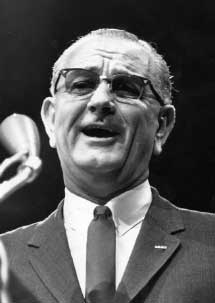
However, we must understand that we face not only God's wrath if we fail to judge error and sin, but also that we face the government's wrath if we do. In 1954, then-Senator Lyndon Johnson inserted a clause into the federal tax code to revoke the tax-exempt status of churches, if their pastors used the pulpit to criticize government. The Alliance Defense Fund is attempting to stir up pastors to resist this shackle on their work.

Acts 5:29 tells us that we must obey God rather than men. Since it is the duty of pastors especially, but also all Christians generally, to speak against the evils of our time, surely the tax code should be an inferior authority in our concerns. Let the Pastor, and each Christian, exercise his spiritual responsibility and constitutional rights. And what consequences the government brings on us, let us be honored to suffer for doing right (I Peter 3:17)!

Monday, October 10, 2011

Isaiah 53:2, the Danger of Images

"For He grew up before Him like a young plant, and like a root out of dry ground; He had no form or majesty that we should look at Him, and no beauty that we should desire Him."

The picture here shows an iconostasis, which is the display of images in an Orthodox Church. Unlike the Church of Rome, the Orthodox hold that the Second Commandment forbids carved images, but not
painted. Thus, no statues. However, I would contend that their distinction has no biblical foundation. As the Commandment (Exodus 20:4) says, "You shall not make for yourself a carved image, or any likeness of anything that is in heaven above, or that is in the earth beneath, or that is in the water under the earth" [emphasis mine]. Notice that it clearly states "carved" or "any likeness."

But, other than the sin of disobedience (I John 3:4), where is the harm? That is the most-frequent question asked by today's latitudinarian Christian. That great Puritan preacher John Owen, suggests a good answer: "[M]en who are complete strangers to seeing the person and glory of Christ by faith have turned to images, pictures, and music to help them in their worship." Owen's position was that we walk by faith in this life, in preparation for the life of sight that we will enjoy in the eternal state (I Corinthians 13:12, I John 3:2, II Corinthians 4:18, 5:7, Hebrews 11:1). Therefore, images enter the religion of the individual or church which does not know Christ by faith. It is a sort of short-circuit, and fools that person into believing that he is in a spiritual condition that he does not truly have. That is why I used the Isaiah text at the top: it precisely makes the point that the experience we need to have with Jesus, the Suffering Servant, is not found in looking upon His likeness.

That is the danger: that images would create a spiritual complacency in a person which blinds him to his real need for the Gospel. To use an analogy, it is like filling the stomach with sand, creating a false sense of fullness, while the person is actually starving to death.

Monday, September 19, 2011

The Reprobation of Pharaoh and the Comfort of Election


"The LORD said to Moses, 'Now you shall see what I will do to Pharaoh; for with a strong hand he will send them out, and with a strong hand he will drive them out of his land.'"

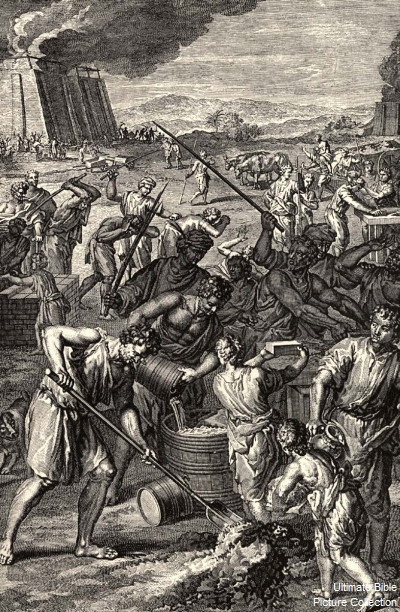
We all know the story: Israel had taken refuge in Egypt during a time of famine in Palestine. God prospered them there, in spite of their oppression by the Egyptians. At this point in Exodus, it has come time for Moses to lead them to liberation in the promised land, but the Egyptians feared the loss of their labor force.

As we see in the verse above, God gave comfort to His people with a promise that He would overrule the opposition of Pharaoh, such that Pharaoh would actually be glad to set them free. However, He also has an eye to His own glory, and He chooses to harden Pharaoh, so that His hand will be made visible in the liberation.

Notice Exodus 7:3-5, "But I will harden Pharaoh’s heart, and though I multiply My miraculous signs and wonders in Egypt, he will not listen to you. Then I will lay My hand on Egypt and with mighty acts of judgment I will bring out My divisions, my people the Israelites. And the Egyptians will know that I am the Lord when I stretch out My hand against Egypt and bring the Israelites out of it." We see here the biblical Calvinist doctrine of reprobation, God's choice to reject, in advance, an unbeliever for the purposes of His own justice and glory. The reprobation of Pharaoh is seen again in Exodus 9:12.

Why has God done this to Pharaoh? We do not need to guess, for He gives the explanation Himself. Exodus 9:16 tells us, "for this purpose I have raised you up, to show you My power, so that My name may be proclaimed in all the earth." God's first inspiration in all things is to promote His own glory. That is why Arminians hate the doctrine of reprobation. They want God's purpose to be to serve us. They hate it that He refuses to adopt their agenda! But His response is seen in Isaiah 42:8, "I am the LORD; that is my name; my glory I give to no other..."

Sunday, September 18, 2011

Matthew 26:39, The True Humanity of Christ

"And going a little farther He fell on his face and prayed, saying, 'My Father, if it be possible, let this cup pass from Me; nevertheless, not as I will, but as You will.'"

Early in the Second Century, immediately following the time of the Apostles, a heresy arose called Docetism. The Docetists held that the human body of Christ was an illusion, since (they claimed) the divine cannot possibly be united with flesh. This was a precursor of Gnosticism. We really don't see this heresy around much, though aspects of it pop up here and there. For example, Sabellians (represented mainly by the United Pentecostal Church) deny the Trinity, claiming that the three persons are actually merely modes of the one God. Since they hold that there is no Second Person of the Trinity, then obviously He could not have been united with a human nature. And Jehovah's Witnesses claim that the resurrection was only spiritual, not a literal resurrection of the flesh of Jesus. While neither of these is strictly Docetism, there are obvious parallels.

However, consider the Scripture above. We see Jesus showing true fear, real human emotion, in the face of His impending suffering and death. Trepidation cannot be a quality of His divine nature. Therefore, we see experiential evidence of His true humanity. He was a man, regardless of what Sabellians or Docetists can protest. And as a true man, in addition to His true divinity, Jesus can therefore sympathize with our own fears and sufferings (Hebrews 4:15). That is great personal comfort that we can take from the high theology of the dual nature of Christ!