Sunday, May 22, 2011

Isaiah's Vision of a Converted World

"It shall come to pass in the latter days
that the mountain of the house of the Lord
shall be established as the highest of the mountains,
and shall be lifted up above the hills;
and all the nations shall flow to it,
and many peoples shall come, and say:
'Come, let us go up to the mountain of the Lord,
to the house of the God of Jacob,
that He may teach us His ways
and that we may walk in His paths.'
For out of Zion shall go the law,
and the word of the Lord from Jerusalem."

- Isaiah 2:2-3

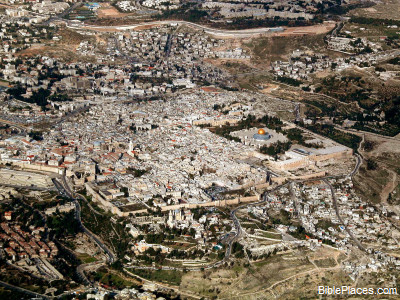
How much plainer can the scriptures be, than that the nations shall flow to the mountain of the Lord? The mountain of the Lord is Mt. Moriah, the Temple Mount, a type of the church (compare Isaiah 56:7, and Psalm 48:1). This prophecy is repeated verbatim in Micah 4:1. It is the second aspect of the prophecy of Daniel 2:35 (with 2:44): the Prophet Daniel saw the kingdom of God as a rock which smashed the great empires and then grew into a great mountain. Compare also Zechariah 8:3. Isaiah saw the peoples flocking to that mountain to be instructed by the Lord. "Law" here is not a reference to the Mosaic Law, but rather is an inclusive term for "teachings," as used in Psalm 119:18, etc.

Thursday, May 19, 2011

The Proper Dating of the Revelation of John

While I have long held to the necessarily-early dating of the writing of the Revelation, I am indebted for the reasoning below to Rev. Kenneth Gentry's book "Postmillennialism Made Easy."

The general view among evangelicals is that the Apostle John wrote the Revelation in the early 90's AD, during the persecution under Emperor Diocletian. Liberal theologians time it much later, and deny the apostolic authorship. However, I don't take that view into consideration. Gentry, and many in the preterist and postmillenialist crowd, time it about 25 years earlier, during the reign of Emperor Nero. I find their reasoning, based on the internal evidence, to be compelling.

First, John writes with a view of a standing Temple. Revelation 11:1-2 reads, "Then I was given a measuring rod like a staff, and I was told, 'Rise and measure the temple of God and the altar and those who worship there, but do not measure the court outside the temple; leave that out, for it is given over to the nations, and they will trample the holy city for forty-two months.'" Since the Romans destroyed the Temple in 70AD, as Jesus Himself prophesied in Matthew 24:2, then the Revelation must have been written before that date. Notice especially the parallel wording used by John here and the words of Jesus in Luke 21:24.

Now go down to Revelation 17:1-6, the vision of a seven-headed beast. Verse 9 then interprets the vision: the seven heads represent seven mountains, surely a reference to the renowned seven hills of Rome. Then verse 10 adds that the heads also represent seven kings. The presumption is strong that these would then be kings of Rome. John specifies that there were five past kings in the chain, one reigning currently, with his successor doomed to reign only briefly. The first seven emperors of Rome were Julius Caesar (49-44BC), Augustus (31BC-14AD, see Luke 2:1), Tiberius (14-37AD, see Luke 3:1), Gaius (37-41AD), Claudius (41-54AD, see Acts 11:28 and Acts 18:2), Nero (54-68AD. see Acts 28:19), and Galba (June, 68-January, 69AD). So, sixth Emperor Nero's death in 68 (followed by the six-month reign of Galba), requires that the Revelation have been written no later that his death on June 6, 68AD, an historically-objective circumstance not subject to anyone's theological presuppositions.

Where this leads me is to the expectation that John was describing the upcoming destruction of Jerusalem, the Temple, and the sacrificial system, in the Revelation. Not exhaustively, since I am conscious obviously that the resurrection and Second Coming are yet to be fulfilled. However, this is logically the predominant focus of the book. Not the European Union or Social Security numbers or the myriad of other passing fantasies that arise daily in the "prophetic" crowd, most-recently from Harold Camping.

Saturday, May 14, 2011

Does Matthew 24 Teach a Future Tribulation?


"Jesus left the temple and was going away, when His disciples came to point out to Him the buildings of the temple. But He answered them, 'You see all these, do you not? Truly, I say to you, there will not be left here one stone upon another that will not be thrown down.' As He sat on the Mount of Olives, the disciples came to him privately, saying, 'Tell us, when will these things be, and what will be the sign of your coming and of the close of the age?' And Jesus answered them, 'See that no one leads you astray. For many will come in My name, saying, "I am the Christ," and they will lead many astray. And you will hear of wars and rumors of wars. See that you are not alarmed, for this must take place, but the end is not yet. For nation will rise against nation, and kingdom against kingdom, and there will be famines and earthquakes in various places. All these are but the beginning of the birth pains.'"
- Matthew 24:1-8

Bits and pieces of this passage have been brought into modern parlance, primarily through the work of popular apocalyptic preachers, such as Hal Lindsay. Every time some foreign conflict is mentioned on the news, someone starts spouting about "wars and rumors of wars," and every earthquake is touted as proof of the coming rapture. However, there is very little critical thinking in these usages. Are they actually justified by the text?

My answer is no, they are not justified. Not only do I deny that Matthew 24 teaches a future tribulation, but I even insist that it is about events that happened long ago, indeed, soon after Jesus spoke these words. I suggest that the apocalyptic interpretation is not only not required by the text, but is actually forbidden by it. I can hear all the voices out there, bellowing, "What, are you CRAZY?!?!?!"

First, go a little further down the passage to verse 16, "
then let those who are in Judea flee to the mountains." Who is Jesus addressing with these warnings? Not people all over the world, but rather specifically in Judea! That is, He isn't warning of wars in general, but specifically in Judea (the area around modern Jerusalem). Nor is He warning of earthquakes in general, but rather specifically in that same area. This is reinforced by the parallel passage in Luke 21:20, "But when you see Jerusalem surrounded by armies, then know that its desolation has come near." There, Luke paraphrases "abomination of desolation" as "Jerusalem surrounded by armies," a situation that doesn't occur in the many conflicts in our modern era. Thus, the geographical references within the passage forbid its use as is popular in our time.

Second, the time references given by the Lord forbid a futuristic interpretation. Note His very words in verse 34, "Truly, I say to you, this generation will not pass away until all these things take place." He explicitly states that the events He is describing will occur within the general lifetimes of His audience. Some dispensationalists have tried to get around this verse by referring it to some future generation, in spite of His use of "this generation." However, their interpretations are excluded not only by the "this," though that would be sufficient, but also by other usages in its context. Just before, in Matthew 23:36, Jesus, speaking to the scribes and Pharisees, tells them, "Truly, I say to you, all these things will come upon this generation." He is referring to their judgment. Remember that our chapter and verse divisions are relatively modern, dating from the 1500's; they were not part of the inspired text. Matthew 23 and 24 are a continuous narrative, with no break in time between the "generation" of 23:36 and the "generation" of 24:34. Jesus is telling the hypocritical leaders of the Jewish nation that the hardness of their hearts will soon bring His retribution. When? In the destruction of Jerusalem by the Romans in 70AD, including the demolition of the temple (24:2, "not one stone left upon another") and the ending of the priestly and sacrificial system. Jesus came again, not in the salvific Second Coming that we yet look forward to, but in awful judgment on those who rejected and murdered Him. Matthew 24, describes a horrible tribulation, it is true, but for them, not for today's Christians.

Wednesday, May 11, 2011

The Messianic Psalms and the Prosperity of the Gospel

Three of the Davidic Psalms are quoted frequently in the New Testament to refer to David's descendant, Jesus Christ, the Messiah. They also teach much regarding his mediatorial reign between His first and second advents.

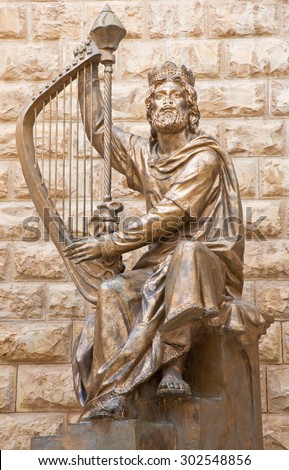
King David, God's Hymn-Writer
Psalm 2:7-8, "The Lord said to me, “You are my Son; today I have begotten You. Ask of me, and I will make the nations Your heritage, and the ends of the earth Your possession." God the Father, speaking to the Son, promises Him all the nations, His merely to ask for. Did Jesus do so? Matthew 28:19 quotes Him, "Go therefore and make disciples of all nations." The Father promised and the Son received. Referring to this passage, Keil and Delitzsch explain, Jehovah "has appointed the dominion of the world to His Son: on His part, therefore, it needs only the desire for it, to appropriate to Himself that which is allotted to Him." Can this mean anything less than that the nations shall belong to Him?

Psalm 22:27-28 reads, "
All the ends of the earth shall remember and turn to the Lord, and all the families of the nations shall worship before You. For kingship belongs to the Lord, and He rules over the nations." Again, the Lord's dominion is taken as the basis for the expectation that a time will come when the nations (not necessarily all individuals) will worship Him through His mediatorial Son. The Apostle Paul borrows this theme in Ephesians 1:20-22.

And finally Psalm 110:1-3, "
The Lord says to my Lord: 'Sit at my right hand, until I make your enemies your footstool.' The Lord sends forth from Zion Your mighty scepter. Rule in the midst of Your enemies! Your people will offer themselves freely on the day of Your power, in holy garments; from the womb of the morning, the dew of Your youth will be Yours." After His ascension, Jesus sat down at the right hand of the Father's throne in heaven, compare Acts 2:33, Hebrews 1:3, and Hebrews 10:13. There He receives the Father's promise to bring all things under His dominion. Notice especially that this is said while Jesus is in Heaven, and explicitly states that He is to wait there until it is achieved. There is no allowance here for the premillennialist error that holds that His dominion is established after His second advent. This is a description of His kingly work between His first and second advents, i.e., it is being achieved now!

It is an error, dishonoring to our Redeemer, to hold that He is impotent to change the world, until some future millennium. I hold that the millennium is now, and Jesus reigns now, and history is the story of His conquest of His enemies. Having once been His enemy, I rejoice in His conquest of my heart (Romans 5:19, Colossians 1:21).

Saturday, April 23, 2011

Evangelicalism for the New Age?


I have written before of the abandonment of the Regulative Principle of Worship by Lake Forest Church, a local, very large congregation of the Evangelical Presbyterian Church. Now, in addition to creeping Popery, Lake Forest has added New Age spirituality to its eclectic mix.

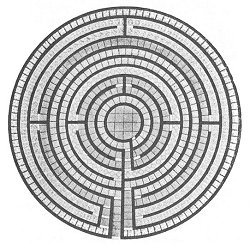
For Easter, Lake Forest is promoting its "prayer labyrinth." Their website announces, "Come participate in an interactive visual and auditory journey of prayer in our Gathering Space meant to draw you deeper into a centered relationship with Christ." While such labyrinths have become commonplace among liberal churches, especially Episcopalian and Catholic, this is the first time I have heard of it in a professing evangelical church. Such labyrinths were absorbed by the state church from Roman paganism about the Fourth Century.

Lake Forest Pastor Mike Moses promotes the labyrinth on his personal blog. Note that he refers to not even one Scripture as a justification for the labyrinth. Rather, he tells us, "The inward journey – ‘letting go’ or shedding. The middle of the journey – centering. The outward journey – incarnation." That isn't biblical Christianity; that is New Age psychobabble!

Moses does refer to one (and only one) Scripture in his blog post, Romans 14, implying that the one who refuses to participate in the labyrinth is "the weaker brother." But I would refer Rev. Moses to I Corinthians 10: 14, "Therefore, my beloved, flee from idolatry." And verse 20, "what pagans sacrifice they offer to demons and not to God. I do not want you to be participants with demons." I suggest that, by adopting a pagan ceremony, Lake Forest Church is fellowshipping with demons.

Wednesday, April 6, 2011

The Bereans and Christian Apologetics


"Now when they had passed through Amphipolis and Apollonia, they came to Thessalonica, where there was a synagogue of the Jews. And Paul went in, as was his custom, and on three Sabbath days he reasoned with them from the Scriptures, explaining and proving that it was necessary for the Christ to suffer and to rise from the dead, and saying, 'This Jesus, Whom I proclaim to you, is the Christ.' And some of them were persuaded and joined Paul and Silas, as did a great many of the devout Greeks and not a few of the leading women."
- Acts 17:1-4

In our Wednesday evening service tonight at church, we started a video series by R. C. Sproul on apologetics. The elder who was leading started us with reading a couple of relevant Bible texts, including I Peter 3:15 and Acts 17, part of which I have quoted above.

That portion reminded me of the book pictured here, which I received recently from Amazon. Note that I haven't read it, yet, so I'm not necessarily endorsing it. I merely note its relevance to the matter at hand.

I also thought of Isaiah 55:11, "[S]o shall My word be that goes out from My mouth; it shall not return to Me empty, but it shall accomplish that which I purpose, and shall succeed in the thing for which I sent it."

I notice in the Mars Hill (or Areopagus, depending on version) story (Acts 17:16-34), Paul didn't preach on justifying what Scripture teaches. Rather, he taught the Scriptures as authoritative and sufficient in themselves. A former pastor of mine advised the congregation to point out what Scripture says on a matter, then to stop, and let the Holy Spirit work. Afterall, the Scriptures are His word, and He will sustain and apply them, as Isaiah promised. He doesn't require us to protect Him from opposition. When Paul followed that advice, though he was an apostle with the authority that office carries, Jews and Greeks were converted!

Sunday, April 3, 2011

Baptism and the Visible/Invisible Church Dichotomy


This morning at church (The Associate Reformed Presbyterian Church of Huntersville) we had both an infant baptism and communion. I heard it called "Sacrament Sunday" several times. While communion was occurring as regularly scheduled, it is unusual to have both sacraments together. The subject of "why baptize infants" came up in Sunday School, and was also the subject of the sermon. I have addressed the biblical basis for the baptism of the infant children of believers before (see here, here, and here; and regarding the mode of baptism, here, here, here, and here), so I won't repeat that here. Rather, I want to address why paedobaptists, i.e., those who baptize the infant children of believers, see this, while credobaptists, i.e., those who advocate believers' baptism only, don't. Note that my reasoning here is a Reformed position, and is not intended to explain the views of Lutherans, Anglicans, Catholics, or Eastern Orthodox.

I think that the problem is that credobaptists seek to apply the characteristics of the invisible church to the visible church.

The Westminster Larger Catechism, Question 62, defines the "visible church" as "a society made up of all such as in all ages and places of the world do profess the true religion, and of their children." That is, an organization on earth, such that one can point to it, and say, "there it is." Scripture uses this sense in such places as Romans 16:3-5, in reference to the church that met in the house of Priscilla and Aquila.

In contrast, Question 64 defines the invisible church as "the whole number of the elect, that have been, are, or shall be gathered into one under Christ the head." Scripture uses this sense in such places as Ephesians 1:22-23, "the church, which is his body..."

The visible church is as man sees it, while the invisible church is as God sees it. The latter is necessarily pure, because God knows our hearts. The first cannot be pure, because men have no infallible means of perceiving the hearts of other men (and imperfectly even their own). The credobaptist expects the visible church to be equivalent to the invisible church, even though this is beyond the ken of mortal men. That is what blinds him to the status of the children of believers (see I Corinthians 7, especially verse 14). By maintaining this dichotomy, the paedobaptist experiences no dissidence in the baptism of someone who is not, and, in fact, may never be, a believer.