Showing posts with label john calvin. Show all posts

Wednesday, August 19, 2026

Sanctification by Faith

In his Catechism for the Church of Geneva (answer # 126), John Calvin wrote, "To believe in Christ is as much to say as to receive Christ in such sort as He doeth give Himself unto us; now this is an evident thing, that Christ doeth not only promise to deliver us from death and to restore unto us the favor of God His Father through the only merits of His innocence, but also He promiseth to make us new creatures by His Spirit, to the end that ye should lead a holy conversation in all good works, so that these must be joined together, except we would divide Christ from Himself." In simpler terms, Jesus does not save  man from the wrath of God without also making him a new creation with good works consistent with that new nature. 

The biblical basis for Calvin's statement comes from II Corinthians 5:17-21: "If anyone is in Christ, he is a new creation. The old has passed away; behold, the new has come. All this is from God, who, through Christ, reconciled us to Himself and gave us the ministry of reconciliation; that is, in Christ, God was reconciling the world to Himself, not counting their trespasses against them, and entrusting to us the message of reconciliation. Therefore, we are ambassadors for Christ, God making His appeal through us. We implore you on behalf of Christ, be reconciled to God. For our sake, He made Him to be sin who knew no sin, so that in Him we might become the righteousness of God." This is a description of the legal exchange that happens at the moment that a sinner experiences saving faith. He has an instantaneous exchange of status with Jesus, receiving the righteousness of Jesus in place of the sin that is ours by nature. That is why Jesus could say to the thief on the cross, "Today you will be with Me in Paradise" (Luke 23:43). The moment he believed, that man had all of the righteousness of Jesus. He was as justified as any saint at a hundred years old, even though he was never given the opportunity to do a single good work. 

However, for the saint who remains in this life, for as long as he remains in this life, there will be good works. After reminding the Christians that their justification is through faith alone, not at all by works (Ephesians 2:8-9), Paul tells the Church at Ephesus (verse 10), "We are His workmanship, created in Christ Jesus for good works, which God prepared beforehand, that we should walk in them." While justification is instantaneous, as we see in the example of the thief on the cross, this new walking in good works, which we call sanctification, is a process lasting as long as the Christian remains in this life. The Westminster Larger Catechism Answer #75 defines sanctification this way: "Sanctification is a work of God's grace, whereby they whom God hath, before the foundation of the world, chosen to be holy, through the powerful operation of His Spirit applying the death and resurrection of Christ unto them, renewed in their whole man after the image of God; having the seeds of repentance unto life, and all other saving graces, put into their hearts, and those graces so stirred up, increased, and strengthened, as that they more and more die unto sin, and rise unto newness of life."

Yet we are never to mistake the order of these events. We can never do good works to gain the favor of God. It is only after a man is justified through faith alone in Jesus alone that he is then able to do good works. This is the point of Paul's epistle to the Galatians. "We know that a person is not justified by works of the law but through faith in Jesus Christ, so we also have believed in Christ Jesus, in order to be justified by faith in Christ and not by works of the law, because by works of the law no one will be justified. But if, in our endeavor to be justified in Christ, we, too, were found to be sinners, is Christ then a servant of sin? Certainly not! For if I rebuild what I tore down, I prove myself to be a transgressor. For through the law I died to the law, so that I might live to God. I have been crucified with Christ. It is no longer I who live, but Christ who lives in me. And the life I now live in the flesh I live by faith in the Son of God, who loved me and gave Himself for me. I do not nullify the grace of God, for is righteousness were through the law, then Christ died for no purpose" (Galatians 2:15-21). 

Paul's challenge to the erring Galatians is, if I was justified by faith alone in Jesus, how would I now turn aside from faith and seek to live the Christian life by my works? No, he says! My Christian life, too, is by faith alone in Christ alone! My good works are not by my own moral striving, but arise from the new life of Christ within me. Sanctification is by faith just as much as justification is by faith!



Saturday, November 20, 2021

The Sovereignty of God over His Enemies


The Bible gives us accounts of several cases in which God interacts with Satan or Satan's demonic minions. For example, we read this story in Job 1:6-12: "Now there was a day when the sons of God came to present themselves before the Lord, and Satan also came among them. The Lord said to Satan, 'From where have you come?' Satan answered the Lord and said, 'From going to and fro on the earth, and from walking up and down on it.' And the Lord said to Satan, 'Have you considered My servant job, that there is none like him on the earth, a blameless and upright man, who fears God and turns away from evil?' Then Satan answered the Lord and said, 'Does Job fear God for no reason? Have You not put a hedge around him and his house and all that he has, on every side? You have blessed the work of his hands, and his possessions have increased in the land. But stretch out Your hand and touch all that he has has, and he will curse You to Your face.' And the Lord said to Satan, 'Behold, all that he has is in your hand. Only against him do not stretch out your hand.' So Satan went out from the presence of the Lord." 

What we see is that Satan, the commander of the demons, must give answer to God for his activities. This chieftain of wickedness cannot claim for himself even the autonomy with which he tempted Adam and Eve in the Garden of Eden. We see this in every interaction between the Father or the Son and any of the minions of Hell. Never does a demon act apart from divine permission, even when the woman is possessed by a legion of demons, or approximately six thousand (Mark 5:1-20). Even with such a number, the demons cower before the incarnate divine Son (verses 10-12). They knew that a day will come when He will judge them to their final imprisonment (Luke 8:31). 

In his catechism, question #28, Calvin addressed this subservience from the demons: "What sayest thou as touching the devils and wicked persons? Be they also subject to Him? A: Albeit that God doth not guide them with His Holy Spirit, yet He doth bridle them in such sort that they be not able to stir or move without His permission and appointment; yea, and moreover He doth compel them to execute His will, although it be against their intent and purpose." 

Saturday, April 24, 2021

The Importance of "Alone" in the Doctrine of Justification

"The Papists will well-enough confess that we be justified by faith, howbeit they add that it is but partly. But that gloss marreth all. For here it is proved that we cannot be found righteous before God, but by the means of our Lord Jesus Christ, and by resting upon the salvation which He hath purchased for us. The Papists see this well enough: and, therefore, for fashion's sake, they say we be justified by faith, but not by faith alone: they will [have] none of that. That is the thing that they fight against, and it is the chief point that is in controversy between them and us." 

- John Calvin, sermon on Galatians 2:16, emphasis added

Evangelicals will often describe the difference between themselves and Roman Catholics as that evangelicals believe in salvation by faith, while Catholics believe in salvation by works. And some Catholics will grant that assessment. However, those evangelicals will have a problem if they run into an educated Catholic and say that. The fact is that Rome is happy to talk about salvation by faith, and has always done so, even in the documents of the Council of Trent in response to the Reformers see, for example, Canons XX and XXIV of Session 6). 

The problem isn't "salvation by faith," but rather the inclusion or exclusion of another word, "alone." The biblical Protestant affirms salvation by faith alone, without works. Romanism denies the application of "alone," claiming instead that salvation is a process in which faith leads to works which then make the person worthy of salvation. The effect of that distinction is that the Protestant also affirms salvation is an instantaneous event, while the Romanist considers it to be a process. When does that process reach the point of a saved status? No one knows in this life, they claim. You can only know when you get there. Or don't.

One result of this error on the part of evangelicals is that Rome has had increasing success in ecumenism. For example, the organization Evangelicals and Catholics Together proclaimed that a unifying understanding had been reached in this statement: "We affirm together that we are justified by grace through faith because of Christ" (ECT statement, XVIII). Do you see the problem with that statement? It is exactly what Rome has always advocated, while the evangelicals in the group betrayed the Reformation by leaving out the key term "alone." The breakthrough was that professing evangelicals converted en masse to Rome's doctrine of justification.

This is the verse to which Calvin refers: "We know that a person is not justified by works of the law but through faith in Jesus Christ, so we also have believed in Christ Jesus, in order to be justified by faith in Christ and not by works of the law, because by works of the law no one will be justified" (Galatians 2:16). 


Saturday, July 14, 2018

The Caricature of Calvinism

I can often tell when a theological opponent is working off what he and his friends say among themselves, rather than from actual knowledge of the topic. I see this in dealing with cults. I also see it from people spouting off against Calvinism. Rarely are they arguing against what Calvinists believe, but rather against their personal caricature of Calvinism.

One example is when they say that Calvinism denies choice, turning people into automatons (I state it in more-favorable terminology than they usually do). Supposedly, the Calvinist believes that God drags the unwilling into the kingdom, or bars people who want in, merely on some capricious whim. Everything in that sentence is a false representation of what Calvinists believe.

First of all, of course there's a choice! Every person who has ever been converted experienced it only as his chosen response to the Gospel. There has never been a single person, even Calvin himself, who said that he believed just because God had decreed that he would. Nor has there ever been a single unbeliever who wanted to turn to Jesus, but failed, because God had barred his way.

Do Calvinists believe that all things happen according to God's plan? Absolutely! Do we believe that God predetermined in prehistory who would and who would not be saved? Again, absolutely and unapologetically! Do we believe that God's predetermination acts contrary to the choices of the particular individuals? Absolutely not.

The error of these people is in equating necessity with compulsion. Everything in history happens by the necessity of God's will : "Our God is in the heavens; He does all that He pleases" (Psalm 115:3, and in many other places). Does He achieve those ends by twisting arms, whether into the kingdom or turned away? Never. Rather, every person who is ever converted experiences the sorrow of sin and the hope of eternal life in Christ, and turns to Him by choice. On the other hand, every person who remains in unbelief does so because he loves his sin and hates God; he remains in unbelief because he prefers it. There is no compulsion on either part. Rather, each is acting exactly as he desires to act. The fact that each desires to act as God has decreed that he would act makes their choices no less the acts of their own wills.


Tuesday, April 16, 2013

Worship Worthy of the Holiness of God

"Now Nadab and Abihu, the sons of Aaron, each took his censer and put fire in it and laid incense on it and offered unauthorized fire before the Lord, which he had not commanded them. And fire came out from before the Lord and consumed them, and they died before the Lord. Then Moses said to Aaron, 'This is what the Lord has said, "Among those who are near Me I will be sanctified, and before all the people I will be glorified."' And Aaron held his peace."
- Leviticus 10:1-3

 We have this brief narrative, in which Moses tells of us two of the sons of Aaron, the newly-appointed high priest," offering "unauthorized fire" (KJV, "strange fire") on the altar of the Lord. This may mean that, where they had been commanded to keep a continuous fire on the altar, they instead began their work with a newly-kindled flame. Or, as in Keil and Delitzsch, this may refer to an unscheduled time or in an improper place. The text here doesn't explain the reference, presumably because it was written by Moses at the time, or soon after, so the details would have been publicly known.

The Lord's response is surprising. He doesn't ask simply, "Why didn't you do things the way I told you?" Rather, He rebukes it as an affront to His holiness.

We see a similar rebuke, also to the priests, in Malachi 1:6, "'A son honors his father, and a servant his master. If then I am a father, where is My honor? And if I am a master, where is My fear?' says the LORD of hosts to you, O priests, who despise My name. But you say, ‘How have we despised Your name?’" There, the priests feign ignorance of their sins: "How have we despised Your name?" they ask.

Manmade worship, labeled theologically as "will-worship," is an affront to God's holiness because it places His worship at the whim of fallen, sinful man. It brings His worship down to our level, rather than up to His. It treats His worship like actual manmade worship of pagan deities. It is no longer worship but abuse. John Calvin (II.8.17), describes it as, "the licentious daring which would subject the incomprehensible God to our senses..." This principle is known in Reformed theology as "the regulative principle of worship" (hereafter "RPW"). It is often phrased as, "Whatever is not commanded is forbidden."

This contrasts with the Lutheran concept, which holds that, "Whatever is not forbidden is permitted." These Protestant views I consider to be consistent with Paul's admonition in I Corinthians 1:40, that "all things should be done decently and in order." And, of course, it contrasts with Catholicism, which holds that the Pope is the Vicar of Christ, and can therefore create whatever he wants in God's name. 

The RPW is prominent in Reformed confessional tradition. In the Second Helvetic Confession, the confessional standard of the Swiss and Hungarian Reformed churches, Chapter V, we read, "[W]e teach that God is to be adored and worshiped as He Himself has taught us to worship, namely, 'in spirit and in truth' (John 4:23 f.), not with any superstition, but with sincerity, according to His Word; lest at anytime He should say to us: 'Who has required these things from your hands?' (Isa. 1:12; Jer. 6:20). For Paul also says: 'God is not served by human hands, as though he needed anything,' etc. (Acts 17:25)." And in the Westminster Confession, the confessional standard of Reformed churches in the Scottish tradition, usually titled "Presbyterian," XXI:1, we read, "[T]he acceptable way of worshiping the true God is instituted by Himself, and so limited by His own revealed will, that He may not be worshiped according to the imaginations and devices of men, or the suggestions of Satan, under any visible representation or any other way not prescribed in the holy Scripture."

 This narrative in Leviticus is a case-law application of the Second Commandment. The fact that God puts His worship in such a prominent place in His Law indicates how important it is in His estimation, regardless of how lackadaisically we treat it. That is why I personally could never, in good conscience, be a member of any but a Reformed church. That is not to say that I think that only the Reformed are Christians. In fact, if my family attended an orthodox Lutheran church, where now they attend none, I would bless God, and not quibble. But in my own actions, my conscience is more thoroughly trained, and I would not make that choice for myself.

Monday, July 13, 2009

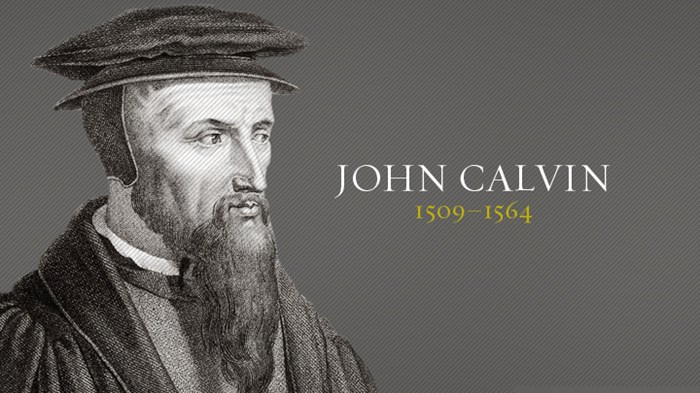
John Calvin on the Merits of Christ

Forwarded from Puritan at Heart:

Now he who is redeemed by the precious blood of Christ and to whom the merits of Christ's passion are applied, is forthwith justified, that is, finds forgiveness of his sins, is immediately acquitted from liability to eternal damnation and raised up by the Holy Spirit, and so from being unrighteous is made righteous. For God when He justifies acts not with man only after the manner of man, merely pardoning him, forgiving his sin, and absolving his guilt, but He makes him better; a thing which men are not wont and not able to give. For He communicates to Him of His Holy Spirit who purifies his heart, and by love shed abroad in his heart, incites him to seek after what is good and just, and follow out and act what is thus sought.
--John Calvin, from "True method of giving peace to Christendom"