Wednesday, November 29, 2017

What Does God Believe about Atheists?


In the Fourteenth Psalm, King David said a number of interesting things about unbelief.

In the first verse, he said:
"The fool says in his heart, 'There is no God.'
They are corrupt, they do abominable deeds;
there is none who does good."


He starts off without fanfare, proclaiming that unbelief is foolish. In our modern society, atheists proclaim their devotion to reason, to logic. But God is unimpressed with their declarations. Rather, He says, the problem is not logic, but righteousness. People believe in all sorts of crazy things, while proclaiming their rationality: aromatherapy, crystals power, aliens. But the question of God is in a class by itself. He has no place in their world of fantasies. Why? Because, in spite of their protestations, it isn't about logic. Rather, unlike crystals, candles, or little green men, the reality of God stands in the way of their hedonistic desires. 

David emphasizes this again in verse 3:
"They have all turned aside; together they have become corrupt;
there is none who does good,
not even one."


This is not news. We know from plenty of other places in Scripture that the natural man is wicked: Even as early as Genesis 6:5, we read, "The Lord saw that the wickedness of man was great in the earth, and that every intention of the thoughts of his heart was only evil continually." The difference is that David moves that idea from the field of morality to the field of rationality. Men make their choices by reasoning from their wicked desires, not from a concern for objective truth.

However, David rips the band-aid off the delusion of the wicked in verse 5:
"There they are in great terror,for God is with the generation of the righteous."

While the atheist pats himself on the back, congratulating himself for kicking God out of his consciousness, David exposes his real fear that the awareness of God will creep back, exposing the shallowness of both his reason and his hedonistic devotion. the Apostle Paul makes the same point in Romans 1:18: "The wrath of God is revealed from heaven against all ungodliness and unrighteousness of men, who by their unrighteousness suppress the truth." Just like squeezing one end of a balloon, the suppression of awareness at one point threatens to burst out at another, to the terror of the unbeliever.

David offers a solution, one that requires true reason, in verse 7: "Oh, that salvation for Israel would come out of Zion!" "Zion" is used in the Old Testament poetry as a reference to the church. the hope for the unbeliever is the Gospel proclamation sent out from God's people. What is the content of that proclamation? It is God's invitation to the wicked man, when he becomes weary of hedonism and hiding from the knowledge of God: "Why do you spend your money for that which is not bread, and your labor for that which does not satisfy? Listen diligently to Me, and eat what is good, and delight yourselves in rich food.  Incline your ear, and come to Me; hear, that your soul may live; and I will make with you an everlasting covenant" (Isaiah 55:2-3).

Monday, November 27, 2017

The Law for All Men, Not Just for Israel

One form of antinomianism holds that the biblical Law is still valid (Matthew 5:18), but is, and has always been, only for Israel.

That is false.

Before I get to the Scriptural evidence against this assertion, let's just think about the logic of it. Israel was given a moral code to define her actions in the eyes of God: "Everyone who makes a practice of sinning also practices lawlessness; sin is lawlessness" (I John 3:4). Yet, according to the theologians of this stripe, Gentiles have no such standard. If sin is defined by the Law, but the Gentiles don't have the Law, does that not imply that Gentiles do not, therefore, have sin? If yes, according to what standard? And, whether one answers yes or no, does that not imply that Gentiles are not under the government of the God of the Bible? Isn't the source of their law their god, by definition?

I can't imagine how these antinomians can answer those questions. However, I don't have to wait for their answers because the Bible is explicitly opposed to any such concept of independence from God's Law. Paul tells us, "When Gentiles, who do not have the law, by nature do what the law requires, they are a law to themselves, even though they do not have the law. They show that the work of the law is written on their hearts, while their conscience also bears witness, and their conflicting thoughts accuse or even excuse them" (Romans 2:14-15). Every man has a conscience, even those who are so wicked as to heave seared their consciences into insensitivity. And, according to Paul, those consciences reflect the Law of God written in our hearts. This is part of the image of God, remaining in us since the creation of Adam, and restored in the New Covenant (Hebrews 8:10, 10:16, from Jeremiah 31:33). Of course, that image has been marred by sin, so the law is not recalled perfectly in the heart. In that way, Israel had an advantage over the Gentiles (Romans 3:2). While having the written Law was an advantage to Israel, that advantage falls far short of implying that the Gentiles were not accountable to God's Law. If that weren't the case, then would not the advantage have been with the Gentiles, for then they could never be accused of sin, and, therefore, had no need for a Savior? Yet, we know that is not the case, because Paul is specifically changed with carrying the Gospel to the Gentiles (Galatians 2:8, I Timothy 2:7)! Why carry to the Gentiles something that they didn't need?

Saturday, November 25, 2017

"The Middle Way" or God's Way?

 It is rare to find a professing atheist in modern America. Rather, it is fashionable not to express assurednes in either direction. To be outspokenly Christian is disdained as fanaticism, while explicit atheism is considered arrogant. Instead, let us all be somewhere in the middle, Christian by heritage, but not too concerned about truth, or agnostic because we don't want to be dogmatic.

Stuff and nonsense, is my reaction! It is that of Jesus, too: "I know your works: you are neither cold nor hot. Would that you were either cold or hot!" (Revelation 3:15).

God does not offer Himself as one option among many. He isn't an item on a smorgasbord, or an orphan preening in the hope that you will pick Him. That is a shabby view of God! 

The God of the Bible does not plead; He commands: "The times of ignorance God overlooked, but now He commands all people everywhere to repent" (Acts 17:30). "This is his commandment, that we believe in the name of His Son Jesus Christ" (I John 3:23). There is no equivocation here, no middle among three choices. God tells us that it His way, with no other option.

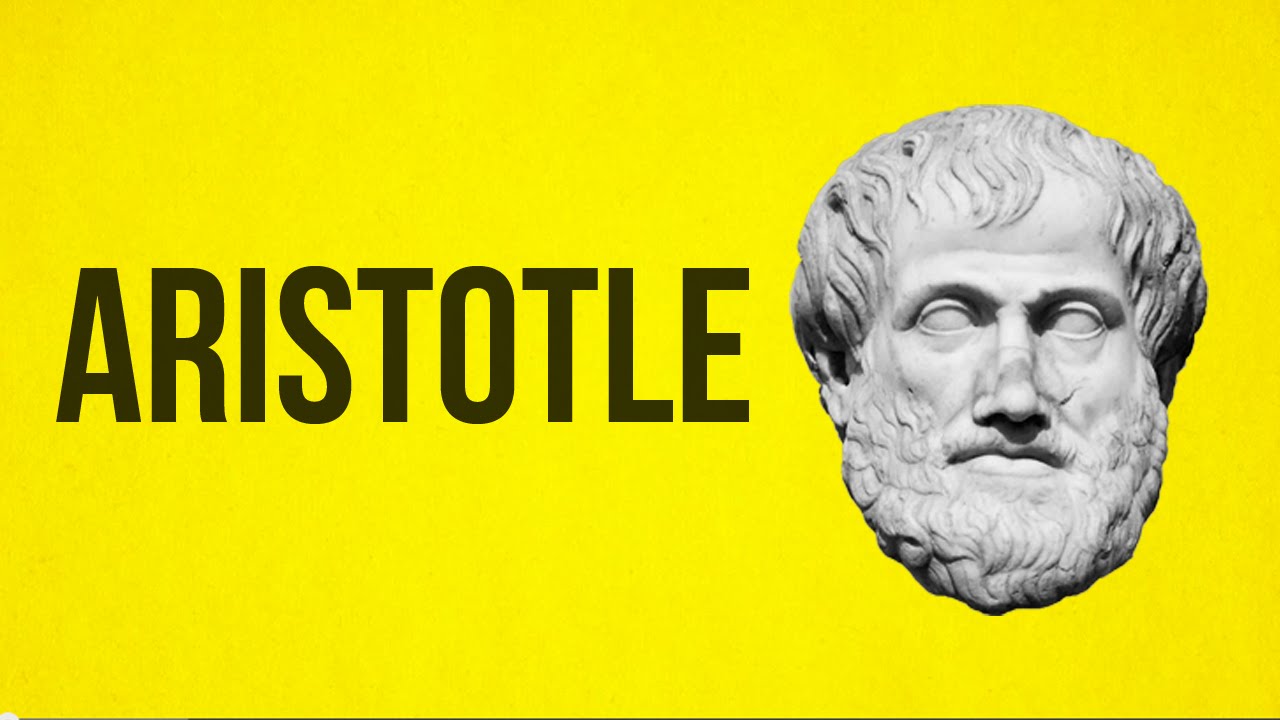
We see here that God gives no consideration to modern moderation, Aristotle's middle way in every decision. This is a shocking concept to the modern American! Who does He think He is? God!?!? And the answer is, yes, that is exactly what He thinks.

There is no "golden mean" here. The options are obedience and disobedience, and the consequences of which option a man chooses."Now therefore fear the Lord and serve Him in sincerity and in faithfulness. Put away the gods ... and serve the Lord. And if it is evil in your eyes to serve the Lord, choose this day whom you will serve... But as for me and my house, we will serve the Lord" (Joshua 24:14-15).

Wednesday, November 22, 2017

A Universe Without God: The Irrationality of the Atheist

In order to understand our world around us, whether in the informal sense of day-to-day living or in a formal,scientific manner, we must accept that every object that has come into existence and every action must have a cause. That is, when the pool ball rolls across the table, we understand that something hit it. We could never develop an understanding of the laws of the universe if we didn't have this presupposition.

However, in order to avoid invoking God, the atheist posits that the universe had a beginning without a cause. He even gives it a name, the Big Bang, as if naming it explains it. Whether he believes that matter came into existence at that point, or holds to a steady state of pulsing matter with repeated big bangs, he must imagine an event of that unimaginable scale without a cause.

That presupposition, if consistently followed through, must eliminate the possibility of a comprehensible universe. If things or events can occur without causes, then irrationality rules, planning is impossible, science is impossible. Thinking is impossible.

Of course, people would not be able to function in the world if we lived according to that presupposition. How can I even fry an egg for breakfast if I operate as if events and things have no causal connection? Yet people do exactly that.

How does that happen?

It's easy enough to explain. The atheist makes such an extreme assumption to rule God out of his consciousness. Then he lives his life with the opposite supposition, that all things and events actually occur in a God-made world that operates according to rational laws, such as that of cause and effect.

The Bible describes exactly this schizophrenic mentality: "The wrath of God is revealed from heaven against all ungodliness and unrighteousness of men, who by their unrighteousness suppress the truth. For what can be known about God is plain to them, because God has shown it to them. For His invisible attributes, namely, His eternal power and divine nature, have been clearly perceived, ever since the creation of the world, in the things that have been made. So they are without excuse. For although they knew God, they did not honor Him as God or give thanks to Him, but they became futile in their thinking, and their foolish hearts were darkened. Claiming to be wise, they became fools" (Romans 1:18-22).

Speaking through the Apostle Paul, God exposes the self-deception of atheism. The created world shows the existence, sovereignty, and righteousness of God. That is why the universe is understandable to us. But the atheist seeks to maintain the illusion of autonomy, that he is sovereign, not God (confer Genesis 3:5), so he is forced to suppress his awareness of God. Since the triune biblical God is why the universe is rational (Acts 17:28, Colossians 1:17), by excluding God, the atheist's world becomes irrational and incomprehensible. Therefore, in order to function in God's world, the atheist compromises, without admitting the compromise, by denying God with his mouth, while acknowledging God with his life. Thus, to use Paul's words, they become fools.

Monday, November 20, 2017

Government Is to Be the Tool of God, Not a Tool Against Him

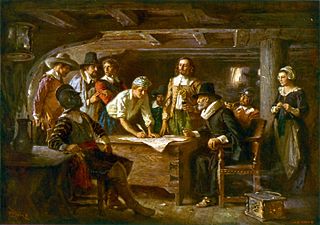
The Signing of the Mayflower Compact
Conservatives like to talk about the United States as "a Christian nation." And I do not doubt that her original settlers had such a concept for the new land. However, when our current Constitution was adopted in 1787, Article VI, section 3, included this provision: "no religious Test shall ever be required as a Qualification to any Office or public Trust under the United States." This provision has now been expanded also to apply to state and local government. Therefore, no atheist, Jew, Pagan, Muslim, or any other spiritual reprobate can be barred as such from rule anywhere in the United States.

The problem is with the assumption that government is supposed to be "neutral" when it comes to religion. Even if neutrality were truly possible, that assumption is contrary to Scripture: "He [i. e., God the Father] put all things under his feet and gave him as head over all things to the church" (Ephesians 1:22). The Father has given to the Son to rule over all things. There is no exception given there for government. Also, if God commands all men everywhere to repent (Acts 17:30), how can it be rational to exclude one collection of men, i. e., government, from that command? We also have the explicit command to kings in Psalm 2:10-12: "Now therefore, O kings, be wise; be warned, O rulers of the earth. Serve the Lord with fear, and rejoice with trembling. Kiss the Son, lest He be angry, and you perish in the way, for His wrath is quickly kindled. Blessed are all who take refuge in Him." Scripture does not allow us the luxury of believing that one group of men, or one human activity, is exempt from the royal rule of the ascended Jesus Christ.

Scripture is not neutral regarding God's instructions regarding the spiritual qualifications that He has set for governors in a Christian nation: "Look for able men from all the people, men who fear God, who are trustworthy and hate a bribe, and place such men over the people" (Exodus 18:21). "The God of Israel has spoken; the Rock of Israel has said to me: When one rules justly over men, [he must rule] in the fear of God" (II Samuel 23:3). God's standard for any level of governor is that he fear God, be capable, trustworthy, and have integrity. Has that been our experience under our "neutral" government? I wouldn't say so.

The moral disintegration of our country isn't something for which I hold the government responsible. After all, the government is acting consistently with the moral basis it has been given, that of "neutrality." Rather, I hold Christians responsible for disobedience to God and His word. Christians dismiss so many of God's commands with an unthinking, "But that's Old Testament." Ephesians 1:22 is certainly not Old Testament! But, even if it were, where does the Bible say that accountability to God's standards ended with Malachi? Nowhere! It is only the bad theology that assumes the end of God's laws, leaving "neutral "government to become the tool of the anti-Christian. The anti-Christian has no qualms about making religious use of government, and Christians have capitulated to that conquest without any effort at resistance.

Friday, November 17, 2017

What Is Faith?


We have a lot of common sayings on the issue of faith. Two that I sincerely hate are "a leap of faith" and "you just gotta have faith." The first means that we should go through life making hazardous decisions with insufficient information. The second is what we say to people dealing with personal or general catastrophes. Faith in what? Or whom? Well, faith in faith, i. e., the New Age concept that insistent belief creates reality.

In contrast, Theologian John Frame, in his "Apologetics," p. 53, says, "Faith is not mere rational thought, but it is not irrational either. It is not 'belief in the absence of evidence'; rather, it is a trust that rests on sufficient evidence... So faith does not believe despite the absence of evidence; rather, faith honors God's Word as sufficient evidence." In other words, "faith" is not a mental insistence without regard to objective circumstances. Rather, it is a belief in the power of God on the basis of His Word, the Bible. Faith isn't the vacuous stubbornness of popular psychology and New Age religion, but rather has a particular foundation and explicit content.

We see that for example, in Jude 1:3: "Contend for the faith that was once for all delivered to the saints." Here the brother of Jesus is referring to faith as a body of belief, of doctrine, which was held in common by believers. He is telling us that the content of our faith matters! That is the opposite of what we say in the phrase I quoted above. Paul referred to the same thing in Titus 1:4: "To Titus, my true child in a common faith..." The emphasis here is on content, too, but a content held in common among believers, equivalent to Jude's "that was once for all delivered to the saints." Both inspired writers reject faith as a feeling or as an individual insistence, but rather as something held in common among all true believers, with a specific content of truth.

Luke describes that content in Acts 6:7: "The word of God continued to increase, and the number of the disciples multiplied greatly in Jerusalem, and a great many of the priests became obedient to the faith." The content of the faith is the word of God, i. e., the Bible, and to believe it is to be obedient. Or, to express the converse, not to believe it is to be disobedient.

Therein lies the problem with faith in faith, without content. it assumes, contrary to Scripture, that God honors disobedience as if it were obedience. Again quoting Paul (Ephesians 5:6): "Let no one deceive you with empty words, for ... the wrath of God comes upon the sons of disobedience." Not doing things God's way cannot be the source of assurance that our common encouragements assume, because they bring, not His blessings, but His wrath.

Here is a definition of biblical faith (Westminster Larger Catechism 72): "Question 72: What is justifying faith? Answer: Justifying faith is a saving grace, wrought in the heart of a sinner by the Spirit and Word of God, whereby he, being convinced of his sin and misery, and of the disability in himself and all other creatures to recover him out of his lost condition, not only assents to the truth of the promise of the gospel, but receives and rests upon Christ and his righteousness, therein held forth, for pardon of sin, and for the accepting and accounting of his person righteous in the sight of God for salvation."

Wednesday, November 15, 2017

The Deception of Autonomy in Liberal Theology


The theological left makes its reputation by tearing down traditional theology, the traditional view of Scripture, traditional morality, etc. Liberal theologians make their academic reputations through novelty, and the more vigorously they speak against traditional Christianity, the more "modern" they are considered to be. No matter how academically rigorous, a conservative theologian is not going to get the recognition of prestigious universities (such as Yale or Harvard) or mainstream media.

What is it for which such theologians are the social heroes that they are portrayed to be?

Take your mind back to the earliest stories in the Bible, in particular to the temptation of Adam. There was find Satan making this offer to Eve, if she would be eat the forbidden fruit: "God knows that when you eat of it your eyes will be opened, and you will be like God, knowing good and evil" (Genesis 3:5). The temptation of Satan to which Even (and then Adam) capitulated was this offer of autonomy. No longer would their spiritual world center on God and His word, but instead they would determine for themselves their standards of good and evil.

Remember, also, the words of Paul: "The wrath of God is revealed from heaven against all ungodliness and unrighteousness of men, who by their unrighteousness suppress the truth. For what can be known about God is plain to them, because God has shown it to them. For His invisible attributes, namely, His eternal power and divine nature, have been clearly perceived, ever since the creation of the world, in the things that have been made. So they are without excuse. For although they knew God, they did not honor Him as God or give thanks to Him, but they became futile in their thinking, and their foolish hearts were darkened. Claiming to be wise, they became fools" (Romans 1:18-22). Paul is describing the lie hidden in Satan's temptation. Though Adam and Even did eat the forbidden fruit, they did not receive the autonomy that they had been promised. Rather, they found that they were still conscious of God and His Law and their accountability to Him. What had changed is that they were now sinners, and hated that knowledge. Their posterity, which is all of mankind (Jesus excluded), would find this same thorn in our consciences. And, apart from regeneration, it is our nature to hate that knowledge and to suppress it from our awareness.

This is where the liberal theologian comes in. He talks about a god, and maybe a Jesus, something which is recognized by even the hardened unbeliever. But the liberal god has no bible, no Law, no righteousness, no Hell, but only touchy-feely concern for our self-esteem. The natural, fallen man can handle that god. He can get on that theological train because it keeps his conscience quiet, and leaves him with what Satan promised, the ability to decide for himself how to live, how to determine truth, and to be satisfied with a life without God. Or so he imagines.

The problem is that the offer of the liberal theologian is just as much a deception as it was from the mouth of the serpent in the Garden of Eden. And, just as was discovered by Adam and Eve, that deception gives no reward of autonomy, but rather only the judgment of death: "For the wages of sin is death" (Romans 6:23).