Saturday, September 2, 2017

Is Trump Your Savior?

In every presidential election season since I have been old enough to follow (which would be since Reagan's initial election), I remember so many voices proclaiming that we must "save America" by voting for one candidate, or by voting against another. This was especially apparent in the 2016 election. "The only hope for America is to elect Trump!"

In conscience, I must deny that such a concept is any way biblical.

An anonymous Hebrew poet recorded God's words on this subject in Psalm 146:3-4:
"Put not your trust in princes,
     in a son of man, in whom there is no salvation.
When his breath departs, he returns to the earth;
 

     on that very day his plans perish."

There is no salvation in a king or a president? Why? Because he dies and turns to dust just like any other man. On that day, his political plans, as wonderful as they might have been, are buried in the grave with him.

However, that Hebrew poet didn't stop there, as if he saw no hope in the world of men. Rather, he continued, in Ps. 146:5-7,
"Blessed is he whose help is the God of Jacob,
     whose hope is in the Lord his God,
who made heaven and earth,
     the sea, and all that is in them,
who keeps faith forever;
     who executes justice for the oppressed,
 

     who gives food to the hungry."

First, notice what he does not say. It is common to say about any problem, "You just have to have faith." Not faith in, but just faith. Faith in faith. No, the Psalmist says. Rather, we must have faith in God, the triune God of the Bible. It isn't faith as such that saves, but rather faith in the proper object, the one true God.

Why is God the only proper hope? Because, unlike human kings - or presidents - He is eternal. Men die, and they and their plans rot into dust. Not so with God. He is eternal, as are His purposes, as is His sovereignty. 

And this isn't simply a practical issue, one of depending on a resource that can sustain that dependency. Rather, for the Christian, this is a matter of faithfulness. How easily we forget the First Commandment: "You shall have no other gods before me" (Exodus 20:3). "I don't think Trump is God," you are no doubt saying. However, whatever you depend on for salvation is your god, whether you use that word or not. As Jesus Himself said (Matthew 6:24), "No one can serve two masters, for either he will hate the one and love the other, or he will be devoted to the one and despise the other. You cannot serve God and money." He speaks of God or money, but it is just as true of God or government. "I, I am the LORD, and besides Me there is no savior" (Isaiah 43:11).


Wednesday, August 30, 2017

Jesus Does Not Allow Devotion to His Mother!


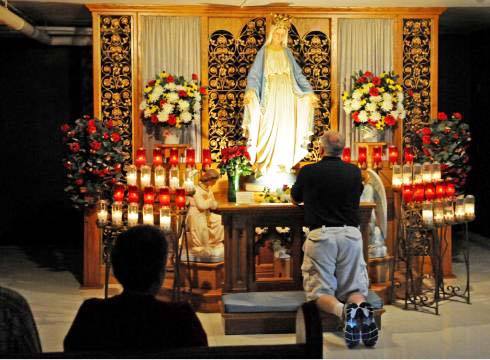
In Luke 11:27, the Blessed Physician gives the record of an anonymous woman, who said to Jesus, "Blessed is the womb that bore You, and the breasts at which You nursed!" This is one of the texts that Roman Catholics cite to justify their adoration of Mary.

The problem with that use is that it is possible only if one stops at verse 27. The next verse, Luke 11:28, records the reaction of Jesus to the woman's statement: "But He said, 'Blessed rather are those who hear the word of God and keep it!'" 

Jesus denies that Mary has a special status on the basis of her having given birth to Him. Rather, He said, spiritual status comes from being a disciple! I will certainly grant that Mary was almost-certainly a disciple of Jesus. However, that makes her equal to every other disciple, not superior. Much less does it earn her special status, with the divine attributes of omnipresence and omniscience, as is implied by Catholic reverence for her.

Monday, August 28, 2017

Oneness Pentecostals, Wrong on the Name of Jesus

Oneness Pentecostals make a lot of bizarre claims. Among them is that baptism is essential for salvation (based on their perverse interpretation of Acts 2:38). And not just any ol' baptism, but specifically immersion in Jesus's name only, absolutely not in the trinitarian formula of Matthew 28:19. This is based on the baptisms in Acts, as well as another perverse interpretation, this time of Acts 4:12: "There is salvation in no one else, for there is no other name under heaven given among men by which we must be saved." They allow the use of the word "name" to be only a term of address.

If you want to see a Oneness believer turn cross-eyed, ask him this question: When a police officer yells at a criminal to "stop in the name of the law," what name is it? That's because their rigidity regarding the word "name" cannot adapt to any other use of that word.

That rigidity gets them into trouble with other portions of Scripture. For example, when John describes the glorified Christ in Revelation 19:13, he says, "He is clothed in a robe dipped in blood, and the name by which He is called is The Word of God." Not "Jesus." So, has the name by which we must be saved changed? If the Oneness are correct, the answer to that question is of salvific significance! If they are right about the use of "name" in Acts 4:12, then John is now teaching a different Gospel (Galatians 1:9). Or, we might conclude that John is correct, but Luke was teaching a different Gospel!

Either way, Oneness rigidity, used to substantiate their manmade religion, produces chaos in the rest of Scripture. Moreover, since Scripture has only one Author, God (I Timothy 3:16), if the Scriptures are chaotic, then so is God. A capricious God is not the God of the Bible: that is the God of Islam!

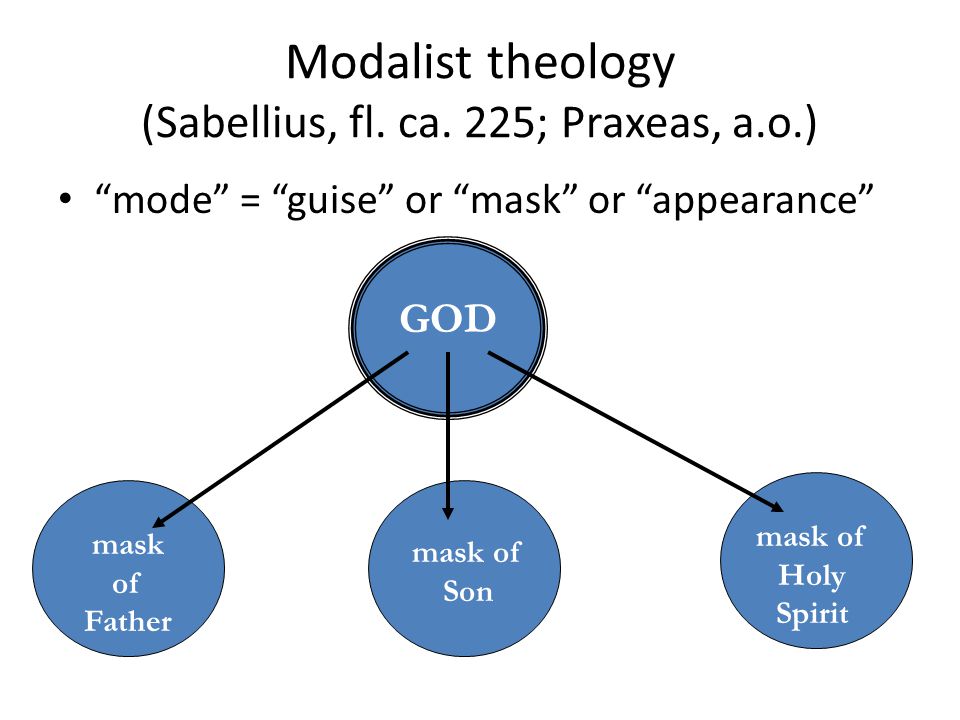
And that is, indeed, my conclusion. The god of Oneness is not the God of the Bible, the living and triune God. Their god is the manmade construct of Sabellius, an irrational god, producing irrational followers. That is not Biblical Christianity. It is baptized Islam.


Saturday, August 26, 2017

Jesus Doesn't Think that All Men Are Basically Good

It is very American to talk about the goodness in all men. That's part of why biblical Christianity has become increasingly unpopular.

But there are some interesting words from Jesus on the matter: "If you then, who are evil, know how to give good gifts to your children, how much more will the heavenly Father give the Holy Spirit to those who ask Him!" (Luke 11:13).

Jesus addresses goodness in two different ways in this sentence. First, He describes a certain kind of goodness, that is, the giving of good gifts to our children. Second, He also describes us as evil.

In this one statement, Jesus tells us that there is a civil goodness in human beings. However, He also tells us that such goodness is contrary to our natural inclination because we are, in His blunt words, evil! Such civic good is a demonstration of Genesis 1:26: "Let Us make man in Our image, after Our likeness." Adam was created in God's image. And, since God is good (Matthew 5:45), Adam was created good (Genesis 1:31), and this goodness has not been completely eliminated by the Fall.

This goodness is not a form of merit. No one could claim that giving good things to his children earns him a right to God's favor. Rather, it increases our judgment as sinners, because we have an awareness of goodness, yet continue in our sinful rebellion against the very God who is so good to us.

We Americans may enjoy patting each other on the back, boosting our self-esteem. However, the word of Jesus over us is "evil."

Wednesday, August 23, 2017

God's Opposition to Those Who Despise His Word


Isn't it natural for a person to think of rejection of something he has made as equivalent to rejection of him? Think of the child that brings home the clay mug that he has made at school. If his father responds with, "This is garbage!" how crushed that child would be. Or imagine the woman who has invested the day in Thanksgiving dinner, only to have her husband spit it out and pronounce it swill. Would we not expect her to harbor resentment of such treatment?

Yet, we think that the rejection and despising of the things of God is merely being "modern." How could He hold us guilty for such independent thinking?

In Psalm 138:2, King David demonstrates an opposite attitude: "I bow down toward Your holy temple and give thanks to Your name for Your steadfast love and Your faithfulness, for You have exalted above all things Your name and Your word." 

David recognizes the two things that God values most, His reputation and His Word, the Bible. Then, in acknowledgement of God's priorities, David submits to them, and doesn't even put forward his own.

It has been de riguer to treat God as an object of disrespect. Do we not treat Him as Santa Claus, existing to give us baubles? Do we not use His name as a curse? A bunch of curses at that! And is it not scholarly and respectable to express doubts about, and independence from, His word in the Bible?

Yet, David tells us that, in God's priorities, those two things are the most important to Him. And, if our priorities are different from His, what can we expect, except futility, resentment, even judgment?

Monday, August 21, 2017

Persecution in the Providence of God

We hear news stories of the persecution of Christians, such as at the hands of the Islamic State in the Middle East. Our natural reaction is to wonder why God allows such acts of cruelty against those who bear His name (which is separate from the question of whether they are bonafide Christians). And, as with all things, I believe that the answer is that it brings Him glory.

But how?

The Book of Acts gives us a number of accounts of persecution of the earliest Christians, including the Apostles themselves. Acts 8, for example, describes a persecution which broke out immediately upon the murder of Stephen the Deacon: "There arose on that day a great persecution against the church in Jerusalem" (verse 1). How is that according to the providence of God? The answer is in the rest of the verse: "They were all scattered throughout the regions of Judea and Samaria, except the apostles."

The persecution in Jerusalem pushed the disciples to spread out from their first home. Consider verse 5: "Philip went down to the city of Samaria and proclaimed to them the Christ." This should immediately remind us of the Lukan version of the Great Commission: "You will be My witnesses in Jerusalem and in all Judea and Samaria, and to the end of the earth" (Acts 1:8). It was the command of Jesus to His disciples that they carry the Gospel in concentric zones away from its first home. And, as is natural, they held back, staying in their comfort zone, as the American saying is. In the providence of God, the persecution in Jerusalem was, at least in part, the way of Jesus to push His church to obey His commission.

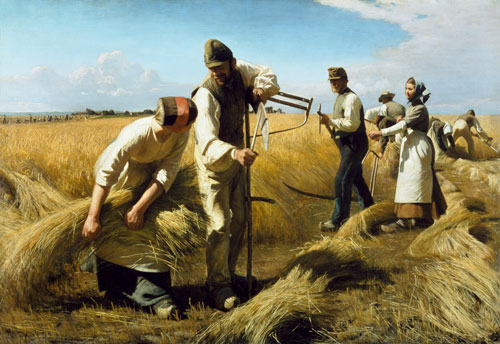
One of the things that Jesus told His first disciples was that the Gospel harvest was ripe, but workers in the field were insufficient (Luke 10:2). But, as is the wont of men, the disciples wanted to stay in their comfortable surroundings. It took persecution to send them out in obedience to the Lord of the harvest.

Of course, this isn't the only purpose of God in persecution. However, let it soak in. What is our comfort zone? And what will the Lord do to make it so uncomfortable that we will do the work to which He has called us?

Saturday, August 19, 2017

Men Hate Predestination, but Jesus Loved It!

Who sits on the throne? God or Man?
 After Jesus had sent out the seventy-two evangelists, they returned with glowing reports of overthrowing the power of Satan. In response to these reports (Luke 10:21-24), "Jesus rejoiced in the Holy Spirit and said, 'I thank You, Father, Lord of heaven and earth, that You have hidden these things from the wise and understanding and revealed them to little children; yes, Father, for such was Your gracious will. All things have been handed over to Me by My Father, and no one knows who the Son is except the Father, or who the Father is except the Son and anyone to whom the Son chooses to reveal Him.' Then turning to the disciples He said privately, 'Blessed are the eyes that see what you see! For I tell you that many prophets and kings desired to see what you see, and did not see it, and to hear what you hear, and did not hear it.'" 

Jesus says something here that most modern Americans, including most professing Evangelicals, hate to hear: God has revealed Himself to some people and hidden Himself from others. That is the experiential definition of predestination, both in election and in reprobation.

The modern American, including the modern Evangelical, reacts with, "That's not fair!" And it's not, but I don't consider that relevant. To the same objection, the Apostle Paul answered (Romans 9:20-21), "Who are you, O man, to answer back to God? Will what is molded say to its molder, 'Why have you made me like this?' Has the potter no right over the clay, to make out of the same lump one vessel for honorable use and another for dishonorable use?" So, Paul's response is not to describe how predestination is fair, but rather to demonstrate that it is presumptuous to ask the question. How can any man claim the authority to call God to account for His actions?

However, Jesus goes even further than did Paul: "Jesus rejoiced in the Holy Spirit!" Jesus considered the sovereignty of the Father, not to be unfair, but to be wonderful! And if any mere man fails to come to that same conclusion, then the failure is in the man, not in God.