Wednesday, January 26, 2022

The Sabbath and God's Creation Rest

When I discuss the Sabbath with antisabbatarians, one of their frequent responses is to claim that the Sabbath was created by the Fourth Commandment, which, they assert, means that it ended with  the abrogation of the ceremonial law at the completion of the cross work of Jesus. 

First, let me say that I agree that the ceremonial law was abrogated exactly because it was completed in the coming, life, death, resurrection, and ascension of Jesus. However, no, the Sabbath was not part of the ceremonial law. Nor did it begin with the giving of the Fourth Commandment. Were murder, adultery, or thievery merely ceremonial prohibitions because they were framed in commandments? I hope that no one would say so. 

In response to that assertion, I say that, even if that abrogation applied to any of the commandments, it would not apply to the Sabbath, because, contrary to the assertion of the antisabbatarian, it was not created by the Fourth Commandment. God initiated the Sabbath day in Genesis 2:2-3, when He rested from creation work: "On the seventh day God finished His work that He had done, and He rested on the seventh day from all His work that He had done. So God blessed the seventh day and made it holy, because on it God rested from all His work that He had done in creation." In response, I usually get something like, "But that doesn't say Sabbath; it was a onetime thing." 

Really? 

That response shows that the antisabbatarian has rarely made any effort to to study the matter. Rather, he is just repeating slogans that he has been given to dismiss the discussion. 

We find this in Exodus 31:13-17: "You are to speak to the people of Israel and say, 'Above all, you shall keep My Sabbaths, for this is a sign between Me and you throughout your generations, that you may know that I, the Lord, sanctify you. You shall keep the Sabbath, because it is holy for you. Everyone who profanes it shall be put to death. Whoever does any work on it, that soul shall be cut off from among his people. Six days shall work be done, but the seventh day is a Sabbath of solemn rest, holy to the Lord. Whoever does any work on the Sabbath day shall be put to death. Therefore, the people of Israel shall keep the Sabbath, observing the Sabbath throughout their generations, as a covenant forever. It is a sign forever between Me and the people of Israel that in six days the Lord made the heaven and earth, and on the seventh day He rested and was refreshed.'

God Himself explicitly ties the continuing Sabbath to His rest from the six days of creation. 

Saturday, January 8, 2022

The Bad News Points the Elect to the Good News


"Be as sensible of your deformity and unworthiness as you can, and walk humbly under the sense of it. But let it not slacken your pace nor abate your hope. if anything may render you worthy, that is, a suitable object of mercy, it is your coming boldly to the throne of grace with all your unworthiness about you. It is a disgustful [sic] modesty to be shy in accepting from those above us. it looks as if we would not be thought to need their kindness, or else as if we thought they needed our requital, or, at least, as if we were unwilling to be obliged by them. Much more unbecoming it is to be backward in accepting the grace from so great a person as our Lord and Redeemer." -Elisha Coles, "A Practical Discourse of God's Sovereignty" 

There are some men who feel such shame of their past sins that they believe that they are beyond the help of Jesus's blood. Coles addresses such people in the quote above. It is exactly because of our unworthiness that He came and extends His mercy to the elect sinner. 

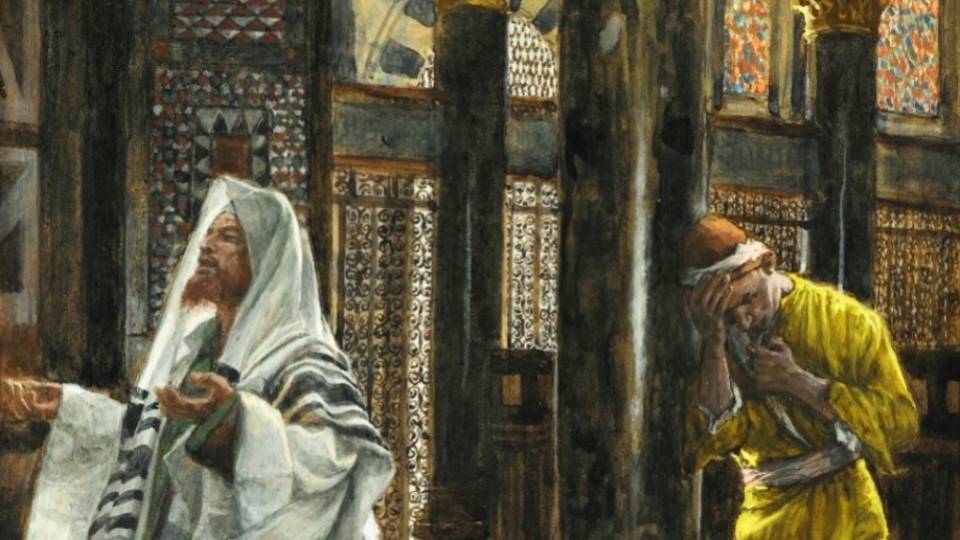
This Puritan writer makes the same point in everyday language what Jesus taught in the Parable of the Pharisee and the Tax Collector (Luke 18:9-14): "He also told this parable to some who trusted in themselves that they were righteous and treated others with contempt: 'Two men went up into the temple to pray, one a Pharisee and the other a tax collector. The Pharisee, standing by himself, prayed thus: God, I thank you that I am not like other men, extortioners, unjust, adulterers, or even like this tax collector. I fast twice a week; I give tithes of all I get. But the tax collector, standing far off, would not even lift up his eyes to Heaven, but beat his breast, saying, God, be merciful to me, a sinner! I tell you, this man went down to his house justified, rather than the other. For everyone who exalts himself will be humbled, but the one who humbles himself will be exalted." Just like the hypothetical sinner in Coles' account, it is the one who knows his inherent unworthiness that can truly turn to Jesus alone for redemption. Anyone who imagines an inherent worthiness in himself, as does the Pharisee, disqualifies himself. 

As Jesus also says (Luke 5:31-32), "Those who are well have no need of a physician, but those who are sick. I have not come to call the righteous but sinners to repentance." 

We also have the testimony of the Apostle Paul (Romans 5:8): "God shows His love for us in that, while we were yet sinners, Christ died for us." 

The amazing thing about the biblical Gospel is that it is the opposite of what the world expects. While the world looks to the upright and virtuous as those who are worthy of Heaven, and to the wicked as those who are unworthy, that religion is backwards. It is for the sinner, the one who knows himself to be helpless, hopeless, and doomed, that Jesus gave Himself on the cross. For the one who falsely imagines that he has any worthiness within himself, Jesus disdains to extend a hope of salvation.

Friday, December 31, 2021

Aught of Ours Is to Insult the Sufficiency of Jesus

"Do but consider how it is: Jesus Christ calls you, because you are blind, to come to Him for eye-salve, and you will not go until you can see better. You are naked, and He calls you to come and receive change of raiment, and you will not go until better arrayed. He offers you gold, for He knows your poverty, and you will not take it until you have something of your own to give for it. Look over it again, and see if this be handsome dealing either with yourselves or Him. It is free grace in redemption that is to be glorified, but something of your own would lessen your need of Christ and lower your esteem of His grace. nay, it would be a means to keep you from Him, as farms and oxen did the invited guests from the wedding supper. Consider further: no man was ever accepted of Christ for what he brought to Him. They are best welcome that bring nothing, and yet expect all things." -Elisha Coles, "A Practical Discourse of God's Sovereignty" 

Revelation 3:17-18: "You say, 'I am rich, I have prospered, and I need nothing,' not realizing that you are wretched, pitiable, poor, blind, and naked. I counsel you to buy from Me gold refined by fire, so that you may be rich, and white garments so that you may clothe yourself and the shame of your nakedness may not be seen, and salve to anoint your eyes, so that you may see.


Wednesday, December 29, 2021

Particular Atonement and the Defeat of Sin

"To take away sin being the end of redemption, to make the work sure, Christ Himself was made sin, imputatively, not inherently. All the sins of those for whom He died met on Him. He and they were so incorporated, as not to be separated by death. Sin could not die, unless Christ died; Christ could not die without being made sin. Nor could He die, but sin must die with Him. Whole Christ, both head and members universally, were all crucified together, and they all rose together, all excepting sin, and that be left in His grave. And let us remember it is there." -Elisha Coles, "A Practical Discourse of God's Sovereignty" (punctuation and grammar modernized) 


Saturday, December 18, 2021

The Goodness of God, His Wrath Toward the Reprobate, and "Common Grace"


"Because of your hard and impenitent heart, you are storing up wrath for yourself on the day of wrath when God's judgment will be revealed" (Romans 2:5) . 


The doctrine of common grace is the majority view in the Reformed camp. I admit that. However, as a member of the minority particular grace view, I have to say that I find the claims of biblical support for common grace to be particularly (yes, pun intended) unconvincing. 


According to the doctrine, God's goodness to all men (Matthew 5:45) is grace to them, every one of them, which enables them, in return, to do some good things, sometimes called "civic good." 

I see a lot of problems with that. 


First of all, yes, God is good to everyone. No Christian could say otherwise. That is because God is inherently good. However, notice that Matthew 5:45 never even mentions "grace." Furthermore, where else does Jesus, quoted in that verse, talk about the goodness of God, in terms of His gifts? In Mark 7:26, a Gentile woman comes to Jesus, and asks Him to deliver her daughter from a demon. He responds, "Let the children be fed first, for it is not right to take the children's bread and throw it to the dogs" (verse 27). But she persists: "Yes, Lord; yet even the dogs under the table eat the children's crumbs" (verse 28). To that, He replies: "For this statement, you may go your way; the demon has left your daughter" (verse 29). The parallel verse in Matthew 15:28 adds His words, "O woman, great is your faith!" It isn't her mere existence which brings His gracious act; it is her faith! However, notice her words by which he credits her faith, that even the dogs, i. e., the reprobate, feed on the crumbs that fall from the table of the children, i. e., the elect. The goodness of God to the reprobate is by overflow from His loving and gracious blessing of the elect. 


God's goodness is no common grace. Rather, it is particular grace which is so great that it overflows to those who hate Him! 


Someone may reply that even overflow grace is grace to the reprobate. Yet that, too, is denied by Scripture. It is those very gifts for which God judges the unbelief of the reprobate. Paul tells us, "Although they knew God, they did not honor Him as God or give thanks to Him" (Romans 1:21). The more gifts received, and over a longer time, the greater their judgment. In Isaiah 48:9-11, God makes this statement to rebellious Israel: "For My name's sake, I defer My anger; for the sake of My praise I restrain it for you, that I may not cut you off. Behold, I have refined you, but not as silver; I have tried you in the furnace of affliction. For My own sake, for My own sake, I do it; for how should My name be profaned? My glory I will not give to another." It isn't grace that leads God to withhold His judgments; it is His concern for His own glory! Receiving God's benefits is not grace to the reprobate, but rather an increase in judgment! 

Wednesday, December 15, 2021

God Hates Divination

One of the worst condemnations of Israel found in the Old Testament prophets is found in Zephaniah 1:12: "I will search Jerusalem with lamps, and I will punish the men who are complacent, those who say in their hearts, 'The Lord will not do good, nor will He do ill.'" God's judgment against His covenant people is not a matter of their denying of Him. They didn't become atheists or convert to a pagan religion. Rather, they denied His relevance. They professed that this God who had brought them out of captivity in Egypt had no place in their lives. 

One claim that the triune God of the Bible makes is to be the source of truth (e. g., John 14:6 and 17:17). Moreover, He claims to be the determiner of history: "I am God, and there is no other; I am God, and there is none like Me, declaring the end from the beginning, and, from ancient times, things not yet done, saying, 'My counsel shall stand, and I will accomplish all My purpose'" (Isaiah 46:9-10). Yet, they turned to other sources of immanency, or so they imagined, accusing Him of irrelevancy and insufficiency. 

God, being the jealous God that He is, rebukes them for such syncretism: "You shall not interpret omens or tell fortunes... Do not turn to mediums or necromancers; do not seek them out and so make yourselves unclean by them: I am the Lord your God" (Leviticus 19:26, 31). 

These things occur in today's America, and even more so in Europe. In some European countries, mediums outnumber Catholic clergy. Most Americans consider ourselves to be too sophisticated for such superstitions. Yet, do we not look to scientists in the same way? As I write this, we keep hearing "follow the science" as we deal with the covid-19 virus. However, we have been seeing it for much longer in the orthodoxy of Darwinian evolution. Rather than the determinative witness of the Creator, we look to the presumptions of, not science, but of scientists, people who have a vested interest in philosophical domination, but not in evidence. The declarations of orthodox scientists have become the Tarot cards and sheep entrails of the modern unbeliever. 

A Diagram For Interpreting Sheep Liver


Wednesday, December 8, 2021

The Unpopular Biblical Doctrine of Reprobation

"The Lord has made everything for its purpose, even the wicked for the day of trouble." 

-Proverbs 16:4 

I think that the least-popular doctrine of Calvinism is that of reprobation, the biblical teaching that God has not only elected some to salvation, but has also chosen the rest for damnation. In biblical language, it is said that God has made the reprobate from the same lump of clay, but as "vessels for dishonorable use" (Romans 9:21; see same phrase in II Timothy 2:20). Both Peter (I Peter 2:8) and Jude, the brother of Jesus (Jude 1:4), tell us that false teachers were anciently purposed for condemnation. 

Yet, though Scripture is explicit on the matter, Christians hate it, deny it, and turn a blind eye to such verses. Even Reformed Christians soften the teaching by saying that it is merely God's passive passing by those whom He has not decided to elect unto salvation. In other words, God, they say, did not decree that the reprobate would die in unbelief; rather, He simply decided not to ordain their salvation. Yet Scripture tells us, "He hardens whomever He wills" (Romans 9:18). Paul certainly showed no hesitancy in declaring that unbelief is as much the decree of God as is belief. 

So, why are Christians of today hesitant, where our forefathers showed no hesitation to speak plainly? 

I think that it is because of the infiltration of the worldview of autonomy into the Christian mentality that has created this backpedaling. American evangelicals have adopted the American cultural view of autonomy, of personal sovereignty, against which the sovereignty of God is a distasteful atavism. Yes, the Puritans held to God's absolute kingship over the creature, but we have outgrown that. 

We have? 

Not really. Rather, that absolute personal autonomy falls back to a time far earlier than that of Paul, Peter, or Jude. It hearkens back to the words of Satan in Genesis 3:5, when he deceitfully tempted Adam and Eve with the myth of independence of the creature from the Creator.