Saturday, August 29, 2020

The Eternal Reality of Hell Contra Annihilationism

 I have noticed a curious trend among professing evangelicals to adopt the doctrine of annihilationism. That doctrine holds that the wicked who are sent to Hell are burned into nothingness. That is, contrary to the traditional belief, there is no such thing as the eternal, conscious consignment of the wicked to a state of punishment. They are annihilated, hence the name. 

Historically, this doctrine has been associated with the sects, primarily the Jehovah's Witnesses and the Seventh-Day Adventists. But in our recent times, it has become mainstream. Even the otherwise orthodox teacher, the late John Stott, adopted it. The spread is because of a growing embarrassment among many over the supposed harshness of the doctrine of an eternal, conscious punishment in Hell. I have been told that annihilationism serves to remove one stumblingblock that keeps unbelievers from accepting the Gospel. 

My response is this: Removing every distinctive doctrine of Christianity would make it more palatable to unbelievers. But, what then do you have left? You have unbelief. You would certainly have no Christianity, and no Jesus. Not in any meaningful sense. The unbeliever hasn't moved to a position of faith. Rather, faith has become unbelief. I cannot accept that as a means of evangelism. 

Furthermore, how does truth change in order to make it palatable to those who deny it? If someone believes that two plus two equals 749, do we stop saying that it really equals four in order to make math palatable to him? I would hope not! 

The proper question is not what the unbeliever thinks, but rather what does God say? 

In answer to that, we have God's word on the subject in Revelation 20:10: "[Then] the devil who had deceived them was thrown into the lake of fire and sulfur where the beast and the false prophet were, and they will be tormented day and night forever and ever." There is no equivocation here! The torment of the wicked is eternal. They never escape. God's justice never finds satisfaction in mere ashes. 

The problem with the annihilationist assumptions about unbelievers is the acceptance that the stated reason for unbelief is the true reason. The Bible tells us that unbelief is a cover, not an issue in itself. Every person knows that there is a God, and that we are answerable to Him. The issue is that, apart from the intervention of the Holy Spirit, every person hates that knowledge, because he loves his sin. Since those two things are incompatible, he must either give up his sin or give up his knowledge of God. His choice? He chooses to suppress his knowledge of God (Romans 1:18-19). Appeasing him by doing away with the doctrine of eternal Hell does nothing to address that deliberate choice. It is like taking an antibiotic in an effort to cure a virus. 


Wednesday, August 26, 2020

Reprobation and the Well-Meant Gospel Offer

 There is a doctrine which has been commonly-held, but not universally-held, among Reformed Christians for hundreds of years. It is usually called the Well-Meant Gospel Offer. According to the doctrine, God offers the Gospel to all men, with the well-meant intention that all receive it, not just the elect. For example, the Dutch Reformed theologian Wilhelmus a Brakel (1635-1711) wrote, "Faith consists in the translation of a soul from self into Christ. Faith consists in receiving Him who offers Himself and who calls and invites every sinner to Himself, the promise being added that those who will come will not be cast out. It finally consists in a reliance of the soul upon Him as the almighty, true, and faithful Savior." 

The doctrine is rejected by the minority, such as the Protestant Reformed Churches. I happen to agree with the minority in this case. 

The problem is the doctrine of reprobation. According to this biblical doctrine (see, for example, Romans 9:21), predestination has two sides, the election of some to salvation and the active rejection of others to damnation. This doctrine is professed by all Reformed believers, including those who hold to the well-meant gospel offer. However, those two doctrines are incompatible. How can we rationally claim that the same God has marked certain sinners for rejection unto everlasting damnation, while at the same time He is supposedly offering those same sinners the opportunity to be saved, with the desire that they be so? Would we suppose that God suffers from multiple-personality disorder? I hope not!

Now, I certainly grant that the Gospel portrays a crucified and resurrected Redeemer who is available to all who will come to Him in sincere faith. However, only the elect will respond to that portrayal, because they alone are redeemed by the Son and called by the Holy Spirit. Thus, there is no conflict between God's decree and His supposed desire. 

Now, a distinction is necessary between the offer as something God supposedly does, and the evangelistic efforts of Christians. When we share the Gospel with unbelievers, we sincerely desire every one of them to be converted. Is there a conflict there? Not at all, because it is not given to men to know or meddle in the secrets of God's decrees. He gives no man the ability to know who is or is not elect. Nor does it lie within the authority of mere men to decide to exclude any sinner, howsoever wicked he may be, from access to the redeeming blood of Jesus. That lies in the purview of God alone.

Saturday, August 22, 2020

How Were Men Saved Before Jesus Came?

 I often see a question repeated in my Facebook Christian groups: What about people who lived before Jesus came? How were they saved? 

To my mind, the question is strange enough. However, I have seen some truly bizarre answers given. When I say bizarre, heretical would be an understatement. Some of them would qualify as occultic! 

One of the merely-heretical answers is that Old Testament believers were saved by the Mosaic sacrifices. That is a dispensationalist concept, and ignores Hebrews, as dispensationalists are wont to do: "It is impossible for the blood of bulls and goats to take away sins" (Hebrews 10:4). Old testament believers were enabled by the Holy Spirit to see through the type of the animal sacrifices to the anti-type, the sacrifice of Jesus, whose blood is truly effectual to the salvation of His people. That means that Old Testament believers were saved the

same way as New Testament believers, by grace alone through faith alone in Christ alone. The difference is that the work of Jesus was obscured by the types and shadows of the Mosaic ceremonies. The Gospel is brighter for the New Testament believer because that obscurity has been removed. We have directly what the Old Testament believer had only indirectly. 

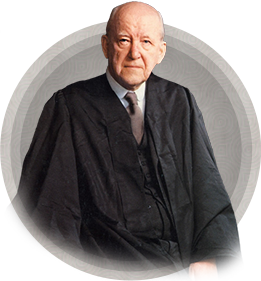
As  Martyn Lloyd-Jones said, "Do you mean by that, asks someone, that the saints in the Old Testament were not forgiven? Of course I do not. They were obviously forgiven and they thanked God for the forgiveness. You cannot say for a moment that people like David and Abraham and Isaac and Jacob were not forgiven. Of course they were forgiven. But they were not forgiven because of those sacrifices that were then offered. They were forgiven because they looked to Christ. They did not see this clearly, but they believed the teaching, and they made these offerings by faith. They believed God’s Word that He was one day going to provide a sacrifice, and in faith they held to that. It was their faith in Christ that saved them, exactly as it is faith in Christ that saves now. That is the argument."

Wednesday, August 19, 2020

Following Paul to Righteousness by Faith


"Look out for the dogs, look out for the evildoers, look out for those who mutilate the flesh. For we are the circumcision, who worship by the Spirit of God and glory in Christ Jesus and put no confidence in the flesh— though I myself have reason for confidence in the flesh also. If anyone else thinks he has reason for confidence in the flesh, I have more: circumcised on the eighth day, of the people of Israel, of the tribe of Benjamin, a Hebrew of Hebrews; as to the law, a Pharisee; as to zeal, a persecutor of the church; as to righteousness under the law, blameless. But whatever gain I had, I counted as loss for the sake of Christ. Indeed, I count everything as loss because of the surpassing worth of knowing Christ Jesus my Lord. For His sake I have suffered the loss of all things and count them as rubbish, in order that I may gain Christ and be found in Him, not having a righteousness of my own that comes from the law, but that which comes through faith in Christ, the righteousness from God that depends on faith.

- Philippians 3:2-9

The Apostle Paul gives us a list of things here which might have been considered grounds for a righteousness before God based on his own qualities. As righteousness was understood by his judaizing opponents, Paul had all of the qualifications of birth, of training, and of works. If anyone could be justified by his own qualifications, then that person could be none other than Paul. 

Yet, what does that same Paul say about his qualifications: "I count them as rubbish" (verse 8). What men would count as shining qualities, Paul calls garbage. And I don't think that Paul is referring here to God's point of view (Isaiah 64:6). Rather, he is telling us what was his own attitude to those things that he, too, in a previous life, counted as glorious. They were garbage, not because they were rejected by God, though that is true, but rather because they had blinded him to true righteousness, that which comes by faith alone in Christ alone. It is as if some prospector had been so in love with his lump of coal that he had ignored a streambed next to him littered with gold nuggets. 

This is why Christians should feel such sorrow for those trapped in pseudo-Christian sects. I have spoken to Mormons, Jehovah's Witnesses, and Oneness Pentecostals who were so proud of their chunks of coal - such as baptism or organizational position - while they are blind to the gold of true righteousness, such as Paul had found, by faith in Christ alone.

Saturday, August 15, 2020

How the Church Paved the Way for Humanism

There has long been a tradition of dividing the Ten Commandments into two tables, commandments one through four and then five through ten. I am OK with that division. The first four deal primarily with man's relationship with God, and the other six primarily with his relationship with his fellow man. They are often portrayed this way in images of the commandments. That might be a bit fanciful. We have no record of how they were divided between the two tablets. Or even if they were divided. Some people believe that each tablet displayed all ten.

That's fine so far. 

There is also a common view that the civil government is supposed to enforce the second table, the laws against thievery and murder, etc., but has no authority over the first four. 

My question is this: Why? 

Sometimes the answer is that the First Amendment to the Constitution forbids it. We have freedom of religion in this land, so we can't have laws against idolatry. Yet our country has a heritage of so-called "blue laws," laws that required businesses to be closed on Sunday in honor of the Sabbath. "Blue," in this case, derives from a historical usage, in which "blue" was used for something which was overly strict. It was a pejorative term, but passed into general usage. The courts have upheld Sunday-closing laws on secular grounds, such as the practicality of providing a day off for workers. 

However, the question must be, Why does the First Amendment - in reality, the Supreme Court's interpretation of the First Amendment - outweigh God's commandments? Should a cultural preference become the standard by which even Christians are to live, over the Word of God? 

When God tells us, "You shall have no other gods before Me" (Exodus 20:3), His desire is clear. So also when He says, "You shall not make for yourself a carved image, or any likeness of anything that is in heaven above, or that is in the earth beneath, or that is in the water under the earth. You shall not bow down to them or serve them, for I the Lord your God am a jealous God" (verses 4-5). So, on what grounds do we decide that His will in these two commandments is less important that it is when He says, "You shall not murder" (verse 13)? There is certainly no biblical justification for that judgment. 

When the Westminster Standards were originally written, the Larger Catechism, question and answer 109, included among the sins forbidden by the Second Commandment, "tolerating a false religion."  However, in 1788, when the first Presbytery of the Presbyterian Church met in the newly-independent United States, they removed that clause as offensive to religious liberty. Not as offensive to the Word of God. 

What this should tell us is that the secular humanism which has come to dominate these United States is not a new phenomenon, and did not suddenly puff into existence because prayer was removed from government schools in the 1960's. Rather, it was the culmination of that decision in 1788 to place political and cultural considerations above the enscripturated Word of God. The door was opened to the supposed independence of "secular life" from God. Now we have parts of our lives which are designated "religious," and parts which are designated "secular." And the humanists are perfectly happy with allowing Christians to enjoy that distinction, because it turns all of life outside the church doors over to them. And the church doors are only a temporary barrier, until the humanists have secured their territory against that day.

Wednesday, August 12, 2020

Does God Have a Body Like Men Have?

One of the distinctions between Mormonism and biblical Christianity is the insistence by Mormons that God the Father has a body such as humans have. They also believe this of the preincarnate God the Son. They justify this belief by the statement in Genesis 1:26-27 that God made Adam in His own image. Mormons say that this must be in His physical image. 

There are three arguments against this Mormon claim.

The first I have discussed before, that the image consists of spiritual attributes, not physical. Since I have already dealt with argument, I will not repeat it here. 

The second argument regards the birth of Seth (Genesis 5:3): "When Adam had lived 130 years, he fathered a son in his own likeness, after his image, and named him Seth." There is a marked change here! Where Adam had been created in the image of God, Seth is conceived in the now-fallen image of Adam. Mormons do not claim that the physical image of men changed from Adam to Seth. That leaves only a spiritual change from Adam's original status to his spiritual status in chapter 5. Therefore, there can be no physical image involved in the creation of Adam. 

And thirdly we have the statements of Moses to Deuteronomy 4. He is reminding did to the idolaters at Baal Peor (described in Numbers 25), and at the giving of the Ten Commandments (Exodus 20): "You came near and stood at the foot of the mountain, while the mountain burned with fire to the heart of heaven, wrapped in darkness, cloud, and gloom. Then the Lord spoke to you out of the midst of the fire. You heard the sound of words, but saw no form; there was only a voice" (Deuteronomy 4:11-12). This is Jehovah, who is identified as the preincarnate Christ by Mormons. I agree with that identification. In His mediatorial role, the preincarnate Son mediated the giving of the Ten Commandments to the covenant people. 

Moses continues (Deuteronomy 4:15-18): "Therefore watch yourselves very carefully. Since you saw no form on the day that the Lord spoke to you at Horeb out of the midst of the fire, beware lest you act corruptly by making a carved image for yourselves, in the form of any figure, the likeness of male or female, the likeness of any animal that is on the earth, the likeness of any winged bird that flies in the air, the likeness of anything that creeps on the ground, the likeness of any fish that is in the water under the earth." 

In both sections of the chapter, Moses emphasizes the lack of physical form of Jehovah. And to bring the point home even more strongly, he warns the people not to make anything as a physical representation of that divine presence. Notice that he also doesn't make what would be a rational suggestion if the Mormon doctrine were true, to look at themselves as the representations of a supposed divine image. That would have been the rational argument, rather than to warn them against the images of animals, if the divine nature had had a physical image

Together, these three arguments from Scripture show that the doctrine of the Mormons has its origin in the same pagan mindset described by Paul in Romans 1:20-23: "His invisible attributes, namely, His eternal power and divine nature, have been clearly perceived, ever since the creation of the world, in the things that have been made. So they are without excuse. For although they knew God, they did not honor Him as God or give thanks to Him, but they became futile in their thinking, and their foolish hearts were darkened. Claiming to be wise, they became fools, and exchanged the glory of the immortal God for images resembling mortal man and birds and animals and creeping things." There is nothing of a biblical basis in it.

Saturday, August 8, 2020

The Impotence of the Church

These two quotes from Gary North ("Tools of Dominion," p. 48), written in 1990, explain why the church is impotent in the face of the crises of humanistic 2020 America.

"To retreat from this task of applied Christianity is to to turn over the running of the world to pagan humanists and their theological allies, Christian antinomians. It is to turn the medical world over to the God-hating abortionists who are opposed so vigorously by Dr. [James] Dobson. Yet this is precisely what every publicly-visible Christian leader has done throughout the Twentieth Century, and what almost all of them did after the late-Seventeenth Century. It is universally assumed by Christians that the case laws of Exodus are null and void, and should be" (emphasis in the original).

"The tools of dominion, God's law, sit unused, and generally-unread by those who call themselves Christians. They are the best weapons that Christians possess for moral self-defense, since the best defense is a good offense, yet they steadfastly refuse to use them. To use God's revealed law effectively would require them to become intimately familiar with its many subtleties and complex applications, and, even less appealing, to discipline themselves in terms of it. They prefer to let is sit unopened, either in their laps or on their shelves. Christians, therefore, continue to lose the war for civilization."