Thursday, November 27, 2014

The Great Thanksgiving Hoax

From the Ludwig von Mises Institute:
Each year at this time, schoolchildren all over America are taught the official Thanksgiving story, and newspapers, radio, TV, and magazines devote vast amounts of time and space to it. It is all very colorful and fascinating.

It is also very deceiving. This official story is nothing like what really happened. It is a fairy tale, a whitewashed and sanitized collection of half-truths which divert attention away from Thanksgiving's real meaning.

The official story has the Pilgrims boarding the Mayflower, coming to America, and establishing the Plymouth colony in the winter of 1620–21. This first winter is hard, and half the colonists die. But the survivors are hard working and tenacious, and they learn new farming techniques from the Indians. The harvest of 1621 is bountiful. The pilgrims hold a celebration, and give thanks to God. They are grateful for the wonderful new abundant land He has given them.

The official story then has the Pilgrims living more or less happily ever after, each year repeating the first Thanksgiving. Other early colonies also have hard times at first, but they soon prosper and adopt the annual tradition of giving thanks for this prosperous new land called America.

The problem with this official story is that the harvest of 1621 was not bountiful, nor were the colonists hard-working or tenacious. 1621 was a famine year and many of the colonists were lazy thieves.
In his History of Plymouth Plantation, the governor of the colony, William Bradford, reported that the colonists went hungry for years because they refused to work in the field. They preferred instead to steal food. He says the colony was riddled with "corruption," and with "confusion and discontent." The crops were small because "much was stolen both by night and day, before it became scarce eatable."
In the harvest feasts of 1621 and 1622, "all had their hungry bellies filled," but only briefly. The prevailing condition during those years was not the abundance the official story claims, it was famine and death. The first "Thanksgiving" was not so much a celebration as it was the last meal of condemned men.

But in subsequent years something changes. The harvest of 1623 was different. Suddenly, "instead of famine now God gave them plenty," Bradford wrote, "and the face of things was changed, to the rejoicing of the hearts of many, for which they blessed God." Thereafter, he wrote, "any general want or famine hath not been amongst them since to this day." In fact, in 1624, so much food was produced that the colonists were able to begin exporting corn.

What happened? After the poor harvest of 1622, writes Bradford, "they began to think how they might raise as much corn as they could, and obtain a better crop." They began to question their form of economic organization.

This had required that "all profits & benefits that are got by trade, traffic, trucking, working, fishing, or any other means" were to be placed in the common stock of the colony, and that, "all such persons as are of this colony, are to have their meat, drink, apparel, and all provisions out of the common stock." A person was to put into the common stock all he could, and take only what he needed.

This "from each according to his ability, to each according to his need" was an early form of socialism, and it is why the Pilgrims were starving. Bradford writes that "young men that were most able and fit for labor and service" complained about being forced to "spend their time and strength to work for other men's wives and children." Also, "the strong, or man of parts, had no more in division of victuals and clothes, than he that was weak." So the young and strong refused to work and the total amount of food produced was never adequate.

To rectify this situation, in 1623 Bradford abolished socialism. He gave each household a parcel of land and told them they could keep what they produced, or trade it away as they saw fit. In other words, he replaced socialism with a free market, and that was the end of the famines.

Many early groups of colonists set up socialist states, all with the same terrible results. At Jamestown, established in 1607, out of every shipload of settlers that arrived, less than half would survive their first twelve months in America. Most of the work was being done by only one-fifth of the men, the other four-fifths choosing to be parasites. In the winter of 1609–10, called "The Starving Time," the population fell from five-hundred to sixty. Then the Jamestown colony was converted to a free market, and the results were every bit as dramatic as those at Plymouth. In 1614 Colony Secretary Ralph Hamor wrote that after the switch there was "plenty of food, which every man by his own industry may easily and doth procure." He said that when the socialist system had prevailed, "we reaped not so much corn from the labors of thirty men as three men have done for themselves now."

Before these free markets were established, the colonists had nothing for which to be thankful. They were in the same situation as Ethiopians are today, and for the same reasons. But after free markets were established, the resulting abundance was so dramatic that annual Thanksgiving celebrations became common throughout the colonies, and in 1863 Thanksgiving became a national holiday.

Thus, the real meaning of Thanksgiving, deleted from the official story, is: Socialism does not work; the one and only source of abundance is free markets, and we thank God we live in a country where we can have them.

Tuesday, November 25, 2014

Grace and Faith in the Abrahamic Covenant

This is another short paper that I have prepared for my biblical theology course. I found it profitable to write, so I hope that it may be profitable to others to read.

    Abraham appears in Genesis as the human side of the first full-orbed biblical covenants. God initiates His covenant with Abraham in 12:2-3: “I will make of you a great nation, and I will bless you, and make your name great, so that you will be a blessing. I will bless those who bless you, and him who dishonors you, I will curse, and in you all the families of the earth shall be blessed.” This covenant is completely gracious, with God undertaking all of its requirements unconditionally. Abraham is a passive party to it.
The next development of the covenant is in chapter 15. In verse 5, God gives the promise of a generous posterity. In verse, He adds the land promise, expanded in verses 13-15. Abraham’s response appears in verse 6: “and he believed the Lord, and He counted it to him as righteousness”. Again, it is striking that the promises of God are unconditional. At no point does He give any requirement to Abraham as the price for the blessings. While Abraham is passive in the covenant, Moses records his reaction of faith. That order is important: faith is the response to the covenant, not its cause.
Another stage is seen in chapter 17. The promise of a posterity is repeated in verses 4-6, and the land promise in verse 8. But we see added elements in verse 2 - holiness- and the extension, not just of posterity, but of spiritual prosperity to that posterity in verse 7. The covenant having already been established, holiness cannot be taken as a causative requirement for the blessings, but rather as the response. So we have the already granted instrument of the covenant, i. e., faith, now with the response, holiness. In addition, the covenant is revealed as a continuing relationship, not just with Abraham personally, but also with his descendants. And in verses 9-14, God also gives a continuing sign of the covenant, circumcision of all its visible male members. In verse 22, we see that the sign was not only for the blood descendants, but for all the members of the household, including those by bond.
    The posterity promise is repeated in 18:10 and 22:17. We also see an interesting element in 17:18-20. God has informed Abraham that the covenant blessings will be through his yet-unborn son by Sarah (v. 16). Abraham reacts, first with disbelief, considering his and Sarah’s advanced ages. Then he asks God to extend His blessings to Ishmael, as well. God responds in the negative, yet also promises material blessings on Ishmael. This again emphasizes the gracious nature of the covenant. Isaac hasn’t even been conceived, yet, but God decrees that he shall be a spiritual member of the covenant. Ishmael has as much claim, as also a son of Abraham, yet is sovereignly excluded. Yet, even for him, there are benefits from the covenant.
The land and posterity promises are renewed to Abraham’s son Isaac in 26:3 and 26:24, and to his grandson Jacob in 28:4 and 28:13. Jacob acknowledges the gracious benefits he has received because of the covenant in 32:9-10. The covenant with Jacob is renewed at Paddan-Aram (35:9-12), both in the posterity and in the land promises. Jacob voices these blessings on Joseph, in 48:15-16. And Joseph refers to the land promise in 50:24. At each of these steps, we see God acting monergistically, promising blessings, with no corresponding requirements from Isaac and Jacob. The covenant is always given as gracious.
In Exodus, Moses portrays the covenant, not as something spoken anew by God, but rather as something to be remembered by the descendants of Abraham. We see this in 2:24, 3:6, 3:15, 4:5, 6:3-4, 6:8, 32:13 (where Moses reminds God!), and 33:1. In 6:3, God adds His covenant Name, Jehovah, instead of God Almighty (Heb., El Shaddai). These references are all couched in the pattern we see in the Prologue of the Ten Commandments(20:2): “I am the Lord [Jehovah] your God, who brought you out of the land of Egypt, out of the house of slavery.” That is, the covenant is given on the basis of the a priori, gracious relationship that God initiated with the line of Abraham. It is never given as a quid pro quo in response to rituals or behaviors of the covenant people. It is sharply dichotomous from the relationships of pagans to their deities.
The Abrahamic covenant is mentioned only once in Leviticus, near the end. In 26:40-41, the people are described as repenting of their iniquities, i. e., their breaking of the laws just given in the rest of the book. In response, verse 42, God promises to remember His covenant. This in no way lessens the graciousness of the covenant. As with the Ten Commandments, God’s actions are predicated on an a priori relationship. The repentance of the people does not create a new relationship. In fact, the verse assumes a failure on the part of the people, and indicates that forgiveness is available, reinforcing the graciousness of the covenant.
In Numbers, we see the land promise recalled in passing in 32:11. Then again in Deuteronomy 1:8, 6:10, 9:5, 9:27-28, 30:20, and 34:4. The posterity promise appears in 29:10-13. The reference in 9:5 particularly stands out because it is bracketed, in verses 4 and 6, with reminders of the graciousness of the covenant: “Do not say in your heart , ‘It is because of my righteousness that the Lord has brought me in to possess the land…’ Know, therefore, that the Lord your God is not giving you this good land to possess because of your righteousness…” Joshua, the successor of Moses, also recalls both the posterity and land promises in 24:3-4.
In the historical books, the remembrances of the Abrahamic covenant are more fleeting. There are no references in I and II Samuel. There is one in I Kings 18:36, where it is recalled by Elijah, And by God in II Kings 13:23. David mentions it in I Chronicles 16:16, and again in 29:18. And the land promise is claimed by Jehoshaphat in II Chronicles 20:7. Hezekiah preaches on the covenant in 30:6, as he sought to bring Judah to repentance. The Levites had the same goal after the Exile, in Nehemiah 9:7-8.
In the Psalms, the role of remembrance continues. We see this in 47:9, 105:6, 105:9, and 105:42. Psalm 105 is partly a repeat of the praise in I Chr. 16, so it appears to be a composition of David. It is significant that he uses God’s covenant with Abraham as a reminder of God’s faithfulness, when his own covenant is used similarly by the major prophets.
The Abrahamic covenant appears several times in the second half of the prophecies of Isaiah. God Himself uses that covenant as the basis for restoring the descendants of Jacob in 29:22-24. He does so again in 41:8-10 and 51:1-3. Isaiah claims the covenant in a prayer for his people in 63:15-17. So, the prophet looks less to the land and posterity promises, and more to the grace of the covenant than did the historical writers. God through Jeremiah does the same in Jer. 33: 25-26. However, God reverses that in Ezekiel 33:24: “Son of man, the inhabitants of these waste places keep saying, ‘Abraham was only one man, yet he got possession of the land; but we are many; the land is surely given to us to possess.’” In spite of statements, such as Deut. 9:4-6, emphasizing that God’s grace is not due to worthiness of the people, in Ezekiel’s time the people are claiming the territory as theirs by right! That might explain why we don’t see the Abrahamic covenant again in the prophets, not until the New Testament.
What is funny is that we see the same attitude when the NT writers pick up the Abrahamic theme. In the first occasion, Matthew 3:9-10, John the Baptist is rebuking the Jewish leaders for presuming to covenant blessings as a right. In 8:11-12, Jesus revives the faith aspect, as He informs the Jews that faithful Gentiles will enjoy the Abrahamic blessings.May, the mother of Jesus, restores the gracious element in Luke 1:54-55. And Zechariah, the father of John the Baptist, does the same in 1:68-75. Jesus renewed the nongenetic aspect of the covenant (as with Ishmael) in 13:28, and in the parable of Lazarus and the rich man (16:19-31). Physical descent does not necessarily bring the spiritual benefits of the covenant! Jesus continues this theme in John 8:33-58. Thus, the Abrahamic covenant appears in the Gospels as a struggle between the perverted version from the Jewish leaders, who expected the covenant blessings of the covenant on the basis of their lineage, a la Ezekiel 33:24, and the correction by Jesus, that the covenant is exclusively gracious, a la Deuteronomy 9:4-6.
In Acts 3:, starting with verse 13, we see Peter claiming that the Abrahamic covenant, on which the Pharisees relied so strongly, actually pointed to Jesus. The Deacon Stephen makes the same point, in part, in his evangelistic sermon of chapter 7, for which he was stoned by that enraged Jews. Paul takes a similar tack in 13:26-33, ending with his assertion, “This He has fulfilled to us, their children, by raising Jesus [from the dead]...” Thus, Luke in Acts uses the Abrahamic theme, not just to deprive the Jewish leaders of their superiority, but to point explicitly to fulfillment in Jesus, preparing for Paul’s identification of Jesus as the prophesied Seed of Abraham.
    Paul puts Abraham prominently in Romans. In chapter 4, he focuses on faith as the response to the covenant. In verse 3, he actually quotes, Genesis 15:6, “Abraham believed God, and it was counted to him as righteousness.” He thus establishes that his gospel of justification by faith alone is not a novelty, but is actually a revival of the covenant made with Abraham at the beginning of Israelite history. In 9:6-18, he reminds his readers of the posterity promise made to Abraham, carried through Isaac but not Ishmael, and through Jacob but not Esau, to demonstrate that the covenant was gracious, not by works or genetics, as Jesus also did in the gospels. And in chapter 11, he brings up Abraham and Isaac to demonstrate God’s faithfulness to that covenant. Thus, Israel had every reason to hope in the covenant, but not to rely on genetics alone. The covenant is by faith, including the faith of Gentiles, who had no DNA from the line of Abraham, but imitated his faith.
Paul caps his Abrahamic apologetic in Galatians, chapter 3. In verse 6, he quotes Genesis again: “Abraham believed God, and it was counted to him as righteousness.” He then proceeds, in verses 7-13, to explain the dichotomy between justification by faith and justification by works, leading to his chief point, verse 14, that the Abrahamic covenant must bring the believer to Jesus Christ, for He is the seed of Abraham promised way back in Genesis (verses 15-18).
    The writer of Hebrews begins a new discussion of Abraham in 2:16, in which Jesus, Jehovah the Covenant-Maker Incarnate, has come to redeem the offspring of Abraham. He expands on this in 6:13-7:10, in which he lays a foundation on God’s faithfulness to Abraham as the security of the believer. God made promises to Abraham in the covenant, fulfilled them, so the believer can depend on Him to fulfill His redemptive purpose revealed in Jesus Christ. Abraham himself is shown trusting that purpose in 11:18-19, which is also seen in James 2:21-23.
    Across both testaments, we see an emphasis on God’s covenant with Abraham as gracious, based on faith, and derived from an a priori relationship. Yet, we also see the people, in spite of these assertions, turning the covenant into a get-out-of-jail-free card, an automatic guarantee of salvation on the basis of physical descent. The prophets, the Apostle Paul, John the Baptist, and Jesus Himself struggle to break that idolatry. Jesus was crucified, Stephen was stoned, and Paul was martyred for their efforts.

Monday, November 24, 2014

The Bible and Confiscatory Government

Every Christian is familiar with these words of Jesus (Matthew 22:21): "Render to Caesar the things that are Caesar's, and to God the things that are God's." His words, of course, are true. I cannot say the same of how people use them. These words are often quoted to justify the taking by government of whatever taxes or property it sees fit. And I am sad to say that no one challenges that interpretation, because few people know their Bibles, beyond a few popular catchphrases.

Consider these words of warning from the Prophet Samuel (I Sam 8:14-15): "[The ruler] will take the best of your fields and vineyards and olive orchards and give them to his servants. He will take the tenth of your grain and of your vineyards and give it to his officers and to his servants." The context is the transition from the theocratic judgeships to the monarchy. Samuel was the last judge, and he was responding to the demands of the people of Israel for a king, "that we also may be like all the nations" (verse 20).

I suspect that most of us reading this are thinking something along the lines of, "I would kill for the privilege of paying only ten percent in taxes." And that is, indeed, one of the things we should see here. But notice also that it is Samuel's warning that the king would tax them ten percent. What does it say about us that we tolerate a government that taxes - income, sales, excise, tariffs - half of our income?

What is wrong with that? Again, we forget our Bibles. Do you recall the XIIIth Commandment (Exodus 20:15)? God says, "You shall not steal." Notice that he doesn't make exceptions for government. It doesn't exclude presidents, congressmen, governors, legislators, mayors, or city councilmen, much less the hordes of unelected bureaucrats with which are burdened. And that is exactly Samuel's warning: If you want a ruler who takes care of you, then you can expect that he will consume your livelihood.

Another prophet, Ezekiel, expresses the commandment explicitly to rulers (Ez. 46:18): "The prince shall not take any of the inheritance of the people, thrusting them out of their property." Wow! Imagine the society we would have if our government submitted to that command. Imagine the liberty and prosperity we would experience, if it became shameful for government to take even just ten percent of our income, and were forbidden to take our physical property. There is no "eminent domain" here! And there is no room for "Moral Monday" protesters to be claiming that government should confiscate and redistribute more of our property. And there is no exemption for tyranny by 50% plus one!

Friday, November 21, 2014

The Fall of Man and the Unfolding of God's Redemptive Purpose

The following is the result of an assignment in my biblical theology class, to examine the description and application of the Fall across the Scriptures. I have found it so profitable that I have decided also to post it here. May the Lord bless it in the lives of readers, as well.

    Even though we associate this story with the writings of Moses, he actually only deals with it in the first portion of Genesis.
    We have the original account in chapter 3. In 2:16-17, we have the only recorded restriction on Adam and Eve: “You may surely eat of every tree of the garden, but of the tree of the knowledge of good and evil, you shall not eat, for in the day that you eat of it, you shall surely die.” However, in chapter 3, the serpent questions that restriction. In verse 1, he asks the woman, “Did God actually say, ‘You shall not eat of any tree…?’” Thus, the fall starts with doubting the word of God. Then the serpent escalates the confrontation in verse 4: “You will not surely die.” He has moved from doubting God to directly contravening His commands. He continues in verse 5, “For God knows that, when you eat of it, your eyes will be opened, and you will be like God…” Now, the serpent caps his temptation with an insinuation regarding God’s motivation in the command. In consequence of which, Eve eats of the fruit, and shares it with Adam, in verse 6.
    The consequences come quickly. In the next verse, the two humans recognize for the first time that they are naked. This realization leads them to hide in shame from God, when He next comes looking for them. Upon their confession of their rebellious act, God pronounces His response: first, in verse 14, the serpent is cursed for his role in tempting the two; next, in verse 16, the woman is cursed with pain in childbearing and conflict with her husband; and third, he is cursed with hardship and futility in his labors in verses 17-19. These curses correspond exactly with the calling that God had given humanity in 1:26-31, to be fruitful and to rule and cultivate the creation.
    The fall snowballs in its effects. In 4:5-8, the next generation, consisting of Cain and Abel (at this point, the only posterity of the first couple), jealousy erupts and sin breaks out in fratricide, as Cain murders Abel. In verse 12, God repeats that part of the curse involving futility in man’s God-given task of making the earth fruitful. And with one more generation, Cain’s son Lamech repeats his father’s sin of murder, and even doubles it (4:23).
    The snowball of sin continues its expansion in chapter 6, where the wickedness of men has consumed their entire existences (verse 5). The only exception is Noah, who, with his family, is preserved from God’s general judgment in the Flood (6:9-8:19).
    In these passages, we see only hints of God’s redemptive purpose in the world of man. 3:15 gives us the protevangelium, the promise of the seed of Eve Who would crush the head of the serpent. In 3:21, we see the first deaths in the world, apparently in sacrifice, to provide coverings of fur for the now-modest first couple. The conflict between Cain and Abel arises during sacrificial offerings (4:3-4). And immediately after the flood, Noah responds with offerings of some of the clean animals from the ark (8:20). So, even as the effects of the fall are manifest, God begins to show His plan of redemption, a substitutionary sacrifice for the forgiveness of sin.
    The subject of the fall doesn’t appear again until the book of Job, and then only in passing. In 31:33, Job, speaking to his friends, in a list of hypothetical failures, includes, “if I have concealed my transgressions as others do by hiding my iniquity in my bosom…” He acknowledges, not just individual sins, but his sinful state, the inherits consequence of Adam’s failure. Is his reference to “concealing transgressions” an allusion to Adam’s fig-leaf apron and hiding among the trees?
    In the Psalms, we get passing references to man’s inheritance of sin.
    In 14:3, David says of fools, “They have all turned aside; together they have become corrupt; there is none who does good, not even one.” Referring to his own sin with Bathsheba, David also says, in 51:5, “Behold, I was brought forth in iniquity, and in sin did my mother conceive me.” In 53:1-3, he repeats his confession: “...They are corrupt, doing abominable iniquity; there is none who does good… They have all fallen away; together they have become corrupt; there is none who does good, not even one.” In his mind, iniquity isn’t an action, but a condition, which reflects the teaching of Moses that Adam’s particular sin had resulted in a condition of sin in his posterity. That is, men are not sinners because they sin, but rather, men sin because they are sinners.
    David apparently taught this lesson to his own children, because we find Solomon repeating it in Ecclesiastes 7:29: “This alone I found, that God made man upright, but they [sic] have sought out many schemes.” In one sentence, he describes the original creation in innocence, a state which was lost, resulting in the present condition of perpetual sin.
    The theme of man’s corruption appears a number of times in the writings of the Prophet Isaiah. He portrays it very vividly in his account of his own calling. In chapter 6, he contrasts (v. 3) the thrice holy nature of Jehovah, with his own self-consciousness in verse 5: “Woe is me me! For I am lost; for I am a man of unclean lips, and I dwell in the midst of a people of unclean lips…” He continues the the themes of relating his personal sinful nature with the corrupt nature of all men. But he includes verse 7: “Your sin is taken away, and your sin is atoned for.” So he also repeats the Mosaic theme of following the declaration of sin with a discrete declaration of God’s redemptive purpose as sin’s solution.
    The prophet applies the judgment of God to his fellow Israelites in 9:17b: For everyone is godless and an evildoer, and every mouth speaks folly. For all this, His anger has not turned away, and His hand is stretched out still.” And he continues in verse 18, with the impact of sin on the created world: “For wickedness burns like a fire; it consumes briers and thorns; it kindles the thickets of the forest, and they roll upward in a column of smoke.” He imitates the curse of Gen. 3 in 14:3: “When the Lord has given you rest from your pain and turmoil and the hard service with which you were made to serve…” Babylon is seen to apply the hardships of Gen. 3:19. The same theme appears again in 24:4-6, with the earth bearing the curse of man’s sin. See, for example, verse 6a: “Therefore, a curse devours the earth, and its inhabitants suffer for their guilt…” God’s reaction of Gen. 6:5-6 is also seen in Isaiah 43:24b: “You have burdened Me with your sins; you have wearied me with your iniquities.” That sinfulness corrupts man’s whole nature (54:6), and He puts it away from His presence (59:2a), “Your iniquities have made a separation between you and your God, and your sins have hidden His face from you…”
    The next prophet, Jeremiah, also describes the general sinfulness that resulted from the fall. In 17:9, he says of Judah, “The heart is deceitful above all things, and desperately sick; who can understand it?” Then, to emphasize the awareness God has of our sin, he answers his own question in the next verse (10): “I The Lord search the heart and test the mind…” The prophet accuses Judah of being so corrupt that he isn’t even conscious of his corruption. Yet, in contrast, Jehovah is aware, just as He was before the flood.
    The next prophet, Ezekiel, recalls the words of the serpent in the prince of Tyre in 28:2: “Your heart is proud, and you have said, ‘I am a god, I seat in the seat of the gods, in the heart of the seas,’ yet you are but a man, and no god…” The serpent appealed to Adam and Eve with the expectation of godhood, and here the prince believes he has what was offered. And as happened to the first pair, the prince is cast out (verse 16): “You were filled with violence in your midst, and you sinned; so I cast you as a profane thing from the mountain of God…” And in 36:33-34, Ezekiel has God renewing the dominion covenant, originally given to Adam: “On the day that I cleanse you from all your iniquities, I will cause the cities to be inhabited, and the waste places shall be rebuilt. And the land that was desolate shall be tilled, instead of being the desolation that it was…” Thus, the redemptive purpose is renewed, in terminology describing the reversing of the curse, that man may again be fruitful and multiply and exercise dominion over the earth.
    And finally, in the prophets and in the Old Testament, we have a passing reference in Hosea 6:7: "Like Adam, they transgressed the covenant; there they dealt faithlessly with me." The prophet uses the original fall as an object lesson for the then-current faithlessness of Judah and Israel.
    In the New Testament, the fall is again an issue in the writings of Paul.
    In Romans 5:12-21, Paul places responsibility for sin on Adam (v.12, “sin came into the world through one man”), with all sins arising from this federal sinfulness (v. 14). However, he also renews the answer of God’s redemptive purpose to undo man’s fallenness. Verse 15, “If many died through one man’s trespass, much more have the grace of God and the free gift by the grace of that one man Jesus Christ abounded for many.” And verse 18,”As one trespass led to condemnation for all men, so one act of righteousness leads to justification and life for all men.” So, in this passage, we also see the pairing of man’s sin, on one hand, with God’s redemptive purpose, on the other.
    In the same epistle, 8:19-25, Paul also reminds us of the consequences for the nonhuman creation in the fall of man. In verse 19, he writes, “The creation waits with eager longing for the revealing of the sons of God.” Because, verse 20, “The creation was subjected to futility, not willingly, but because of him who subjected it.” And then the redemptive purpose in verse 21, “[in hope] that the creation itself will be set free from its bondage to decay…” And verses 23-24, “we ourselves… groan inwardly as we wait eagerly for adoption as sons, the redemption of our bodies, for in this hope we were saved.” Paul repeats the theme of general sinfulness followed by the hope of God’s redemptive purpose.
    In my final example, I Timothy 2:9-15, Paul isn’t addressing the issue of sin or of redemption, but rather applying the story of Genesis 3 to social behavior. He is addressing the behavior of women in the church, in terms of apparel and good works (vv. 9-10), and then during corporate worship, in quietness and submission (11-12), and not in authority over men (v. 12), for (verse 13-14), “It was Adam who was first created, and then Eve. And it was not Adam who was deceived, but the woman, being deceived, fell into transgression.” WHile Paul is addressing a nonsoteriological matter in this passage, his use of the creation and fall indicates his assumption of the reality of the story. He obviously knew the Mosaic record in Genesis, and assumed its truth.
    And finally, the story appears again in John’s Revelation, 12:9,: And the great dragon was thrown down, that ancient serpent, who is called the devil and Satan, the deceiver of the whole world - he was thrown down to the earth, and his angels were thrown down with him.” Here we have the first revelation of the identity of the serpent. In the words of Moses, it is just an animal, though cleverer than is natural for its kind. Here we have its identification as the chief evil, Satan. Then, in verses 10-11: “Now the salvation and the power and the kingdom of our God and the authority of His Christ have come, for the accuser of our brothers has been thrown down, who accuses them day and night before our God. And they have conquered him by the blood of the Lamb and by the word of their testimony, for they loved not their lives, even unto death.” These verses bring us full circle to Genesis 3:15. there the serpent was promised that the seed of the woman would crush his head. Here we see that promise fulfilled. Where Genesis 3 gave the account of man’s fall into the dominion of sin, here we see the redemptive victory of Jesus Christ over that sin. What had been promised has now been revealed. The repeated pairing of the judgment of sin with God’s redemptive purpose, is now experiential, with the judgment and destruction of sinfulness itself.

Thursday, November 20, 2014

Where does the Bible Teach Sola Scriptura?

During the Reformation, one of the primary ssues was that of authority. And it is, indeed, the central issue that divides biblical Protestants from Catholics: by what standard do we judge truth? The Catholics answer with the Bible, church tradition, and the Magisterium, i. e., the church hierarchy. The Reformers answered with the Latin phrase, Sola Scriptura, Scripture alone. That does not mean that everything must be explicitly stated in the Bible, but rather that it must be either explicitly stated or necessarily logically required by it. In the words of the Westminster Confession of Faith I:6, "The whole counsel of God, concerning all things necessary for his own glory, man's salvation, faith, and life, is either expressly set down in Scripture, or by good and necessary consequence may be deduced from Scripture."

Protestants defend our position in various ways. An excellent one can be seen here, by the late Orthodox Presbyterian Rev. Greg Bahnsen. In response, Catholics ask the question, legitimately, if hypocritically, "Where does the Bible teach sola scriptura?" Again, various answers, some better, some worse, are given. I will offer one that I have not seen from anyone else.

"When they say to you, 'Inquire of the mediums and the necromancers who chirp and mutter,' should not a people inquire of their God? Should they inquire of the dead on behalf of the living? To the teaching and to the testimony! If they will not speak according to this word, it is because they have no dawn" (Isaiah 8:19-20). God, speaking here through the Prophet Isaiah, asks the very question I am addressing: how should the people of God judge truth and falsity? And He gives the only infallible answer: By comparing it to the Word that He had breathed out (II Timothy 3:16), i. e., the Bible.

Sunday, November 16, 2014

Sola Fide and the Catholic Use of James 2:24

As any Christian should know, the Apostle Paul tells us (Romans 3:28), "We hold that one is justified by faith apart from the works of the law." Faith is the means - not the basis, which is the sacrifice of Christ on the cross - of justification before God, that is, a judicial declaration of guiltlessness.

While claiming not to teach salvation based on works from one side of the mouth, with the other Catholics immediately throw up James 2:24: "You see that a person is justified by works and not by faith alone."

Hmmm, the Bible-believer might think, were the Reformers wrong in decrying the Catholic doctrine of salvation? Are we saved partly by works? This thinking could severely undermine the assurance of salvation. For the Catholic, an obvious question would be, How do I know when I have added enough good works to qualify for justification?

However, their whole argument fails with just a little consideration of context. For this verse, the context is the entire paragraph, James 2:18-26. Verse 18, the second half (emphasis added), is the key: "Show me your faith apart from your works, and I will show you my faith by my works" [emphasis mine]. He says "show me" and "show you," but never "show God." James isn't arguing with Paul over how the believer is justified in the eyes of God! He is talking about how we demonstrate our faith before the eyes of people around us. He is stating, in different words, the same principle stated by Jesus in Matthew 7:16: "You will recognize them by their fruits."

I write this for two purposes. The first is to reinforce the confidence of the Protestant in the face of Catholic abuse of Scripture. The second is in hope that God will open the eyes of a Catholic reader, leading him to recognize that he has been deceived. I appeal to you to turn to Christ in faith alone, eschewing any confidence in your good works to get you into eternal life. In God's eyes, the best that you can do is as "a polluted garment" (Isaiah 64:6). Your best works are repugnant to Him.

Tuesday, November 11, 2014

The Sacrifice of the Catholic Mass, and Its Offense to the Gospel

"If anyone saith that the sacrifice of the Mass is only a sacrifice of praise and thanksgiving, or that it is a bare commemoration of the sacrifice consummated on the cross, but not a propitiatory sacrifice, or that it profits him only who receives, and that it ought not to be offered for the living and the dead for sins, pains, satisfactions, and other necessities, let him be anathema."
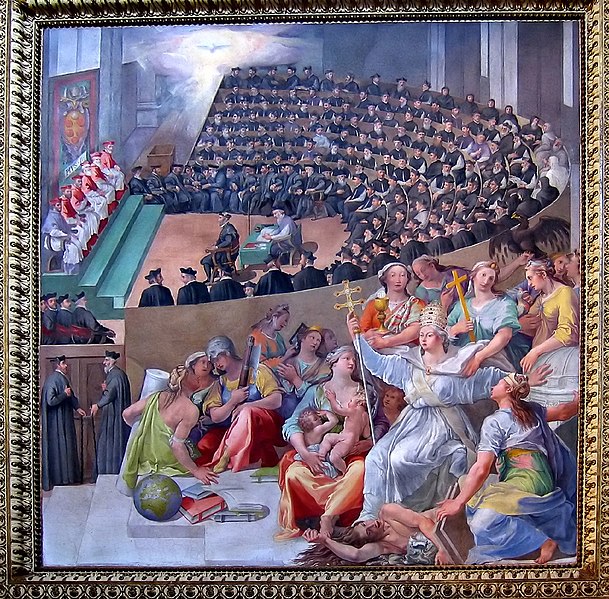
The Council of Trent

The above statement is a quote from the decrees of the Council of Trent, chapter 9, canon 3. This council was called by the Roman Catholic Church to address the crisis created by the budding of the Reformation. It defined, officially and infallibly (Rome claims), Catholic doctrine, in perpetuity. I have highlighted in boldface the key phrases in that statement. They claim for this statement the support of Malachi 1:11, "For from the rising of the sun to its setting, my name will be great among the nations, and, in every place, incense will be offered to my name, and a pure offering."

When dealing with Catholic apologists, I find that they consistently claim that the Mass is not a sacrifice. For example, Dave Armstrong writes, "It is crucial to understand that the Sacrifice of the Mass is not a 're-sacrifice' of Christ, as is the common misconception. Jesus does not die every time a priest offers Mass, since He died once, in history, on earth" (A Biblical Defense of Catholicism, p. 95). Yet, he says in the very next paragraph, "in the Mass, Jesus Christ ultimately offers the sacrifice of Himself (just as at the Last Supper), with the priest merely acting in His stead, as a purely secondary, instrumental agent." So, as Trent says, it is a sacrifice, but it's not, because it is Christ sacrificing Himself, not the priest sacrificing Him. To me, that sounds like Rome is trying to play both sides of the matter.

However, whether Christ is supposedly sacrificing Himself, or the priest is sacrificing Him, the claim should be anathema (to reclaim their word) to any true Christian.

The writer of Hebrews (10:5) quotes Jesus Himself, using the words of Psalm 40:6, "Sacrifice and offerings You have not desired." So, in His own words, Jesus is telling us that we do not need a continuing sacrifice, whether offered by Himself, or "with the priest merely acting in His stead." Why is that? Because (Heb. 10:11, emphasis added) "we have been sanctified through the offering of the body of Jesus Christ once for all." The whole point of this chapter of Hebrews is to establish the superiority of Christ's priestly offering of Himself over the Jewish Aaronic priests exactly because their sacrifices had to be repeated. In contrast (Heb. 10:12-14, emphasis added), "when Christ had offered for all time a single sacrifice for sins, He sat down at the right hand of God..., for, by a single offering, He has perfected for all time those who are being sanctified." And I think that the final nail in the coffin is seen in verses 17 and 18: "'I will remember their sins and their lawless deeds no more.' Where there is forgiveness of sins, there is no longer any offering for sin."

By claiming a continuing sacrifice in the Mass, the Catholic Church is claiming that it must complete an insufficiency in the sacrifice of Christ. And, as the writer of Hebrews (10:1) points out, "it can never, by the same sacrifices, that are continually offered every year [or every Sunday], make perfect those who draw near." That is, if the sacrifice must be continually offered, then it is never sufficient to achieve the purpose of sanctification. The Catholic has no assurance that he has partaken in the sacrifice of the Mass enough times to know when he has been saved from his sins.

That is bondage of an horrific sort! That is why the Reformation was necessary! And it is why bible-believing Protestants must never cease to point the finger at Rome and denounce it as a perversion of Christianity.

On which will you rely, Catholic reader? A Savior who gave His life for His people, once for all, or a Mass with nothing but the claims of the Pope, contrary to the Scriptures themselves?