Wednesday, September 24, 2014

Streams in the Desert: Israel in Prophecy

"For I will pour water on the thirsty land,
    and streams on the dry ground;
I will pour My Spirit upon your offspring,
    and My blessing on your descendants.
They shall spring up among the grass
    like willows by flowing streams.
This one will say, ‘I am the Lord's,’
    another will call on the name of Jacob,
and another will write on his hand, ‘The Lord's,’
    and name himself by the name of Israel."
- Isaiah 44:3-5

I have no issues with the modern State of Israel. However, as I have noted before, I oppose the Israelotry that seems to possess so much of American evangelicalism. I think much of it involves bad hermeneutics, changing spiritual prophecies into materialistic pandering.

That's why I quote the verses above. It is true that the Old Testament, especially the book of Isaiah, prophesies some wondrous events in Israel. I simply deny that those events are intended to be taken in a literal way. Rather, I see them as prophecies of the wondrous works of the Holy Spirit in the Gospel. Yet dispensationalists accuse me, and those who hold to the same view, of "spiritualizing" Scripture. I proudly admit my debt to the Puritans in this matter, as can be found described in the book, The Puritan Hope, by Iain Murray.

But is it fair to accuse me of spiritualizing? I don't believe so. Afterall, the proper hermeneutic method is to interpret the Bible, one passage compared to another, referred to as "the analogy of faith." The more difficult passage is interpreted in the light of the clearer passage.

In this case, we have an explicit interpretation of the symbols used by Isaiah. In verse 5, he quotes God, proclaiming that "I will pour water on the thirsty land, and streams on the dry ground." Then, in the pattern of Hebrew parallelism, that phrase is restated, "I will pour My Spirit upon your offspring, and My blessing on your descendants."  An equivalency is given: pouring out water and streams means pouring out the Holy Spirit.

While I equate Israel and the church, I also connect this to Paul's prophecy in Romans 11:25-27 (compare, for example, Zechariah 1:17 and 12:10) that a day will come when Israel, i. e., ethnic Israel, will turn as a people to Messiah Jesus, Him whom they had rejected. So, I do not deny that ethnic Israel has a particular place in the purposes of God. Rather, what I deny is that political Israel is the fulfillment of those purposes.

Friday, September 5, 2014

The Preacher of Ecclesiastes, vs Praying to Saints

"The living know that they will die, but the dead know nothing, and they have no more reward, for the memory of them is forgotten. Their love and their hate and their envy have already perished; and forever they have no more share in all that is done under the sun."
- Ecclesiastes 9:5-6

In Catholicism, Eastern Orthodoxy, and some elements of Anglicanism, the faithful are encouraged to pray to saints, great spiritual figures who have passed beyond the veil, "our departed brothers and sisters in Christ." These dead saints supposedly act as intermediaries between Christians on earth and God. They justify this practice primarily with passages from the Revelation. The article linked here, for example, quotes Rev. 8:4, which refers to the incense as "the prayers of the saints." This represents a little sleight of hand, since the reference is obviously to Christians alive on the earth, not some disembodied gang of the extra-spiritual in heaven.

What does the Preacher, the narrator in the book of Ecclesiastes, tell us about those who have already passed out of the world of the living? Read the verses at the top, Eccl. 9:5-6. They "have no more share in all that is done under the sun"! Even the New American Bible, a Catholic translation, says, in verse 5, "the dead no longer know anything." The Catholics like to refer to the Revelation on this issue. Let us oblige them! Of the righteous dead in heaven, Rev. 21:4 tells us, (starting with the last words of verse 3), "God Himself will be with them as their God. He will wipe away every tear from their eyes, and death shall be no more, neither shall there be mourning, nor crying, nor pain anymore, for the former things have passed away."

When the true Christian departs from this life, he enters the presence of God (II Cor. 5:8, Phil. 1:21-23). Part of the wonder of that time is that we are free from the concerns and sorrows of this life. In contrast, who among the departed is focused on those left behind? Refer to the Parable of the Rich Man and Lazarus (Luke 16:19-31). We see Lazarus at Abraham's side, but nothing is heard from him.  In contrast, the Rich Man in Hell sees, not just blessed Lazarus, but also his reprobate brethren still in this world. It isn't the saints in heaven watching us now, but the condemned in Hell! So, the Catholic doctrine of the saints is really a doctrine of the damned!

How blessed it is to know that I have a great High Priest, once dead, but now with the power of an indestructible life (Heb. 7:16), who "is able to save to the uttermost those who draw near to God through Him, since He always lives to make intercession for them" (Heb. 8:25)! The dead saints are just that, dead, but my Savior Jesus is alive, and makes intercession for me, even when I am too weak to pray for myself. That is a far superior comfort to any superstitious reliance on any Saint Whatshisname!

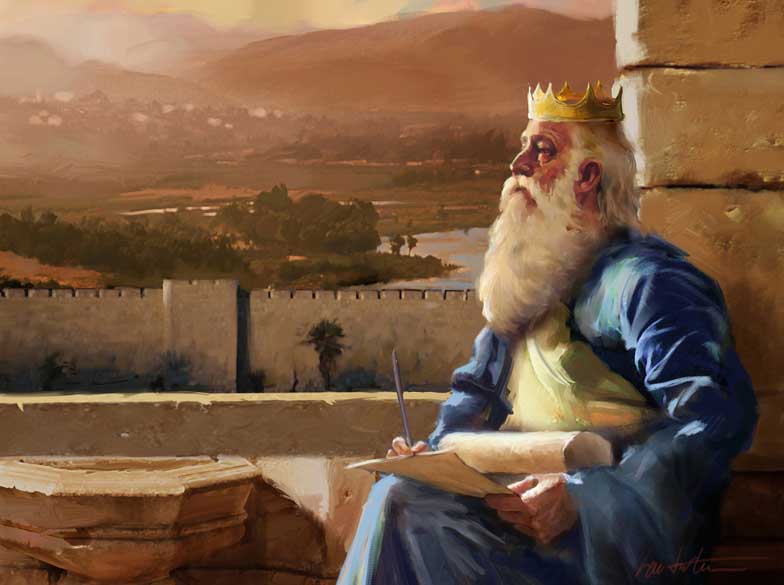
Solomon Ponders Life in His Old Age

Monday, August 18, 2014

"The Mighty God": Jehovah's Witnesses Betrayed by Their Own "Bible"

"For a child has been born to us, 
A son has been given to us; 
And the rulership will rest on his shoulder. 
His name will be called Wonderful Counselor,  
Mighty God, Eternal Father, Prince of Peace."

This is Isaiah 9:6 in the New World Translation (2013 revision), the Bible published by the Watchtower Society, or, as they are commonly called, the Jehovah's Witnesses. Why am I quoting their version? Have I suddenly converted? No, of course not.

I am quoting it because  the Watchtower has accidentally made an important confession here.

If you discuss this verse with a Witness, he will agree that it refers to Jesus Christ. However, they claim that it only teaches that Jesus is a "mighty god" (note lower case), just as they say about John 1:1. He is not the Almighty God, Jehovah.

Their problem is that they forgot to amend the next chapter of Isaiah. In Isaiah 10:21, the NWT refers to Jehovah as "the Mighty God." So, if their interpretation of 9:6 is correct, then they must also teach that Jehovah is not "the Almighty God," but just "the mighty god." In other words, their interpretation of the their own version requires them to say that God is not God!

Why do they insist so strongly in this particular heresy? I have thought long on that question. The Watchtower won't give an honest answer to it, of course. But I think it is that our God, the incarnate I Am (John 8:58), is powerful for the complete salvation of all His people. But, by hiding that great salvation, the Watchtower Society keeps its members in bondage, looking to Brooklyn for salvation. The Catholic Church uses a similar strategy, not by denying the deity of Christ, but by denying the infallibility and perspicuity of the Bible. Different roads to the same goal!

Friday, August 15, 2014

Is It True that the New Testament Doesn't Mention Infant Baptism?

"For I do not want you to be unaware, brothers, that our fathers were all under the cloud, and all passed through the sea,  and all were baptized into Moses in the cloud and in the sea,  and all ate the same spiritual food,  and all drank the same spiritual drink. For they drank from the spiritual Rock that followed them, and the Rock was Christ."
- I Cor. 10:1-4

I have heard it repeated by Baptists, over and over, ad nauseum, that the New Testament never mentions the baptism of infants, as if that would settle the question. But, as often as it is stated, is it true? No, it's not!
 
Look at the passage quoted above, I Corinthians 10:1-4, referring to the people of Israel during the Exodus from Egypt. This is a familiar story. The Israelites had been given permission by Pharaoh to leave their bondage in Goshen. However, Pharaoh had had a change of heart, and set out in pursuit, intending to retrieve his unpaid workforce. When the Israelites approached the Red Sea (Hebrew, "Sea of Reeds"), their God, Jehovah, made a way for them, dividing the sea to the right and to the left. After they passed through, the Egyptians attempted to follow, but God sent the sea back, crushing the Egyptian troops between two walls of water. The account can be found in Exodus, chapter 14.

Paul uses this experience as a metaphor for baptism. Who was baptized? Adults? Believers? That's what Baptists would have us believe. But what is the actuality? Everyone among the covenant people, men, women, elderly, and children! And this is exactly the case that Presbyterians make. We do not advocate the baptism of those foreign to the covenant, the equivalent of the Egyptians. That is the red herring argument of baptists. Rather, we advocate the baptism of those with a relationship to the covenant, i. e., adult believers, if they haven't been previously baptized, as well as the children within their household. That is, the same that Paul described to the Corinthian Christians.

So, what is the answer to the question in my title? Is it true that the New Testament never mentions the baptism of infants (or children)? Obviously, the answer is no. And, though it isn't the subject addressed here, this text also undercuts the Baptist insistence that baptism must be by immersion. Who got immersed in the Exodus? The Egyptians!

It must be noted that the case I make here only applies to the Presbyterian (or Reformed) view of baptism. It isn't intended to support other views, such as that of the Catholic Church.

Thursday, August 7, 2014

Who Are the Sons of God?

Before I start, I want to say that nothing I am about to say should be taken to refer to the only-begotten Son of God (John 1:14). That is a class that belongs to Jesus alone, and cannot be shared with any other human being.

This matter comes up because of a discussion I had recently over the issue of Hell. This was part of the same discussion that inspired my prior post on annihilationism. This Seventh-Day Adventist friend of mine stated that she thought that it was a violation of the Fatherhood of God to believe that He would consign some of His sons and daughters to eternal punishment. My friend was stunned when I objected that the damned are not the sons of God, for only believers can bear that title.

In the same hymn of the Incarnation that I quote above, we read (John 1:12), "To all who did receive Him, who believed in His name, He gave the right to become the children of God" [emphasis mine]. These believers are contrasted with those who "did not receive Him" in the verse before. So, the Apostle John clearly portrays the relationship of son to Father as the result of faith, not birth or creation.

The Apostle Paul adds his own authority to this definition (Romans 8:14-15): "For all who are led by the Spirit of God are sons of God... [Y]ou have received the Spirit of adoption as sons, by whom we cry, 'Abba! Father!'" And in Galatians 3:26, "in Christ Jesus you are all sons of God, through faith." And in II Corinthians 6:18, "'I will be a father to you, and you shall be sons and daughters to Me,' says the Lord Almighty." So, again, we see that the relationship of human sons to the divine Father is based on faith, not nature. Only Jesus Christ is the Son of God by nature.

Often we see this "fatherhood of God" discussion, when liberals try to turn everyone into an implicit Christian. That isn't the problem with my friend. Rather, she was trying to justify a doctrine which I can only call a heresy, a misunderstanding of the status of unbelieving men and women.

In his book, A Theology  of the New Testament, Fuller Seminary Professor of New Testament Exegesis and Theology George Eldon Ladd says on this issue (p. 86), "It is not as Father that God cares for the birds [Matthew 6:26], and it is not as Father that God bestows His creaturely blessings on those who are not His children [Matthew 5:44-45]. The Fatherhood of God belongs to those who have responded to the divine seeking love and have submitted themselves to God's Kingdom. God seeks men, not because He is their Father, but because He would become their Father" [emphasis added].

Saturday, July 26, 2014

Contra Annihilationism: "Destruction" is not the Same Thing as "Extinction"

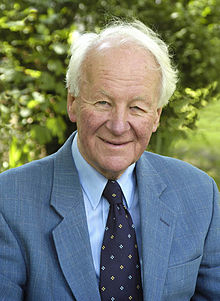
As exemplified by the late John Stott, the philosophy of annihilationism has been spreading, even among professed evangelicals. Annihilationism is the belief that unbelievers do not suffer eternal punishment in hell, the traditional view, but rather are extinguished, either at death or at the final Judgment. While it has been connected historically to the Jehovah's Witnesses and Seventh-Day Adventists (and their Armstronist offshoots), this heresy has been gaining acceptance in more otherwise-traditional churches.

I am currently reading the book Hell under Fire, edited by Christopher W. Morgan and Robert A. Peterson. While the book deals with evangelical universalism as well as annihilationism, I am currently reading just the annihilationism portion. In it is a chapter by theologian Douglas Moo, entitled "Paul on Hell," pp. 104-5. In it, he addresses the argument of annihilationists that "everlasting" and its synonyms refer to irrevocable extinction, rather than to continuous punishment. The Greek words at issue are olethros and apollumi/apoleia. He says: "Leaving aside, for the moment, judgment texts, none of the key terms usually has this meaning [i. e., 'irrevocable'] in the Old and New Testaments. Rather, they usually refer to the situation of a person or object that has lost the essence of its nature or function... The key words for 'destroy' and 'destruction' can also refer to land that has lost its fruitfulness (olethros in Ezek. 6:14; 14:16 [LXX]); to ointment that is poured out wastefully and to no purpose (apoleia in Matt. 26:; Mark 14:4); to wineskins that can no longer function because they have holes in them (apollumi in Matt. 9:17); Mark 2:22; Luke 5:37); to a coin that is useless because it is 'lost' (apollumi in Luke 15:9); or to an entire world that 'perishes,' as an inhabited world, in the Flood (2 Pet. 3:6). In none of these cases do the objects cease to exist; they cease to be useful or to exist in their original, intended state."

Friday, July 11, 2014

Does "Whosoever Will" Mean that Anyone Can Become a Christian, Just by Willing?

I have watched a certain well-known TV evangelist make fun of Calvinists a number of times. One of his subordinates even said one time, "'Whosoever will,' that disproves it [i.e., Calvinism] right there!" And I suspect that the majority of American evangelicals would simply nod their heads in unthinking agreement.

But is that actually what the Bible says? I happen not to think so.

Let's begin with the words of Paul. Consider Romans 3:11 (quoting Psalm 14:2), "No one seeks for God." Why is that? Ephesians 2:1, for we "are dead in the trespasses and sins." A dead person cannot will or choose anything. Jesus makes the same point in John 6:44, "No one can come to Me unless the Father who sent Me draws him." For (Matthew 11:27), "No one knows the Son except the Father, and no one knows the Father except the Son, and anyone to whom the Son chooses to reveal Him." So, whose will is the deciding factor? Not ours, but His (see also John 1:13)!

So, how does "whosoever will" (Revelation 22:17) fit in? Again, Paul explains (Philippians 2:13): "It is God Who works in you, both to will and to work for His good purpose." Thus, we see that it is true that "whosoever will may come," but it is only because God works in us to create that will! So, TV preacher, that settles it right there!